[{"name":"Everest Base Camp Trek","duration":"14","image_url":"https:\/\/www.allhimalayantreks.com\/storage\/trip-galleries\/1\/thumb_4b830d92fadc4c68b1e8886a7f879cad.webp","offer_price":1175,"url":"https:\/\/www.allhimalayantreks.com\/trips\/everest-base-camp-trek"},{"name":"Everest View Trek","duration":"9","image_url":"https:\/\/www.allhimalayantreks.com\/storage\/trip-galleries\/2\/thumb_67e3b64f28bb7fe46efd5edb0b8c0b70.webp","offer_price":890,"url":"https:\/\/www.allhimalayantreks.com\/trips\/everest-view-trek"},{"name":"Gokyo Ri Trek 10 days","duration":"10","image_url":"https:\/\/www.allhimalayantreks.com\/storage\/trip-galleries\/3\/thumb_c01977bc670aa835677d6b342e96aa95.webp","offer_price":1270,"url":"https:\/\/www.allhimalayantreks.com\/trips\/gokyo-ri-trek-10-days"},{"name":"Everest Three High Passes Trekking","duration":"19","image_url":"https:\/\/www.allhimalayantreks.com\/storage\/trip-galleries\/4\/thumb_645753d8eb778459a249b833ad39d851.webp","offer_price":1345,"url":"https:\/\/www.allhimalayantreks.com\/trips\/everest-three-high-passes-trekking"},{"name":"Annapurna Base Camp Trek","duration":"13","image_url":"https:\/\/www.allhimalayantreks.com\/storage\/trip-galleries\/5\/thumb_6865009674c652efacaf63d8cd75b24a.webp","offer_price":null,"url":"https:\/\/www.allhimalayantreks.com\/trips\/annapurna-base-camp-trek"},{"name":"Shortest Annapurna Circuit Trek","duration":"8","image_url":"https:\/\/www.allhimalayantreks.com\/storage\/trip-galleries\/6\/thumb_243c641a084eceb4ad69d2a4ad117ddb.webp","offer_price":null,"url":"https:\/\/www.allhimalayantreks.com\/trips\/shortest-annapurna-circuit-trek"},{"name":"Ghorepani Poon Hill Trek","duration":"6","image_url":"https:\/\/www.allhimalayantreks.com\/storage\/trip-galleries\/7\/thumb_ae0a5575ae2aeb7fa252856838d767f5.webp","offer_price":null,"url":"https:\/\/www.allhimalayantreks.com\/trips\/ghorepani-poon-hill-trek"},{"name":"Short ABC Trek with Poonhill","duration":"8","image_url":"https:\/\/www.allhimalayantreks.com\/storage\/trip-galleries\/8\/thumb_1231dedce915315838f8166f2e7632d1.webp","offer_price":650,"url":"https:\/\/www.allhimalayantreks.com\/trips\/short-abc-trek-with-poonhill"},{"name":"Langtang Valley Trek","duration":"10","image_url":"https:\/\/www.allhimalayantreks.com\/storage\/trip-galleries\/9\/thumb_5b4b4f05909fa8803d54ac84285cb555.webp","offer_price":null,"url":"https:\/\/www.allhimalayantreks.com\/trips\/langtang-valley-trek"},{"name":"Gosaikunda Lake Trek","duration":"8","image_url":"https:\/\/www.allhimalayantreks.com\/storage\/trip-galleries\/10\/thumb_028fc663f9fbe10c00d50d32adec4f7a.webp","offer_price":null,"url":"https:\/\/www.allhimalayantreks.com\/trips\/gosaikunda-lake-trek"},{"name":"Tamang Heritage Trail Trek","duration":"9","image_url":"https:\/\/www.allhimalayantreks.com\/storage\/trip-galleries\/11\/thumb_6c65a803a51e2b6c7058e0f1b685c203.webp","offer_price":null,"url":"https:\/\/www.allhimalayantreks.com\/trips\/tamang-heritage-trail-trek"},{"name":"Chisapani Nagarkot Hiking","duration":"3","image_url":"https:\/\/www.allhimalayantreks.com\/storage\/trip-galleries\/12\/thumb_60702804e5e4d0cc20a4bad23d7dc26c.webp","offer_price":null,"url":"https:\/\/www.allhimalayantreks.com\/trips\/chisapani-nagarkot-hiking"},{"name":"Upper Mustang Trek","duration":"18","image_url":"https:\/\/www.allhimalayantreks.com\/storage\/trip-galleries\/13\/thumb_d8eafc1e7014ee7dbf094bb2940c8e65.webp","offer_price":null,"url":"https:\/\/www.allhimalayantreks.com\/trips\/upper-mustang-trek"},{"name":"Ghorepani Poon Hiil Trek 3 Day","duration":"3","image_url":"https:\/\/www.allhimalayantreks.com\/storage\/trip-galleries\/14\/thumb_43f06d89b77e3ea214feed95fa46f9ce.webp","offer_price":null,"url":"https:\/\/www.allhimalayantreks.com\/trips\/ghorepani-poon-hiil-trek-3-day"},{"name":"Mardi Himal Trek","duration":"11","image_url":"https:\/\/www.allhimalayantreks.com\/storage\/trip-galleries\/15\/thumb_21da47928d20b1bf1c9ad39053bdd206.webp","offer_price":null,"url":"https:\/\/www.allhimalayantreks.com\/trips\/mardi-himal-trek"},{"name":"Khopra Danda Trek","duration":"14","image_url":"https:\/\/www.allhimalayantreks.com\/storage\/trip-galleries\/16\/thumb_92510475d8e41fe478925b698ca56a42.webp","offer_price":null,"url":"https:\/\/www.allhimalayantreks.com\/trips\/khopra-danda-trek"},{"name":"Jomsom Muktinath Trek","duration":"14","image_url":"https:\/\/www.allhimalayantreks.com\/storage\/trip-galleries\/17\/thumb_56e53ea08cb1b2ac7ad9cba96a70d978.webp","offer_price":null,"url":"https:\/\/www.allhimalayantreks.com\/trips\/jomsom-muktinath-trek"},{"name":"Ghandruk Annapurna Base Camp Trek","duration":"11","image_url":"https:\/\/www.allhimalayantreks.com\/storage\/trip-galleries\/18\/thumb_4246b4fa65718115dd319fc8453a479c.webp","offer_price":null,"url":"https:\/\/www.allhimalayantreks.com\/trips\/ghandruk-annapurna-base-camp-trek"},{"name":"Annapurna Circuit and Tilicho Lake Trek","duration":"14","image_url":"https:\/\/www.allhimalayantreks.com\/storage\/trip-galleries\/19\/thumb_dc159ee957f5e36f5fdffbd9b4d06153.webp","offer_price":null,"url":"https:\/\/www.allhimalayantreks.com\/trips\/annapurna-circuit-and-tilicho-lake-trek"},{"name":"Nepal Highlights Tour","duration":"11","image_url":"https:\/\/www.allhimalayantreks.com\/storage\/trip-galleries\/20\/thumb_952827d82900df6efb1be910dd0afc89.webp","offer_price":null,"url":"https:\/\/www.allhimalayantreks.com\/trips\/nepal-highlights-tour"},{"name":"Kathmandu Day Tour","duration":"1","image_url":"https:\/\/www.allhimalayantreks.com\/storage\/trip-galleries\/21\/thumb_11c8afb0ea7a71120dfa33b2f8761594.webp","offer_price":null,"url":"https:\/\/www.allhimalayantreks.com\/trips\/kathmandu-day-tour"},{"name":"Everest Three Passes Trek","duration":"18","image_url":"https:\/\/www.allhimalayantreks.com\/storage\/trip-galleries\/22\/thumb_b476a7a1748c3c1e3388187378933117.webp","offer_price":1550,"url":"https:\/\/www.allhimalayantreks.com\/trips\/everest-three-passes-trek"},{"name":"Everest Base Camp Trek via Gokyo Lake","duration":"15","image_url":"https:\/\/www.allhimalayantreks.com\/storage\/trip-galleries\/23\/thumb_48bb9309731b048a759065415ef8f147.webp","offer_price":1300,"url":"https:\/\/www.allhimalayantreks.com\/trips\/everest-base-camp-trek-via-gokyo-lake"},{"name":"Island Peak With Everest 3 Passes Trek","duration":"18 Days","image_url":"https:\/\/www.allhimalayantreks.com\/storage\/trip-galleries\/24\/thumb_87846e8876b369f0d323d5ab80146c91.webp","offer_price":null,"url":"https:\/\/www.allhimalayantreks.com\/trips\/island-peak-with-everest-3-passes-trek"},{"name":"Everest Base Camp Trek with Helicopter Return","duration":"11","image_url":"https:\/\/www.allhimalayantreks.com\/storage\/trip-galleries\/25\/thumb_fbce85abd32cf0f79fd155cd3add0319.webp","offer_price":null,"url":"https:\/\/www.allhimalayantreks.com\/trips\/everest-base-camp-trek-with-helicopter-return"},{"name":"Budget Everest Base Camp Trek","duration":"12","image_url":"https:\/\/www.allhimalayantreks.com\/storage\/trip-galleries\/26\/thumb_75a42fe11a3fc3abe0dca6df0336226f.webp","offer_price":null,"url":"https:\/\/www.allhimalayantreks.com\/trips\/budget-everest-base-camp-trek"},{"name":"Luxury Everest Base Camp Trek","duration":"14","image_url":"https:\/\/www.allhimalayantreks.com\/storage\/trip-galleries\/27\/thumb_ba33e53afbf8b97e6432fdd2c5130080.webp","offer_price":2400,"url":"https:\/\/www.allhimalayantreks.com\/trips\/luxury-everest-base-camp-trek"},{"name":"Annapurna Circuit Trek","duration":"14","image_url":"https:\/\/www.allhimalayantreks.com\/storage\/trip-galleries\/28\/thumb_6112d98996d78143360b19694d37593a.webp","offer_price":null,"url":"https:\/\/www.allhimalayantreks.com\/trips\/annapurna-circuit-trek"},{"name":"Manaslu Circuit Trek","duration":"14","image_url":"https:\/\/www.allhimalayantreks.com\/storage\/trip-galleries\/29\/thumb_8fe7115b4d0c0b8ecd6789d93b6d19aa.webp","offer_price":900,"url":"https:\/\/www.allhimalayantreks.com\/trips\/manaslu-circuit-trek"},{"name":"Short Annapurna Base Camp Trek","duration":"5","image_url":"https:\/\/www.allhimalayantreks.com\/storage\/trip-galleries\/30\/thumb_95b4ea62ad155b06e0b1b7d2a0e1edbb.webp","offer_price":null,"url":"https:\/\/www.allhimalayantreks.com\/trips\/short-annapurna-base-camp-trek"}]
15 Days Everest Base Camp Chola Pass Gokyo Trek: Cost, Itinerary & Best Time Explained (2026/27/28 Guide)
The Everest Base Camp via Cho-La Pass and Gokyo Lakes trek is a bucket-list Himalayan adventure that combines the classic EBC trail with a high mountain pass and the pristine Gokyo Valley. Over 15 days you’ll trek through lush Sherpa villages and rhododendron forests, ascend steep high-altitude trails, and witness iconic 360° views of Everest (8,848m), Lhotse, Ama Dablam and other giants.
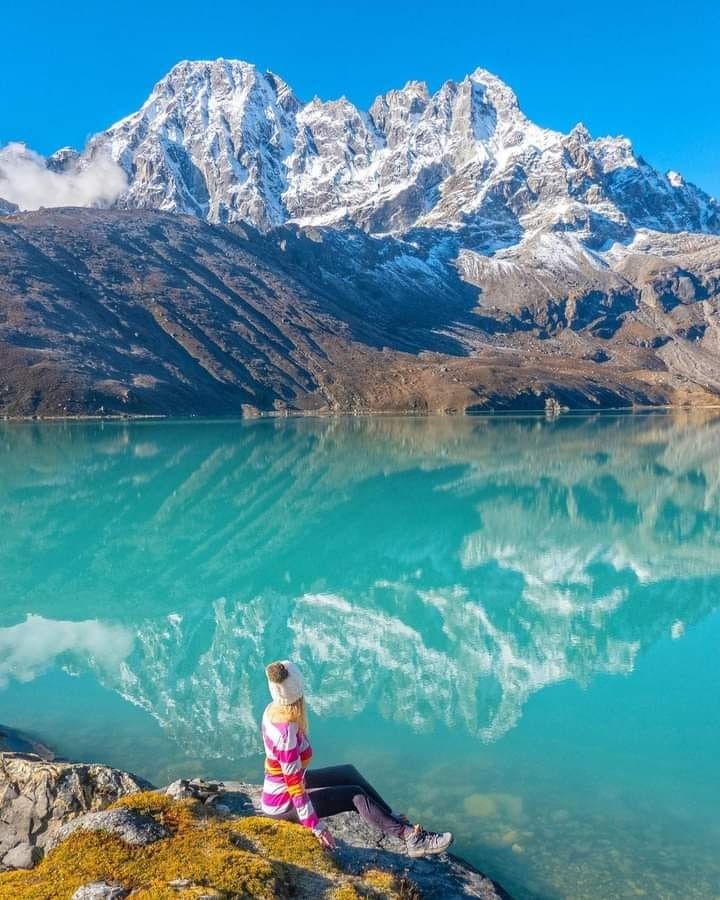
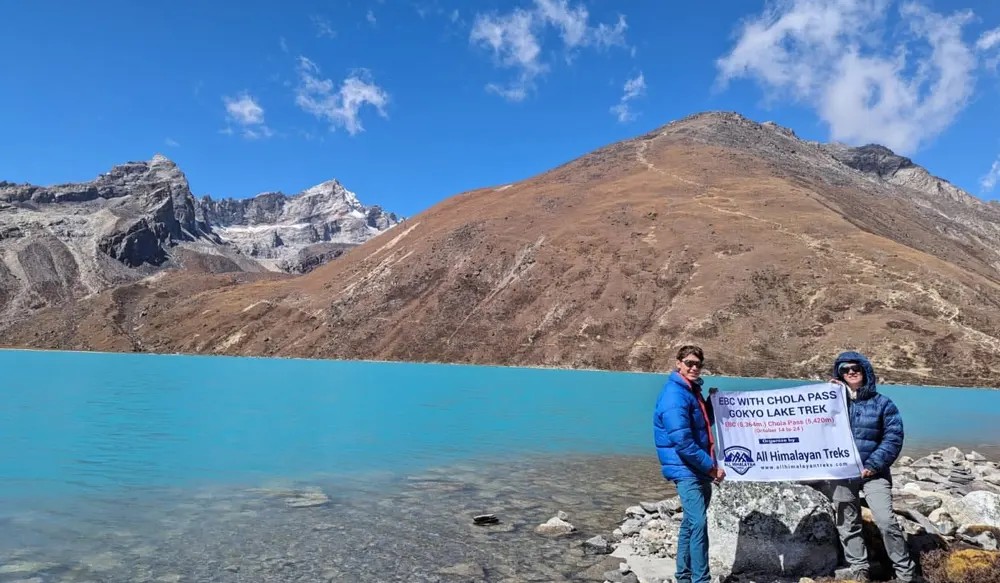
The highlight is crossing Cho-La Pass (5,420 m) and visiting the “sacred” turquoise Gokyo Lakes beyond. The remote Gokyo side trail is far less crowded than the standard EBC route, offering an intimate glacier-and-lake setting with panoramas of Everest and the Ngozumpa Glacier. Along the way you’ll experience Sherpa Buddhist culture (Tengboche monastery, prayer wheels, mani walls) against a backdrop of soaring peaks. This challenging trek rewards committed hikers with some of Nepal’s most spectacular scenery and a true wilderness experience.
Prayer wheels and Buddhist flags at Tengboche Monastery; Sherpa culture is on display throughout the Everest–Chola–Gokyo trek. The trail lies entirely within Nepal’s Sagarmatha National Park (a UNESCO site), starting with a flight into Lukla (2,840m) and climbing steadily into the Khumbu Valley. The itinerary is strenuous – with long days and altitude gains – but includes built-in acclimatization stops.
You’ll cross the deep Dudh Kosi gorge via iconic suspension bridges, pause in Namche Bazaar (3,440m) for acclimatization, then continue through Dingboche and Lobuche up to Everest Base Camp (5,364m) before backtracking to cross Cho-La Pass into the Gokyo Valley. Reaching GokyoRi (5,357m) grants another Everest viewpoint. In sum, this 15-day guided trek is a true Himalayan epic, blending adventure and scenic variety that few other treks can match.
Detailed 15-Day Itinerary
Most guided trips follow a clockwise loop via Lobuche, GorakShep (Everest Base Camp) and Cho La Pass. A typical day-by-day plan is:
Day 1: Kathmandu → Lukla → Phakding. Fly from Kathmandu (1,350m) to Lukla (2,840m), a short mountain flight followed by trekking ~3–4 hours (8 km) down the Dudh Kosi valley to Phakding (2,610m). The afternoon hike is relatively gentle, passing pine forests, monasteries and mani walls. This first day is mostly transit and a short trek to kick off acclimatization. (Meals: B,L,D)
Day 2: Phakding to Namche Bazaar. Trek 6–7 hours (10 km) from Phakding to Namche Bazaar (3,440m). The trail climbs gradually past Sherpa villages like Monjo (the park entry point) and crosses several high suspension bridges over the DudhKosi.
High suspension bridges over the DudhKoshi: on Day 2 you’ll cross bridges like this one (the Hillary Suspension Bridge, named after Sir Edmund Hillary) on the way to Namche. After Monjo the ascent steepens through forests. By late afternoon you arrive at Namche Bazaar, the bustling Sherpa capital. (Today’s altitude gain is 830m.)
Day 3: Acclimatization in Namche (Rest Day).Namche’s bracing altitude warrants a rest day. You can explore the town or take short hikes for acclimatization – common outings include trekking a few hundred meters above Namche (e.g. to Syangboche or Everest View Hotel) to enjoy Everest/Lhotse views.
These short “climb high, sleep low” hikes help stabilize oxygen levels. Namche has cafes, gear shops and bakeries to help you stock up. (Light activity 2–3 hrs.). Namche Bazaar (3,440m) perched on a mountain ridge, offers Himalayan panoramas and acts as the acclimatization hub.
Day 4: Namche Bazaar to Tengboche. Trek 5–6 hours (10 km) from Namche to Tengboche Monastery (3,860m). The trail ascends out of Namche through forests and rhododendron groves. Late morning you reach the famous Tengboche Monastery – an ideal spot for lunch and panoramic views.
From Tengboche there is an optional uphill side-hike (30–45 min) to the monastery for a prayer ceremony and majestic ridge views including Everest and AmaDablam. Continue on to camp for the night in Tengboche.
Day 5: Tengboche to Dingboche. Trek 5–6 hours (12 km) from Tengboche to Dingboche (4,410m). The route descends to the ImjaKhola Valley before climbing back up. You pass Debuche, Pangboche, and Shomare before reaching Dingboche, then undulate through yak pastures toward the high, glacial-enclosed valley of Dingboche. This is one of the higher villages on the trek. (Altitude gain today: 550 m)
Day 6: Acclimatization in Dingboche. Rest day at Dingboche (4,410m) with an acclimatization hike. A popular option is to climb a local peak (Nangkartshang 5,083m or Nagarjuna Hill 5,060m) for sweeping views of AmaDablam and the Everest massif. These excursions (4–5 hrs) follow the “climb high, sleep low” rule that allows your body to adapt. You can also explore the village or simply rest, since Dingboche’s thin air can trigger early fatigue.
Day 7: Dingboche to Lobuche. Trek 4–5 hours (8 km) from Dingboche to Lobuche (4,910m). The trail ascends steadily through moraines and yak pastures. Views open up to the Khumbu peaks. Lobuche is a small cluster of lodges near the terminal moraine of the Khumbu Glacier.
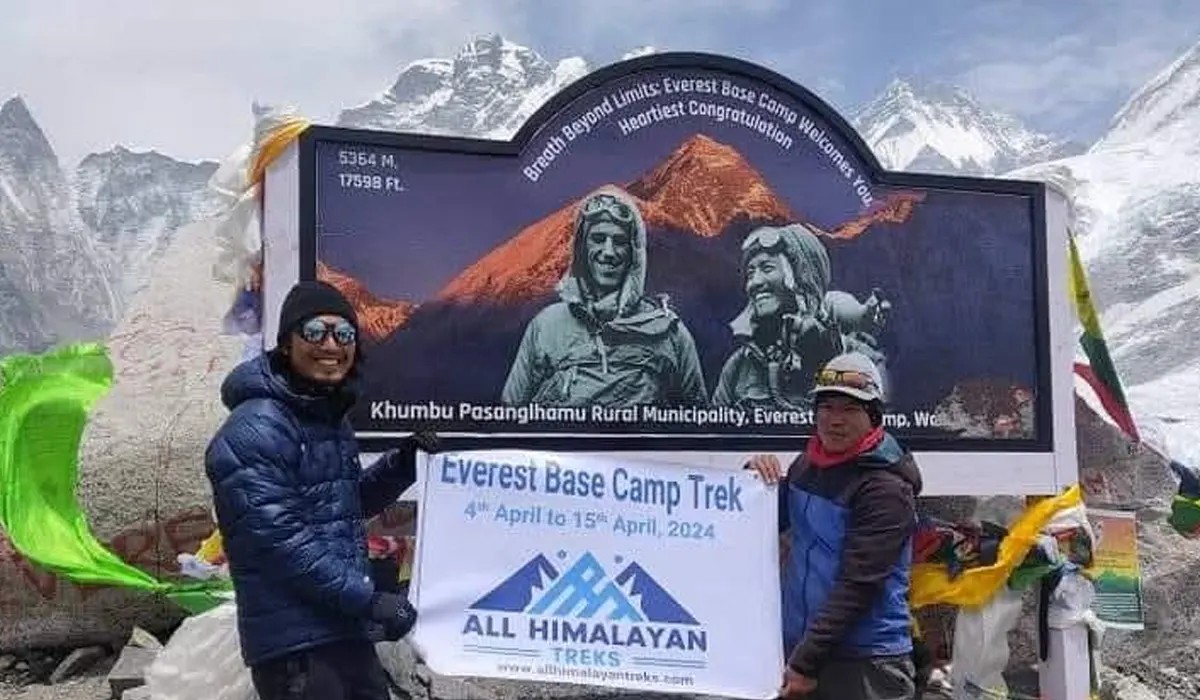
Day 8: Lobuche → GorakShep → Everest Base Camp → GorakShep. This is a big day (15 km round-trip, 8–9 hrs). Start early and trek 3–4 hours from Lobuche to GorakShep (5,164m). From GorakShep, you continue 2–3 hours up to Everest Base Camp (5,364m), walking on the Khumbu Glacier moraine with Everest looming above. At base camp you’ll see the icefall and prayer flags; spend time soaking in the achievement. Return down to GorakShep for the night.
Day 9: GorakShep → Kala Patthar → Dzongla (4,830 m). Before dawn, hike 1–2 hrs up to Kala Patthar (5,545m) for sunrise views of Everest and the high peaks. After descending Kala Patthar, continue westward (via GorakShep) beyond Lobuche towards Dzongla (4,830 m). This 6–7 hr trek (11 km) crosses the lateral moraine of the Khumbu Glacier. Dzongla (4,830 m) is a small, teahouse stop (it helps break up the ascent to Cho La).
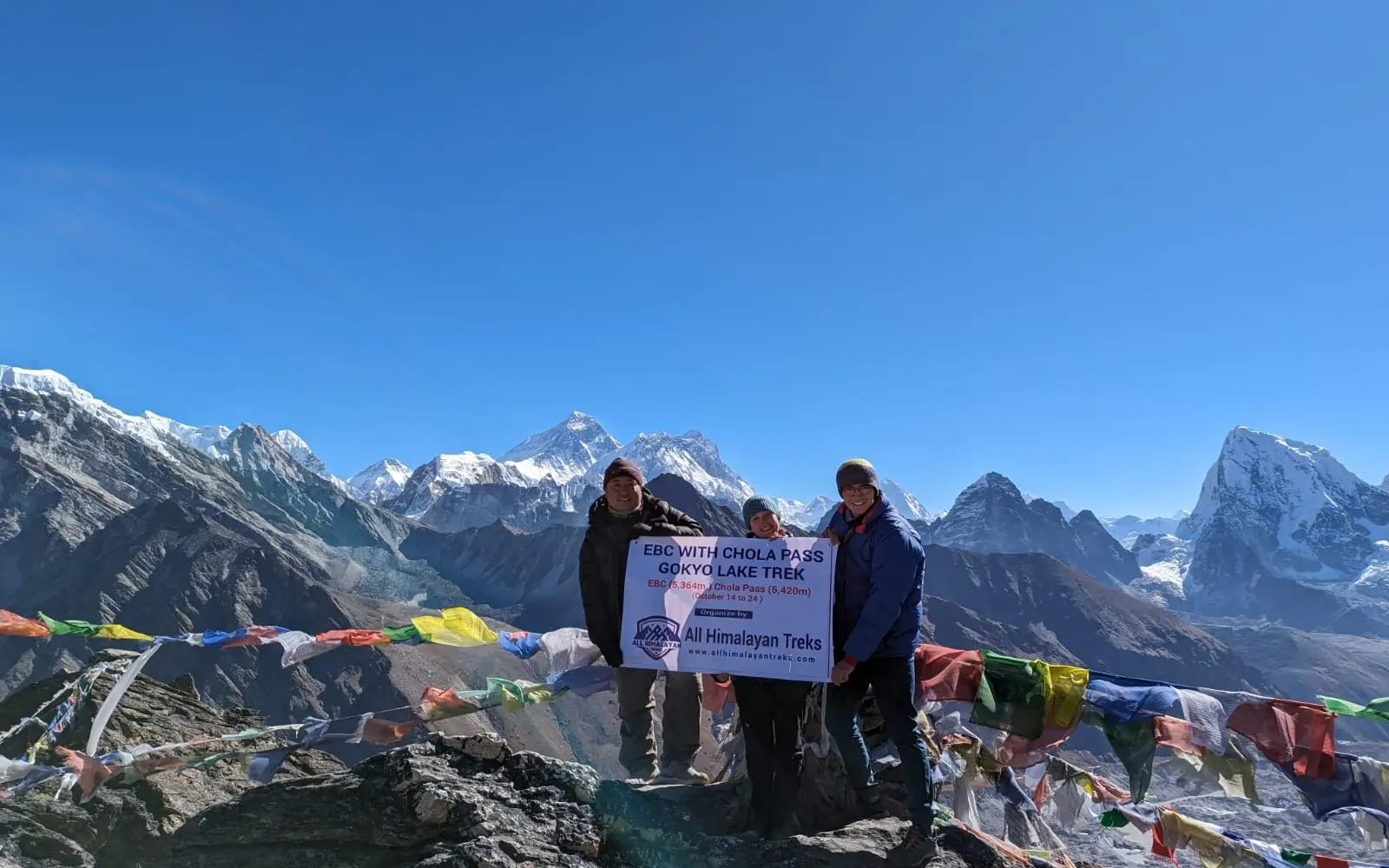
Day 10: Dzongla (4,830 m) → Cho-La Pass → Thagnak. Trek 7–8 hours (9 km) over Cho-La Pass (5,420 m) and down to Thagnak (4,700m). This is the hardest day: a steep climb (500+ m) to the snow-covered Cho-La col, where you get sweeping views of Cho Oyu and snowy passes. The descent into the Gokyo valley is long (700 m down), ending in the small settlement of Thagnak. (Today’s pass crossing marks leaving the Khumbu/EBC trail and entering the Gokyo region.)
Day 11: Thagnak to Gokyo. Trek 3–4 hours (4 km) from Thagnak to Gokyo village (4,750m). The path skirts the Ngozumpa Glacier and descends to the Gokyo Lakes valley. You arrive at the village of Gokyo perched above DudhPokhari (the 3rd Gokyo Lake). Spend the afternoon resting or visiting the lakeshores.
Day 12: Gokyo → GokyoRi → Machhermo. Today’s 6–7 hr hike (11 km) involves climbing GokyoRi (5,357m) at sunrise for phenomenal 360° views (Everest, Cho Oyu, Makalu etc.), then descending to Machhermo (4,470m). The summit climb gains ~600m, but the descent is gradual along the lakes. Machhermo is a scenic alpine valley with glacier views.
Day 13: Machhermo to Namche Bazaar. Trek 6–7 hours (16 km) downhill from Machhermo to Namche Bazaar (3,440m). The return follows the morning’s trail in reverse: descend through Gokyo and across moraine before dropping into the DudhKosi valley. You rejoin the busier EBC corridor around Mong La/PhortseTenga–Sanasa before Namche. (Altitude loss 1,030m.)
Day 14: Namche Bazaar to Lukla. Trek 7–8 hours (18 km) from Namche back to Lukla (2,840m). This long final day gradually descends through the familiar route — passing Monjo, Jorsalle, and Phakding — before reaching Lukla. The views of the high Himalaya fade as the trail returns to lower forested terrain.
Day 15: Fly Lukla → Kathmandu. A short morning flight brings you back to Kathmandu. You’ll arrive mid-day at Tribhuvan International Airport, concluding the trek.
Every day is a teahouse accommodation (no more than basic mountain lodges) and three meals. Precise programs may depend on the operator (not all treks have additional rest or buffer days in case of bad weather).
Costs: Pricing, Inclusions & Tipping
The cost of a 15-day guided trip to the Everest Base Camp–Cho La–Gokyo is a huge cost that implies the logistics of all remote areas. Price: At a mid-range price in 2026 2028, it will cost about 1500 2000 USD. This is consistent with industry listings (e.g. $1,400 in 2025) and group joins ($1,330–1,300 per person). Exact cost depends on group size, season, and included services.
What’s Included: The package generally covers domestic flights (Kathmandu–Lukla round-trip), all trek lodging (tea-house dorm rooms), three meals per day (breakfast, lunch, dinner), permits, and services of a licensed English-speaking guide (plus porters at 1 porter per 2 trekkers). Sagarmatha National Park and KhumbuPasangLhamu Rural Municipality entry permits are also paid.
Guides and porters carry tents, camping gear (if any), and medical kits; some companies provide shared sleeping bags and down jackets if needed. The trip cost also covers government taxes, equipment like an oximeter for monitoring, and emergency evacuation arrangements (paid by your insurance).
What’s Not Included: Usually you must pay your international airfare, Nepal visa fees, travel insurance (mandatory), airport transfers in Kathmandu, and personal expenses (snacks, beverages, showers, battery charging). Most itineraries exclude meals in Kathmandu (hotel lunches) and alcoholic drinks. Tips for guides and porters are not included and are customary.
Tipping & Wages:Tipping in Nepal is expected. A common guideline is $20 per day for the lead guide, $15/day for any assistant guide, and $10/day per porter (to be split among participants). For 15 days at $15–20/day, guide tips are $225–300 per group (split per person). Adjust by group size and service level. Other sources recommend 10-15 percent of trek price as a group gratuity.
In Nepal, the average wages paid by a porter are approximately $2030/day with food and accommodation and thus tips play a big role in toppling their wages. You had better tip at the end of trek (cash) or as your company suggests. It is important to note that the advice regarding tipping may be different; these figures are average.
An example cost breakdown for a 15-day guided package (per person) might be: - Package price (guide, porter, lodges, meals, flights, permits): $1,600 - Nepal visa (30-day, multiple entry): $50 - Travel insurance (high-altitude cover): $100–200 - Tips (guide+porter): $150 - Personal expenses (drinks, snacks, hot showers): $150 -Total: $2,000–2,200 USD
Local currency: Most payments on trek are in Nepalese rupees (NPR). You can pay tips and extras in USD or NPR. ATMs exist in Lukla and Namche but can be out of cash or offline—carry enough NPR for the trek.
Best Time to Trek (2026–2028)
The prime seasons for this high Himalayan trek remain spring (March–May) and autumn (late September–November) each year. In spring, days are warmer, rhododendrons bloom in lower valleys, and mountain views are generally clear.
In autumn, stable high-pressure patterns give crisp air and minimal rain, yielding spectacular vistas of Everest and the surrounding giants. Both seasons coincide with Nepal’s dry windows and cultural festivals (Holi/New Year in spring; Dashain/Tihar in autumn) which can add local color.
Spring (Mar–May 2026–28): By April, the climate warms and days are long and clear. Trails and lodges can be crowded in peak April–May. You’ll see blooming rhododendrons on the trek. However, late spring does see the onset of the pre-monsoon humidity by May, so afternoons can cloud up.
(Notably, climate trends have made weather a bit more erratic; Spring afternoons, especially May, can see convective cloud build-up and brief storms; build 1–2 buffer days for flights/Cho-La conditions
Summer/Monsoon (Jun–Aug):Not recommended. This period brings heavy rains and thick clouds over Nepal. On the trail, expect slippery, muddy paths, leeches in forests, and frequent showers. The mountains are usually shrouded in clouds. Landslide risk is higher. Only very experienced trekkers on heavy gear attempt EBC in monsoon, but the Cho-La route is best avoided.
Autumn (Sep–Nov): Widely regarded as the best season. After mid-September the monsoon clears out, yielding cool nights and stable weather. October often has crystal-clear skies and warm daytime, making photography ideal. November can be chilly by morning, but still very clear. Crowds are large in October (increasing demand for permits and flights). The post-rain air means vivid mountain views. Overall Autumn offers “optimal weather conditions” – dry trails and panoramic vistas.
Winter (Dec–Feb): Very cold (below –15°C at night above 4,000m), with snow at higher camps. Some tea houses close. Winter treks see few foreign visitors; only very well-prepared groups (with snow gear) attempt it. Daylight is shorter. However, if gear and fitness are excellent, a winter EBC trek rewards you with solitude (though the Gokyo side may not be passable).
For planning in 2026–2028, follow these windows. Note that climate change is affecting the Himalaya.
Scientists report rising temperatures in the Everest region, glacier retreat, and more erratic weather. This means the traditional “weather windows” can be shorter and more unpredictable. For instance, clear spring weather can get interrupted by early summer storms. Always build extra days into your schedule for potential weather delays, and consult up-to-date forecasts (e.g. Trekking agencies) before your trek.
Route Comparison: EBC + Cho-La +Gokyovs Standard EBC vs Annapurna Circuit
EBC+Cho-La+Gokyovs Standard Everest Base Camp (EBC) Trek: The standard EBC trek (round-trip from Lukla to Base Camp and back) is about 11–14 days and follows only the main trail through Gorak Shep. Adding Cho-La and Gokyo makes the trek longer (15 days) and more challenging.
Scenery: The classic EBC route offers iconic, high-Alpine landscapes with towering peaks (Everest, Lhotse, Nuptse, Ama Dablam etc.) and dramatic Khumbu Icefall views. The Gokyo extension adds a different landscape – emerald glacial lakes and vast Ngozumpa Glacier.
From GokyoRi and Cho-La, you still see Everest, but often from farther away; you also see Cho Oyu and Makalu. In short, EBC is about steep glaciers and Khumbu vistas, while the Gokyo route rewards you with serene lakes, glacier valleys, and uncrowded hilltop views.
Difficulty: Both treks require good fitness, but the EBC+Gokyo circuit is slightly harder than the EBC-only path. You still reach similar altitudes (Kalapathar 5,545m, on EBC vs GokyoRi 5,357m), but the Cho-La route involves additional high passes (over 5,300m) and long day climbs.
The standard EBC trail gains altitude more consistently (steeper after Namche), whereas the Gokyo variant includes a very steep pass but also some descent (the climb to Cho-La and descent to Gokyo). Overall, plan on 1–2 additional acclimatization days compared to the straight EBC trek.
Crowds and Culture: The main EBC trail is very popular; you’ll see groups of trekkers, runners, and many porters en route to Gorak Shep. In contrast, the Gokyo route is less crowded, especially past Lobuche. This means more solitude and a more “authentic” village experience on the Gokyo side.
Both routes are rich in Sherpa culture (monasteries in Tengboche, Namche), but on the quieter Gokyo trail you may meet fewer international tourists and have more chance to interact closely with locals.
Fitness, Acclimatization and Preparation
This trek demands a high fitness level. You should train for several months in advance with cardiovascular exercise (running, hiking, stair-climbing) and leg strength workouts. Specifically, a regimen of long hikes (3–6 hours) with elevation gain while carrying a weighted backpack is recommended. Incorporate uphill/downhill hiking, and train 4–5 times per week if possible. Core and lower-body strength training (squats, lunges, step-ups) will help with the long ascents. Endurance is key: some days involve 8+ hours of trekking.
Acclimatization is critical. The itinerary above has built-in “rest” stops at Namche and Dingboche, but you should also follow the principle of “climb high, sleep low” whenever possible. During acclimatization days, go on short hikes above camp to induce adaptation (e.g. climb a hill above Namche or Dingboche, then return to sleep lower).
Stay well-hydrated and avoid alcohol. Many guides advise ascending no more than 300–500m per day once above 3,000m, and taking an extra day at Dingboche or beyond if you feel symptoms of altitude sickness. Carry common medications: acetazolamide (Diamox) can aid acclimatization, and bring simple first-aid (painkillers, altitude pills, rehydration salts).
Even with preparation, altitude sickness can happen. Warning signs include headache, nausea, fatigue. Descend or take extra rest days if symptoms worsen. To check the oxygen in the blood, an oximeter is frequently offered by the agencies (as one operator points out, O 2 saturation is checked twice a day). In worst cases, the helicopter evacuation (included in good travel insurance) is inevitable.
In addition to fitness, the practical preparations involve:
-Permits:Sagarmatha National Park Entry (foreigners NPR 3,000), Khumbu Pasang Lhamu Rural Municipality Entry (NPR 2,000 per a maximum of 4 weeks). The rate of the EBC/Khumbu route does not need TIMS. Carry duplicates of permits/ID.
- Travel Insurance: It should include high-altitude medical evacuation (5,000m). Take an all-inclusive travel and medical insurance. High-altitude evacuation insurance is mandatory in most of the trekking agencies.
- Packing: Lug in quality hiking gear (see checklist below). Accommodation beyond 3500m is bare-bone- there will be shared rooms, and there will be minimal power. Bring money to pay in teahouses (Rupy Nepalese).
- Health: Recommended up-to-date vaccinations include tetanus, hepatitis, typhoid. Only when prescribed: consider acetazolamide (Diamox 125mg twice per day) a day before major ascent.
Lastly, get all of your trip logistics in order: triple-check Lukla flights (they are usually flying out of Ramechhap during high season), have contingency days in place in the event of weather, and notify someone of your schedule.