The Shortest Annapurna Circuit Trek is one of the realest Himalayan trekking experiences that you can get in Nepal. Your boots sink into the dust of Besisahar’s bus park as dawn breaks over the Marsyangdi River. Forget polished tourism brochures; this is where real Nepal breathes, chickens scattering from idling buses, porters knotting rope harnesses around plastic crates, the sharp scent of diesel and burning juniper mixing in the air. We don’t just book your seat, our Kathmandu team negotiates the last available jeep space if landslides block the road in monsoon, ensuring you’re not stranded for days like solo travelers often are.
Near Chame, stone houses with carved wooden windows guard generations of Gurung heritage. You’ll see women grinding millet on flat stones outside doorways, their silver nose rings sparkling, a tradition fading fast but preserved here. When your backpack straps dig into your shoulders on the steep climb toward Pisang, our guides know it is time to take a short yet much-needed break. This isn’t scripted culture, it’s daily life where children have gone on past prayer wheels spun by monks since the 14th century.
The Manang Valley floor surprises you with its Martian red soil and ancient irrigation canals diverting glacial melt. Here, locals still practice sky burials on designated hilltops, a sacred ritual you’ll observe respectfully from a distance, not as a spectacle but as part of the landscape’s spiritual portion. We secure your teahouse stay in advance during peak season when every room fills by noon, and our Shortest Annapurna Circuit Trek guide recognizes the subtle signs of altitude strain before you feel them, offering ginger tea before the symptoms hit.
At Muktinath, you will witness a legendary fire, a natural gas flame burning eternally beside freezing water spouts, sacred to both Hindus and Buddhists. Pilgrims circumambulate the temple in woollen layers while freezing droplets from frozen slopes land on sun-warmed stones. When your camera battery dies in the subzero dawn, it is time to take out the next one, so be prepared with a couple of spare batteries if you are heavy into photography. This isn’t just logistics, it’s anticipating needs you haven’t voiced.
The trail to Thorong Phedi cuts through yak pastures where nomads trade various goods in transactions that has evolved over time. You’ll smell smoke and butter tea before seeing the teahouse, its steam mingling with prayer flags strung across the pass. Our porters know most of the rock slide risk zones on this stretch; they’ll reroute you when monsoon rains loosen the trail, while your guide explains how these flags carry prayers on the wind. The different colors of the prayer flags have different representations, blue for sky, white for air, red for fire.
Descending toward Jomsom, the landscape shifts abruptly to desert canyons with wind-sculpted slopes. Villagers here grow rare apples in stone-walled plots, and their knowledge passed through whispered family secrets. All in all, this trek reveals Nepal’s soul in raw moments, a grandmother sharing sweets from her pocket, the clanging of monastery bells at midnight, the way porters sing folk songs to lighten loads. We handle the chaos so you experience the clarity; the permits, the last-minute vehicle swaps, the gear repairs at 4,500 meters. While others worry about logistics, you’ll stand atop Thorong La Pass breathing thin air, realizing the true luxury isn’t five-star hotels but guides who know exactly when to push you and when to pour more tea. Your journey begins where guidebooks end, in the raw, beautiful reality only those who live these mountains understand.
The first day of your Shortest Annapurna Circuit Trek will be nothing more than exciting. We board a bus in Kathmandu for the seven hour journey to Besisahar, covering 173 kilometers through winding terrain. This initial leg establishes our rhythm for the expedition ahead. From Besisahar, we transfer to a shared jeep for the mountain segment. The 66-kilometer route to Chame traverses rough off-road conditions requiring five to six hours of travel time. You will feel the elevation shift from 760 meters in Besisahar to 2650 meters in Chame. Dust clouds follow each vehicle, navigating narrow tracks carved into steep slopes.
Travel takes 12 to 14 hours along the Marsyangdi River corridor. You pass Dharapani at 1860 meters as subtropical forests shift to rocky river valleys. Local drivers steer jeeps through sharp narrow turns with practiced precision. You adapt to altitude changes during this transit day. Our Shortest Annapurna Circuit Trek guides advise packing layers for temperature swings between valley floors and mountain passes. Chame teahouses provide basic yet functional lodging for all trekkers. You spot prayer wheels and mani stones at village entry points. Food options decrease after Besisahar so bring your own snacks for en route hunger.


Day 2 of the Shortest Annapurna Circuit Trek is here. We start climbing alongside the Marsyangdi River through pine forests toward Upper Pisang. This fourteen kilometer segment gains 640 meters over five to six hours of steady walking. You will cross suspension bridges spanning milky river channels multiple times during morning hours. The trail passes through Gurung villages where stone houses with slate roofs cluster on mountain slopes. We navigate switchbacks through barley fields before reaching the sacred Mani Wall at Bratang Gompa.
Your legs adjust to ascents averaging 40 meters per kilometer. Upper Pisang sits at 3300 meters amid canyon walls and distant peaks. We observe traditional irrigation channels directing glacial meltwater to terraced fields. You spot prayer flags strung across narrow trails marking spiritual zones. Afternoon sun highlights ancient rock carvings near the village entrance. We recommend checking footwear for hot spots during the final kilometer. The ascent reveals Annapurna II and Gangapurna massifs in panoramic views. Teahouse stays deliver clear night skies because of minimal light pollution.
We follow the valley upward through rhododendron forests toward Manang on the 3rd day of the Shortest Annapurna Circuit Trek. This sixteen kilometer trek gains 340 meters over five to six hours through varied terrain. You will cross the Dudh Khola River via sturdy suspension bridges early in the morning. The trail passes through seasonal pastures where yaks graze on sparse mountain vegetation. We navigate rocky sections requiring careful foot placement between scattered boulders and scree slopes. Manang Valley opens before us at 3540 meters, surrounded by 6000 meter peaks on all sides.
Take note of traditional stone houses with flat roofs designed for heavy snow loads. Your lungs adjust to thinner air as we approach the village's main marketplace area. Afternoon hours reveal how locals use solar panels to power basic electrical needs in remote settlements. We recommend testing your altitude tolerance with short walks around the village perimeter. You will observe prayer wheels spinning continuously outside the main monastery complex. The final approach crosses a stream near Tenki village before entering Manang proper. Your teahouse accommodation provides essential rest before tomorrow's acclimatization activities.
We dedicate today to altitude adaptation through controlled elevation exposure in Manang. This is the one and only acclimatization day on the Shortest Annapurna Circuit Trek. You may choose between two established acclimatization routes based on personal comfort levels. The Ice Lake option climbs 1080 meters to 4620 meters over four hours of steady walking. This route follows glacial moraines past frozen lakes reflecting surrounding snow peaks. Alternatively, the Gangapurna Base Camp hike gains 600 meters to 4130 meters through rocky terrain.
Both trails require steady pacing with frequent breathing checks at this elevation threshold. We monitor oxygen saturation levels hourly during these acclimatization hikes. Take time to observe how prayer flags flutter in high altitude winds near trail summits. Your body benefits from slower movement patterns at these extreme elevations. Afternoon hours allow visits to the local monastery and health post facilities. We recommend drinking three liters of fluid daily to maintain proper hydration balance. You will notice how sunlight intensity increases significantly above 4000 meters elevation. Return to Manang before afternoon clouds obscure mountain views for safety reasons. Your evening meal provides carbohydrate rich foods to replenish energy stores depleted during hikes.
The following day on the Shortest Annapurna Circuit Trek, we climb steadily through high altitude pastures toward Yak Kharka today. This ten kilometer segment gains 555 meters over three to four hours through open terrain. You will pass through seasonal herder settlements where stone shelters dot the landscape. The trail follows ancient trade routes used by caravans and traders for centuries across this plateau. We navigate gentle slopes through grasslands where animals graze on very minimal vegetation during summer months. Yak Kharka sits at 4095 meters surrounded by dramatic canyon walls and distant peaks.
Take note of how vegetation disappears above 4000 meters, leaving only hardy grasses and lichens. Your breathing requires conscious regulation during sustained ascents at this elevation threshold. Afternoon sun illuminates how glacial meltwater feeds small streams along the trail corridor. We recommend checking your water supply levels before starting each day's segment. You will observe prayer flags marking spiritual thresholds near high mountain passes. The final approach crosses a stream near Ledar village before entering Chauri Lader proper. Our accommodation for the night provides energizing meals before tomorrow's critical pass preparation.
The following day on the Shortest Annapurna Circuit Trek, we make a short but significant ascent toward Thorong La Pass preparation points today. This five kilometer segment gains either 355 meters to 4450 meters or 785 meters to 4880 meters depending on the chosen route. You will notice how trail conditions change dramatically with each hundred meter elevation gain. The Thorong High Camp option provides shorter pass crossing distance tomorrow but requires steeper climbing today. We navigate rocky sections requiring careful foot placement between scattered boulders and scree slopes. Thorong Phedi sits at 4450 meters surrounded by barren landscapes and distant snow peaks.
Take time to observe all the amazing scenes throughout the way, especially near trail summits. Your lungs, slowly and steadily, adjust to thinner air as we enter areas where oxygen concentration drops down to 58 to 60 percent of sea level. You will notice how vegetation disappears completely above 4500 meters leaving only rock formations. The final approach crosses frozen streams that thaw during midday sun exposure periods. The day ends with a filling meal, typically paired with hot soups for the cold and chilly weather conditions of the high Himalayan altitude
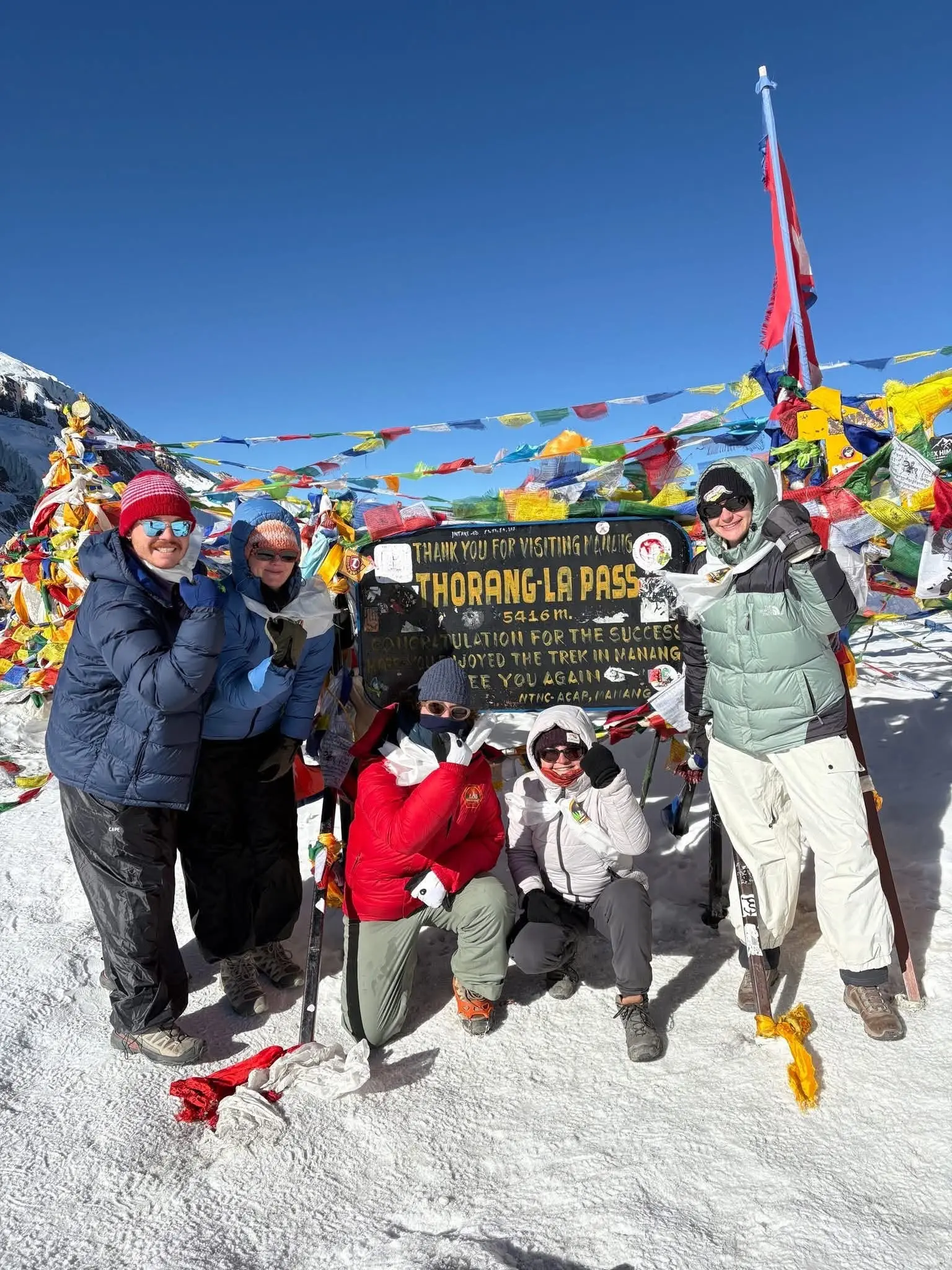
Day 7 of the Shortest Annapurna Circuit Trek begins before dawn for the critical Thorong La Pass crossing at 5416 meters. This eight hour segment covers twenty kilometers with 966 meters of ascent and 1706 meters of descent. You will navigate switchbacks through rocky terrain requiring careful foot placement during early hours. The pass summit marks the watershed between two major river systems in central Nepal. We descend toward Muktinath through barren landscapes with panoramic mountain views. Your breathing requires deliberate attention during long and exhausting ascents at extreme elevations.
En route, we will stop for a filling lunch, which also serves as a rest break. After we are ready to move, the guide takes the lead as the porters carry all the luggage for you. Soon after, you will get to see the spire of the Muktinath temple. This will come as a heavy relief since this day is going to be the most tiring of the entire Shortest Annapurna Circuit Trek. After reaching our destination of the day, we will have you check in at a nearby lodge. If you are up for it, you can simply stroll around, take some sunset pictures with the group or just rest for the time being.
We board a local bus for the ten hour descent toward Pokhara through changing landscapes. This journey covers 150 kilometers through valleys and mountain passes with variable road conditions. You will notice how vegetation changes from alpine to subtropical as elevation decreases steadily. The bus navigates sharp road turns with practiced precision along narrow mountain roads. You can easily see how river systems widen as we approach lower elevation settlements. Your body adjusts to thicker air as we descend below 2000 meters during afternoon hours.
The daylight hours show how agricultural practices change with decreasing elevation gradients. We recommend securing window seats for better views of changing landscape features. You will get to see how local markets transform from high altitude settlements to bustling commercial centres. The final approach follows the Marshyangdi River corridor through terraced farmlands. Your hotel accommodation in Pokhara provides comfortable rest after completing the Shortest Annapurna Circuit Trek. This marks the end of the amazing journey through the villages of Annapurna region. You can also opt to end the trek in Kathmandu or ask us for a guided tour around the lovely city of Pokhara. This city is the tourism capital and the most beautiful city of the entire country, exploring it is a great way to end the beautiful Annapurna trek.

We board a local bus at Kathmandu's Gongabu Bus Park early in the morning for the journey to Besisahar. You should get your luggage ready the night before and get ready to move after a filling breakfast at last night's accommodation. Usually, the bus departure time is a little late to accommodate late passengers, but we will not drift off too far from the schedule. This seven to eight hour drive covers 173 kilometers through winding mountain roads with frequent stops. We will stop for refreshments and lunch; highway restaurants are the only options for lunch. You will notice the landscape shifting from urban Kathmandu to rural villages along the Marsyangdi River corridor. Road conditions vary significantly with sections damaged by mudslides requiring careful navigation. Dust fills the bus as we pass through terraced farmlands and river valleys during this initial transit phase. From Besisahar, we transfer to a shared jeep for the mountain segment toward Chame.
This five to six hour jeep ride traverses rough off-road tracks covering approximately 66 kilometers. Your body begins adjusting to elevation changes as we climb from 760 meters at Besisahar to 2650 meters in Chame. Narrow mountain roads wind through pine forests with dramatic canyon views throughout the journey. Teahouse accommodation awaits us in Chame, providing basic but functional lodging after the journey. Your Shortest Annapurna Circuit Trek guide handles all transportation arrangements, ensuring smooth transitions between bus and jeep segments. It can get a little dusty en route, so get a face mask, gaiter, or anything you use to cover your face from dust.
Daily walking spans six to eight hours across varied terrain. You navigate continuous ascents and descents on rocky cliff paths requiring precise foot placement. Trails alternate between valleys and mountain passes testing endurance daily. Our guides have been going up and down this itinerary for more than 5 years. They will have your back in case of difficulties, as much as possible. Steep high-elevation slopes demand conscious breathing control. Thorong La Pass at 5416 meters requires eight focused hours as the trek's most demanding segment. Cardiovascular strain increases above 3000 meters with every kilometer gained.
This trek ranks strenuous due to combined distance and altitude challenges. No technical climbing skills are necessary but physical resilience and mental readiness prove essential. We advise prior loaded backpack hikes for preparation. If you are someone with tons of trekking experience, this trek should not be an issue for you to complete. Perhaps, more like a walk in the park. Acclimatization days enable gradual altitude adaptation, which is an integral part of our Shortest Annapurna Circuit Trek. Physical demands intensify above 4000 meters where each step requires greater effort. Guides adjust group pacing based on real-time conditions ensuring safe progression. Fit trekkers achieve success through consistent preparation and mindful exertion.
September to November offer the clearest skies and most stable weather for the Shortest Annapurna Circuit Trek. You experience moderate temperatures and excellent mountain visibility during peak trekking months. October provides the best conditions with dry trails and comfortable daytime temperatures. March to May bring favorable weather and blooming rhododendron forests. We recommend these seasons for reliable patterns and minimal rain. Heavy rainfall during June to August makes trails slippery and dangerous. Colder temperatures and snow occur at higher elevations in December to February.
You will encounter more fellow trekkers during spring and autumn compared to unfavorable seasons. These optimal seasons provide the safest conditions for crossing Thorong La Pass at 5416 meters. Your experience improves significantly with clear views of Annapurna and Dhaulagiri mountain ranges during these periods. We avoid monsoon months due to increased landslide risks along the mountain roads and trails. Daytime temperatures remain comfortable between 15-25°C during autumn, while spring offers slightly warmer conditions. As per our guide's experience, the locals are very hesitant to stay in higher elevations during the winter months, they tend to drop to lower villages. You will appreciate the stable weather patterns during these recommended seasons for consistent daily progress. These periods balance ideal conditions with manageable crowd levels along the circuit route.
Beginners complete the Shortest Annapurna Circuit Trek with proper preparation and realistic expectations. You reach 5416 meters at Thorong La Pass, requiring significant altitude adaptation. The trek starts low but steadily gains altitude, demanding strong cardiovascular fitness from day one. You do not need technical climbing skills as rocky sections and narrow paths demand steady footing. We recommend extra acclimatization time in Manang at 3519 meters. Prepare with months of cardiovascular training before your journey.
Beginners face higher altitude sickness risks. We monitor symptoms closely and adjust itineraries as needed. Our guide pace walks to your capability throughout the Shortest Annapurna Circuit Trek. You walk 10 to 12 kilometers daily with steady elevation changes testing endurance. Built-in acclimatization days at key elevations support beginner adaptation. Thorough preparation makes this trek achievable for first-time high altitude trekkers. Guides assess fitness daily to ensure safe mountain progression. Practice loaded backpack hikes on varied terrain before departure. Commit to physical training for successful completion. Respect mountain conditions and reap incredible rewards through proper readiness.
We prevent altitude sickness through gradual elevation gain using the "climb high sleep low" principle daily. Your body adapts with daily ascents limited to 300-500 meters above 3000 meters. Guides carry oximeters to check oxygen saturation twice daily during the Shortest Annapurna Circuit Trek. Report headaches, nausea, or dizziness immediately to our trained staff. Hydrate with three liters of fluid daily at high elevations. We include mandatory acclimatization days in the itinerary. Regulate breathing during ascents with frequent rest stops to avoid overexertion.
We avoid alcohol consumption during the trek as it accelerates altitude sickness symptoms significantly. Our guides have seen a couple of trekkers unable to continue because of heavy alcohol consumption the previous night. You will notice symptoms worsening if ignored, so we prioritize descent at the first serious warning signs. Our Shortest Annapurna Circuit Trek guides carry comprehensive medical kits, including medications for altitude sickness treatment. We follow established protocols requiring descent if symptoms progress beyond mild headache or fatigue. Following the standard protocol, we will have you descend and take pills if needed. Prevention remains our primary strategy with careful pacing and adequate rest periods built into each day. Your safety depends on honest communication about how you feel throughout the high altitude journey.
We stay in basic teahouses offering twin bed rooms with shared restroom facilities throughout the trek. Our guides knew a few with attached bathrooms, but they are usually packed for the season. Your accommodation includes simple but functional lodging with communal dining areas for meals and socializing. Teahouses provide heated common rooms where trekkers gather in the evenings after daily meals and talks. Stories of past trekking adventure, hardships, humor, grief, etc. gets thrown around. You will find limited bathroom facilities typically with squat toilets located outside main buildings. Meals consist of traditional Nepali dishes like dal bhat (lentil soup with rice) served with vegetables. We recommend you to try the local dishes as much as possible and if you decide it's not your cup of tea, you can always go back to popular options. Teahouses offer varied menus, including momos (dumplings), thukpa (noodle soup), and occasionally pizza. Your food choices become more limited at higher elevations above 4000 meters due to supply constraints.
We recommend vegetarian options that prove safer and more digestible at high altitudes during the Shortest Annapurna Circuit Trek. You can purchase tea, coffee, hot chocolate, and other beverages at additional cost in all teahouses. Drinking water requires purification, so we advise using boiled water or purification tablets throughout the journey. Some teahouses sell bottled water, but this creates environmental concerns in remote mountain areas. Your guide ensures food safety standards remain high despite basic kitchen facilities in these remote locations. Teahouse accommodations provide essential shelter with varying comfort levels depending on elevation and location.
We begin with a local bus journey from Kathmandu's Gongabu Bus Park to Besisahar early in the morning. This seven to eight hour bus ride covers approximately 173 kilometers through mountainous terrain. Our personal best has been seven hours, the road, at current, does not support any faster average speed. You will experience winding roads with frequent stops along the Marsyangdi River valley during this transit. From Besisahar, we transfer to shared jeeps for the mountain segment toward Chame. This five to six hour jeep ride traverses rough off-road tracks requiring careful navigation by experienced drivers. This portion of the drive can be bumpy at times and accompanied by goats, kids returning from school, and locals doing their daily chores. Your transportation continues with walking as the primary mode throughout the trekking portion of the itinerary. We use local buses for the final descent from Muktinath to Pokhara, completing the Shortest Annapurna Circuit Trek.
You will notice road conditions vary significantly with sections damaged by seasonal weather patterns. The bus journey from Muktinath to Pokhara takes approximately ten hours, covering mountainous terrain. On the way down, you will see many great scenes; the guide will let you know the major places en route. Our lunch of the day will be served at a roadside eatery where dal bhat is the main dish. We recommend window seats for better views during all vehicle transportation segments of the trip. Your guide handles all transportation arrangements, ensuring that you reach your destination on time and without any major issues. Local buses provide the most budget friendly transportation option between major trekking points. This combination of bus, jeep, and walking creates the complete Annapurna Circuit transportation experience.
We require the Annapurna Conservation Area Permit (ACAP) for all trekkers entering the conservation zone. This permit costs NPR 3,000 for foreign nationals traveling in the region. Your guide processes this essential documentation before we begin the trekking portion of the Shortest Annapurna Circuit Trek. As of 2023, the TIMS card requirement has been suspended for the Annapurna region, simplifying the process. You must carry your valid passport with at least six months' validity for permit verification purposes. The ACAP permit supports environmental conservation efforts within the Annapurna region effectively. We obtain permits through authorized trekking agencies, ensuring compliance with current regulations.
Your guide carries permit documentation for group verification at official checkpoints along the trail. You will encounter permit check posts at multiple locations, including Chame and Manang, during the trek. Over the years, our guides have developed a professionally good relationship with the checkpost officers. Nepal Tourism Board mandates these permits to protect the fragile mountain ecosystem from overuse. Solo trekking in the Annapurna region requires mandatory permits for all foreign trekkers currently. However, it does not mean you will wander over the remote areas all alone, you are legally required to have a licensed guide like the ones we have. Your travel insurance must cover high altitude trekking up to 5500 meters for permit processing. These permits represent essential legal requirements for responsible trekking in the Annapurna region.
We recommend a minimum of six to eight weeks of dedicated physical preparation before attempting this high altitude Shortest Annapurna Circuit Trek. Our guide and porters also train for the upcoming trek so that they do not tire out while guiding and carrying your luggage, respectively. Your training should include regular stair climbing sessions mimicking the sustained uphill sections of the trail. Cardiovascular exercises like running or cycling build essential endurance for daily six to eight hour walks. You must practice hiking with a loaded backpack on varied terrain to prepare for mountain conditions. Strength training focusing on leg muscles supports stability during long downhill sections of the trek. We advise gradual altitude exposure before departure, if possible, to improve acclimatization success. Proper footwear testing prevents blisters, so break in your trekking boots well before departure.
Your packing list includes adjustable trekking poles for stability on rocky and uneven trail sections. Hydration practice ensures you maintain proper fluid intake during high altitude exertion. It is the key to keep yourself healthy in the high hills and also safe from any altitude related issues. We provide sleeping bags and down jackets on rent, but you must bring appropriate personal gear for cold conditions. Fitness preparation transforms this challenging Shortest Annapurna Circuit Trek into an achievable and rewarding experience for trekkers.
We follow the classic Annapurna Circuit route, but alternative paths exist for specific interests. The New Annapurna Trekking Trails (NATT) system offers road free options staying true to original paths. Although it is new, we have sent a handful of groups to this trek, and know our way around it. You can combine the circuit with Tilicho Lake by detouring from Manang toward this high altitude lake. This alternate route begins at Khangsar, leading to Tilicho Base Camp adding significant elevation gain. Obviously, the altitude gain is higher, but so are the amount of incredible scenes. Trekkers choose shorter variations focusing on specific sections like Manang to Muktinath.
The standard circuit avoids heavily trafficked road sections through strategic trail selection. Our guides know the routes like the back of their hand, you can craft a unique itinerary over a digital meeting with him. You benefit from guiding knowledge about current trail conditions and optimal path choices daily. Alternative routes provide options for different time constraints while maintaining core circuit experiences. Our Shortest Annapurna Circuit Trek guides suggest customized options based on your specific interests and capabilities. These variations enhance flexibility while preserving the essence of the Annapurna Circuit journey.
Our Shortest Annapurna Circuit Trek package covers essential elements, including teahouse accommodation and three daily meals (BLD) during the trekking days. The budget package price starts from _____ USD per person for the complete circuit experience. This cost includes Kathmandu to Besisahar transfers, jeep to Chame, and Pokhara transportation after the trek. You pay for the Annapurna Conservation Area Permit (ACAP), which costs NPR 3,000 for foreign nationals. Nepal entry visa fees apply at $30 for 15 days, $50 for 30 days, or $125 for 90 days validity. However, this will not be a part of our trek package. Moreover, the package excludes meals in Kathmandu and Pokhara outside of included breakfasts.
Personal expenses like hot showers, battery charging, and additional beverages remain your responsibility. Unless pre-arrangements have been made, the package will not cover these expenses under any circumstances. Tipping for guides and porters follows local customs, though amounts vary based on service quality. Travel and medical insurance represent essential personal expenses not included in standard packages. You should budget for emergency evacuation coverage, which proves critical at high altitudes. The total of the trek will increase depending on package inclusions and personal spending habits. Proper budgeting ensures you cover all necessary expenses without financial stress during the Shortest Annapurna Circuit Trek.
We find charging stations in most teahouses for electronic devices at additional cost per charging session. You pay approximately $1-$3 per device for charging, though prices increase at higher elevation locations. Solar power drives village electricity so charging depends on sunlight. You need power banks because solar availability decreases above 4000 meters. Most teahouses sell WiFi for $3-$4 per session with spotty connections. You get 3G coverage at most teahouses for basic messaging needs.
You should download offline maps and documents before departure due to spotty internet connectivity. Charging opportunities decrease significantly during the Thorong La Pass crossing segment of the trek. We recommend conserving battery life by limiting device usage during critical high altitude sections. Your Shortest Annapurna Circuit Trek guide carries satellite communication devices for emergencies beyond regular cellular coverage. Proper gadget management ensures you maintain communication and navigation capabilities throughout the journey.
You pay small fees for hot showers in teahouses, which become increasingly valuable after long trekking days. Device charging costs accumulate throughout the trek with higher prices at elevated locations. Additional beverages like tea, coffee, hot chocolate, and soft drinks require separate payment at each teahouse. You have to cover costs for desserts, chocolate, and other sweet treats beyond standard meal inclusions, out of your own pocket, separately. Personal expenses include toiletries, snacks, and any unplanned equipment needs during the Shortest Annapurna Circuit Trek.
Emergency evacuation coverage represents essential insurance not included in standard trekking packages. You need to get it from a travel insurance company. Our reps can recommend you a few, if you do not know where to go. You pay for all alcoholic and nonalcoholic drinks consumed during evenings in teahouses. Travel insurance remains your responsibility covering medical treatment and evacuation needs. Personal medical supplies and medications require separate budgeting beyond basic first aid provisions. We recommend carrying extra cash with you at all times to pay for your extra expenses. These expenses enhance comfort but remain optional based on individual preferences and needs.
Landscapes shift from subtropical forests to high altitude deserts. Daily elevation changes require careful acclimatization. Teahouses offer basic lodging with shared facilities. Walk six to eight hours daily across river valleys and mountain passes. Rapid weather shifts demand layered clothing for morning and evening. You see Annapurna and Dhaulagiri ranges on clear days. Learn from Gurung and Manangi communities during village stops. Teahouses serve Dal bhat; food choices shrink above 3500 meters. Your body adapts through daily elevation gains and scheduled rest days. Evening teahouse talks build group connections naturally. This trek tests physical limits while delivering mountain immersion rewards. Finish the circuit stronger and more aware of your capabilities.
Documents & Essentials
Clothing
Handwear
Footwear
Gear & Accessories
Miscellaneous
We modify itineraries for major religious festivals like Yartung, Rimdu, Lhosar, etc. with advance notice. You experience authentic cultural events instead of just standard trail segments. Our local guides coordinate with village elders to arrange respectful viewing positions. We secure alternative lodging if festival dates affect teahouse availability. You gain unique insights into Himalayan Buddhist rituals during these unplanned cultural immersions.
Walk clockwise around chortens and mani walls while keeping them on your right side. Our guides demonstrate proper etiquette before approaching sacred sites.
Meet your trekking team at Kathmandu's Thamel district hotel lobby at 8 AM. We provide exact meeting coordinates via WhatsApp the night before departure. Your guide holds a company sign with your name for easy identification.
Our Shortest Annapurna Circuit Trek guides implement pre-planned detour routes when landslides block trails. You continue trekking without significant delays through the contingency routes. Our team carries updated maps showing all emergency bypass options.
We equip guides with satellite phones for remote communication. You access emergency services through these devices when cellular coverage fails. Our base office monitors all check-ins twice daily during critical pass crossings.
You receive customized dal bhat portions with gluten-free grains. Cross-contamination risks remain at higher elevations where supply options decrease.
Teahouses do not provide heated sleeping areas during subzero temperatures. You rely on your sleeping bag and layered clothing for warmth. We supply down jackets and high-quality sleeping bags, on rent, rated for -15°C conditions.
No backup systems exist when solar power fails at high elevation lodges. You experience complete electricity loss during extended cloudy periods. Your Shortest Annapurna Circuit Trek guide identifies lodges with alternative power sources during itinerary planning.
Teahouses provide early packed lunches for pre-dawn summit departures upon request. You specify meal preferences during evening meal planning. Our guides confirm lunch readiness before bedtime for smooth morning departures. Packed lunches include energy bars, boiled eggs, and tea in thermoses.
Sleeping room upgrades depend on teahouse availability and elevation constraints. You request upgrades through your guide during booking for priority consideration. Basic lodges above 4000 meters offer minimal room variations due to space limitations. Our agency secures the best available options at critical points like Thorong Phedi. Higher elevation locations rarely provide private room alternatives.
Layer moisture-wicking base, insulating mid, and waterproof outer layers for monsoon downpours. You wear breathable fabrics that dry quickly during sudden storms. Our Shortest Annapurna Circuit Trek guides demonstrate proper layering techniques during Kathmandu orientation. Avoid cotton clothing which retains moisture at high elevations.
Adjust trekking poles shorter for steep descents above Thorong La Pass to maintain stability. You shorten poles by 5-10 centimeters for downhill sections. Our guides show proper pole positioning for rocky terrain during initial trail segments. Test adjustments on practice descents near Chame before high pass crossings. Carry repair tools for pole mechanisms in case of mechanical failure.
You don't need to bring all the equipment as we provide sleeping bags, down jackets, and poles on rent. Test rental equipment during pre-trek fittings to ensure proper fit. Bring essential personal items like footwear and base layers for comfort. We verify all rental gear functions properly before trail departure.
Essential items include broken-in boots, moisture-wicking base layers, and UV-protection sunglasses. You need a headlamp with spare batteries for pre-dawn pass crossings. Pack personal medications and a basic first-aid kit despite our comprehensive medical supplies. Bring altitude sickness medication approved by your physician before departure.
We descend immediately to lower elevation if oximeter readings drop below 80% saturation. Your Shortest Annapurna Circuit Trek guide administers oxygen from our portable canisters during descent. We monitor vital signs hourly until saturation stabilizes. You receive medical evaluation at the nearest health post after descent.
You remain sheltered in teahouses during whiteout conditions until visibility improves. Our guides use compass and physical trail markers for safe movement in low visibility. You receive emergency thermal blankets during unexpected overnight stops. We maintain constant communication with the base office about weather developments.
Our guides hold altitude sickness medication administration training. You benefit from the guide's training in recognizing early AMS symptoms through practical experience. Our medical protocols follow the standard guidelines.
Monsoon landslides cause frequent jeep schedule disruptions between Besisahar and Chame. You experience delays averaging two to three hours during heavy rainfall periods. Our Shortest Annapurna Circuit Trek team maintains relationships with multiple jeep operators for alternative transport options. We provide real-time updates through local contacts during road closures. You receive contingency plans for extended delays affecting trek schedules.
Roadside restaurants provide meals during long transportation days. You eat dal bhat, momos, or noodle dishes at highway eateries along the route. Our guides select clean establishments with high customer turnover for food safety. We include meal stops during bus journey planning to avoid hunger-related fatigue. Pack snacks as backup during unexpected delays between meal stops.
Jeeps feature low-range gearing and reinforced suspensions for steep gradients above 4000 meters. You notice experienced drivers using engine braking on downhill sections.
International flight expenses remain your responsibility outside the Shortest Annapurna Circuit Trek package. You book and pay for flights to Kathmandu separately from trek costs. Our agency provides arrival coordination services upon request. We assist with domestic flight arrangements within Nepal for additional fees. Flight costs fluctuate based on seasonal demand and booking timing.
Permit fees fund Annapurna Conservation Area maintenance and community development projects. You contribute directly to trail upkeep and local environmental initiatives. The local government manages these funds for sustainable tourism development. Conservation efforts include reforestation and waste management programs. Your permit supports monitoring stations protecting the region's biodiversity.
Tourism Board offices require passport copies for permit processing in Kathmandu. Our guides handle all documentation at the official permit center. You provide your passport during Kathmandu orientation for processing. We return original documents immediately after permit issuance. Keep digital copies as backup throughout the trekking journey.
We adjust final pricing if significant permit fee changes occur before trek commencement. Minor fluctuations get absorbed into our operational costs without affecting you. Our booking confirmation states the current permit fee structure. You receive updated cost breakdowns if major fee revisions happen. We communicate any cost changes transparently through official channels.
Missing permit checkpoints are not taken lightly, mandatory return to the last checkpoint for verification is the standard procedure. You face fines from NPR 5,000 up to NPR 10,000 for checkpoint violations.
Our guides speak conversational English with some knowing basic French or German phrases. You communicate effectively through clear, simple language during the Shortest Annapurna Circuit Trek. We match language skills to your preferences during booking. Complex topics get explained through demonstration when language barriers exist.
One strong porter supports two trekkers with maximum 12.5 kg luggage per trekker, a total of 25 kg. Excess luggage stays in Kathmandu with our secure storage system.
Guides use satellite phones to communicate with base offices. You benefit from twice-daily check-ins during critical high-elevation segments. Our base office tracks team progress through GPS coordinates from these devices. Emergency communication channels remain active 24/7 throughout the Shortest Annapurna Circuit Trek. These systems function reliably beyond cellular network coverage.
Porters descend immediately to lower elevations when showing altitude sickness symptoms. In addition to having tons of experience, they are used to the climate and weather conditions of the high elevations.
Final payments become due one week before your trek departure date. You receive payment reminders through email and WhatsApp notifications. Bank transfers and credit cards work for final settlements. We provide official receipts immediately after payment confirmation. Contact us promptly if payment timing issues arise before the deadline.
Insurance certificates showing high-altitude coverage up to 5500 meters confirm your policy validity. You email scanned copies to our office before departure. We verify coverage details with your provider if needed. Ensure policies include helicopter evacuation and altitude-related illnesses. Incomplete coverage requires policy updates before trek commencement.
You receive pre-departure information packets within 48 hours of booking confirmation. Things like gear lists, itinerary details, and contact information will be provided as per your modifications, if any. Contact us immediately for any clarification about pre-departure materials.
We use the currency exchange rate on your Shortest Annapurna Circuit Trek starting day for final settlements. You pay in USD, EUR, or NPR based on your preference. Rate fluctuations during booking periods don't affect final payments. We provide receipts showing the applied exchange rate. Contact us for current rate information before making payments.
This journey remains somewhat doable during the wet monsoon season with proper preparation. One of the upsides of this season is that you will not encounter many groups of trekkers. Upper Manang Valley stays relatively dry due to the rain shadow effect. However, in the lower section of the trek, leeches have been persistent since centuries and they love to hangout in the rain.
Winter treks feature snow-covered trails and freezing nighttime temperatures, literally. You experience the least crowd out of all the seasons but face potential road closures due to snow accumulation in high mountain passes. Daytime temperatures, although single digit celsius, remain manageable with proper layering during clear conditions.
Autumn brings clear skies and stable conditions in Manang with daytime temperatures around 15°C. This season offers the most reliable weather for high mountain pass crossing. Prepare for sudden afternoon cloud formations affecting higher elevations.