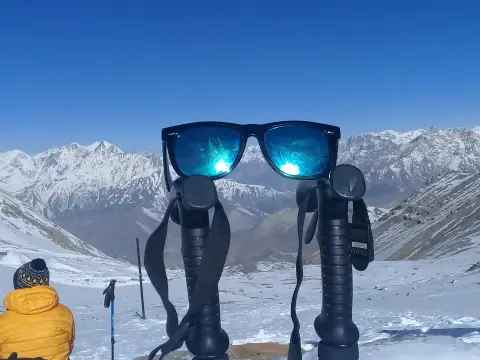
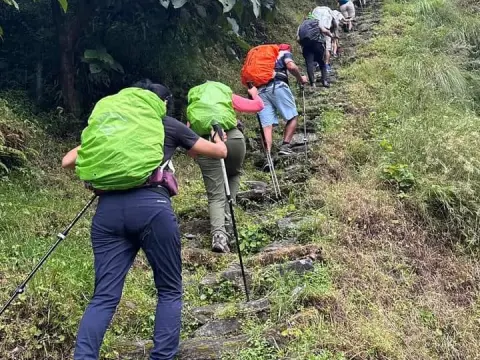
The Annapurna Region is Nepal's most diverse trekking destination, spanning subtropical jungles, terraced rice fields, high altitude desert, and panoramic viewpoints above 5,000m often within the same trek. Home to the world famous Annapurna Circuit and Annapurna Base Camp Trek, the region offers routes for every level of trekker, from a 3-day introduction to Poon Hill to a full 14-day circuit around the Annapurna massif.
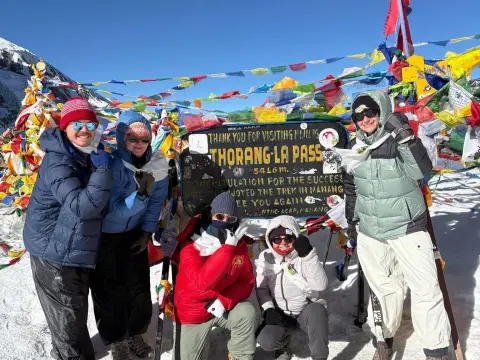
Most routes begin in or near Pokhara, Nepal's lakeside gateway city, before climbing through Gurung and Magar villages, rhododendron forests, and terraced farmland into the high mountains. Along the way, trekkers cross the legendary Thorong La Pass (5,416m), visit the sacred Muktinath Temple, and soak in natural hot springs at Tatopani all set against views of Annapurna I, Dhaulagiri, and the striking fishtail summit of Machhapuchhre.
What sets this region apart from other Himalayan trekking destinations is the sheer range of landscape and difficulty packed into one area. Trekkers with only a few days can still reach a genuine Himalayan viewpoint at Poon Hill; those with two weeks can complete the full Annapurna Circuit or extend it with the remote glacial lake at Tilicho. Well-developed teahouse infrastructure, shorter approach times than the Everest region, and Pokhara's easy access from Kathmandu make Annapurna one of the more flexible and accessible regions for trekkers planning a Nepal itinerary around limited time or budget. Best trekked in spring (March–May) or autumn (September–November), when skies are clearest and mountain views are at their best.
A quieter, off the beaten path alternative to the main Annapurna trails, climbing to the Khopra Ridge for uninterrupted views of Dhaulagiri, Annapurna South, and Nilgiri without the crowds of the busier routes.
The classic short trek through rhododendron forests and Gurung villages to the sunrise viewpoint at Poon Hill (3,210m), taking in panoramic views of the Annapurna and Dhaulagiri ranges without pushing to extreme altitude.
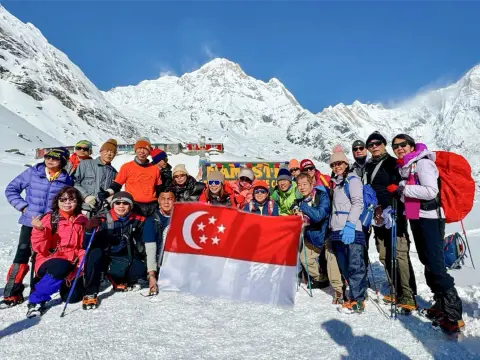
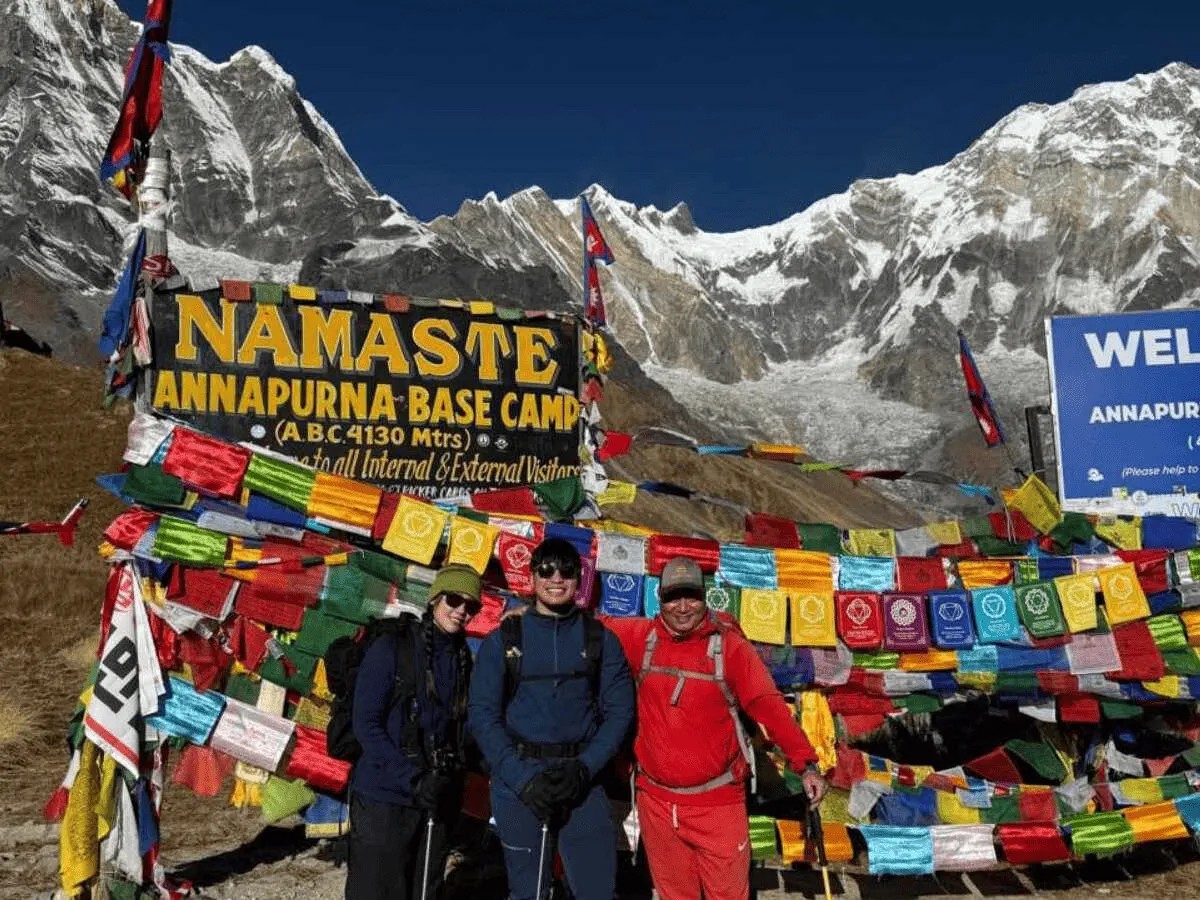
A journey into the heart of the Annapurna Sanctuary, a natural amphitheater ringed by 7,000m and 8,000m peaks. This well paced 13 day itinerary balances a gradual, well acclimatized ascent with some of the most dramatic mountain scenery in Nepal.
A less-crowded ridge trek to Mardi Himal Base Camp (4,500m), offering close up views of Machhapuchhre (Fishtail) along a narrow, scenic trail that sees far fewer trekkers than the main Annapurna Base Camp route.
A version of the classic Base Camp trek routed through Ghandruk, one of the region's largest and most well preserved Gurung villages, adding extra cultural depth to the approach into the Annapurna Sanctuary.
The most time-efficient way to experience the Annapurna foothills, reaching the Poon Hill viewpoint and back in just three days ideal for trekkers with a tight schedule who still want a genuine Himalayan sunrise.
The complete classic circuit around the Annapurna massif, crossing the dramatic Thorong La Pass (5,416m) and descending through the high desert landscape of Mustang to the sacred Muktinath Temple widely regarded as one of the world's great long-distance treks.
A condensed route into the Annapurna Sanctuary for trekkers short on time, reaching Base Camp and its surrounding amphitheater of peaks in just five days without sacrificing the core highlights of the full trek.
The full Annapurna Circuit with a detour to Tilicho Lake (4,919m), one of the highest lakes of its size in the world, added via a challenging landslide traverse for trekkers seeking the circuit's most remote and rewarding side trip.
A streamlined take on the classic circuit that uses vehicle transport on the lower sections to reach Thorong La Pass and Muktinath in just 8 days, for trekkers who want the circuit's highlights without the full multi-week commitment.
Combines two of the region's signature experiences in one trip the Poon Hill sunrise viewpoint and Annapurna Base Camp itself in a well paced 8-day itinerary that suits trekkers who want variety without a long schedule.
Annapurna earns its reputation as Nepal's most varied trekking region by packing an unusual range of landscape, culture, and difficulty into one area often within a single itinerary.
With eleven different itineraries in this region, the right choice usually comes down to how many days you have, how much altitude and physical challenge you want, and whether you're aiming for a specific landmark like Base Camp, Thorong La Pass, or Poon Hill.
| If you want… | Consider |
|---|---|
| The fastest possible taste of the Himalayas | Ghorepani Poon Hill Trek 3 Day (3 days) |
| The classic Poon Hill sunrise experience at a relaxed pace | Ghorepani Poon Hill Trek (6 days) |
| Annapurna Base Camp without the full time commitment | Short Annapurna Base Camp Trek (5 days) |
| Base Camp plus the Poon Hill viewpoint in one trip | Short ABC Trek with Poon Hill (8 days) |
| The full classic journey into the Annapurna Sanctuary | Annapurna Base Camp Trek (13 days) or Ghandruk Annapurna Base Camp Trek (11 days) |
| A quieter ridge trek with close-up Machhapuchhre views | Mardi Himal Trek (11 days) |
| An off-the-beaten-path alternative away from the crowds | Khopra Danda Trek (14 days) |
| The complete circuit around the Annapurna massif | Annapurna Circuit Trek (14 days) or Shortest Annapurna Circuit Trek (8 days) |
| The circuit's most remote and demanding side trip | Annapurna Circuit and Tilicho Lake Trek (14 days) |
Spring (March–May) brings mild temperatures, blooming rhododendron forests at lower elevations, and generally stable weather one of the two peak trekking seasons in the region.
Autumn (September–November) is Annapurna's most popular season, with the clearest skies and most reliable mountain views of the year, particularly through October.
Winter (December–February) works well for shorter, lower elevation routes like Poon Hill or Khopra Danda, but higher routes such as the full Circuit and Thorong La Pass become more difficult due to snow and cold, and some passes may close.
Monsoon (June–August) brings heavy rain and frequently obscured views to most of the region, though the rain shadow area beyond Manang on the Circuit stays comparatively dry.
All treks in this region require the following permit:
As with other conservation areas in Nepal, foreign trekkers are required to trek with a licensed guide in the Annapurna Conservation Area. Your permit is typically arranged by your trekking agency and checked at entry points along the trail.