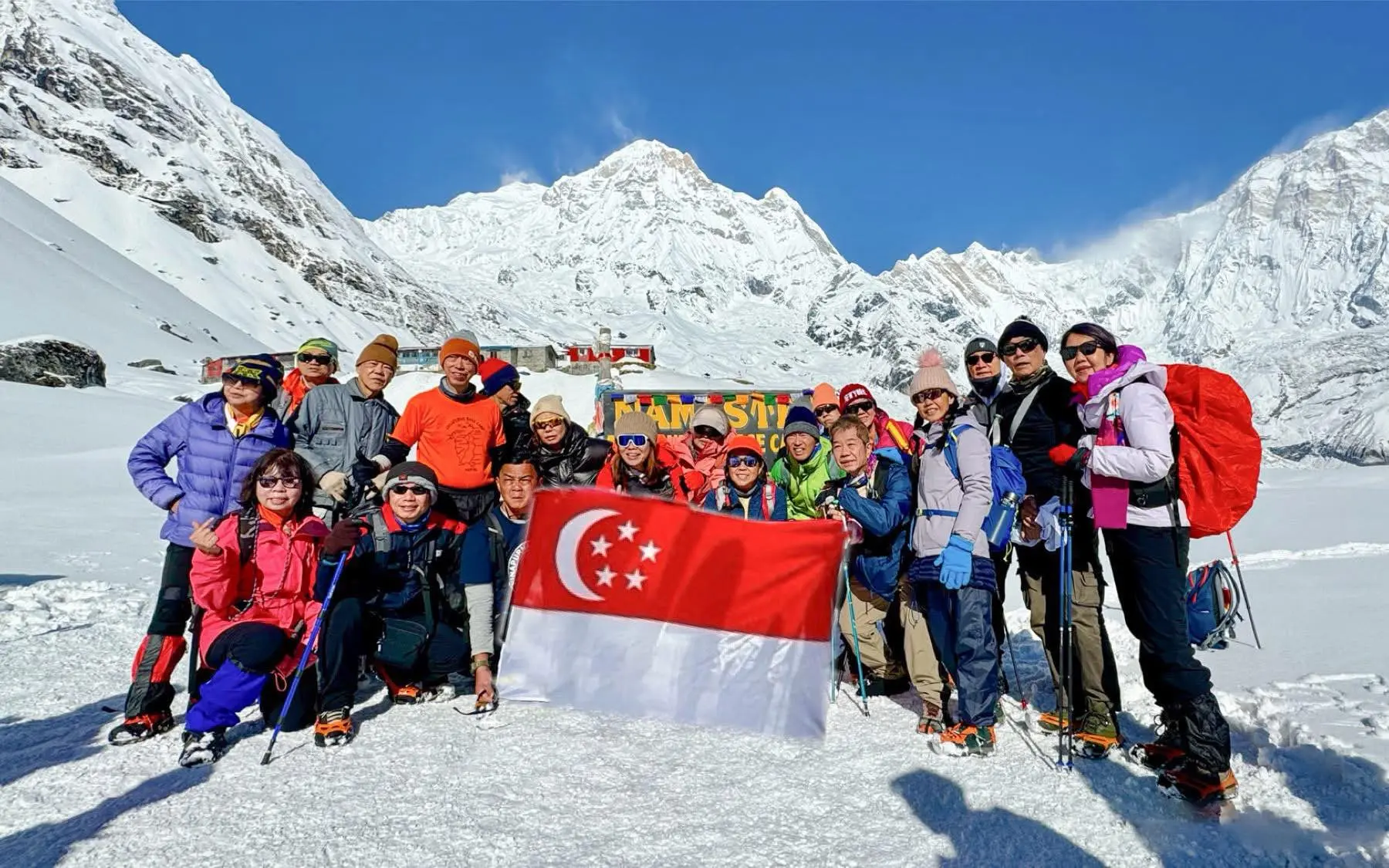
We begin the Short ABC Trek with Poonhill, where the Annapurna massif pierces Nepal's skyline. This trek crosses the Annapurna Conservation Area, spanning 7,629 square kilometers of rugged terrain. Over 100,000 people call this region home, living at densities of just 33 persons per square kilometer. Gurung and Magar communities form the cultural backbone here, their traditions shaping every village we pass. You'll walk paths used for centuries by porters carrying salt and grain between Tibet and lowland markets.
The conservation area protects elevations from 790 meters up to Annapurna South's 7,219-meter summit. Our eight-day route covers 4,130 meters at Base Camp down to Pokhara's lakeside at 800 meters. Stone steps number over 3,200 between Nayapul and Ulleri alone. Gurung villages like Chhomrong maintain ancient rice-pounding rituals you'll witness at dawn. Women in traditional gunyu cholo dresses greet you with chiya tea in family-run lodges.
Jhinudanda's hot springs tell a story locals still believe. They say serpent gods created these 30°C waters centuries ago to heal after celestial battles. The day you reach there, you'll soak tired muscles where generations of Gurung elders sought relief. The region hosts well over 100,000 international trekkers annually, yet retains its soul through community-managed teahouses. Like most international visitors, we avoid the monsoon season when landslides block trails. October and November offer clearest skies for Poonhill's sunrise spectacle. Your journey supports local economies, tens of thousands of residents depend on sustainable tourism across ten ethnic groups. Pack layers for temperature swings from 25°C valleys to near-freezing Base Camp nights.
This Short ABC Trek with Poonhill differs from Everest routes through its cultural immersion. You sleep in stone teahouses where many stories have been played out and shared. Rhododendron forests bloom crimson each spring between 1,500 to 3,500 meters. The French first summited Annapurna I in 1950, but locals knew these peaks as sacred long before. The rough Himalayan terrain is unforgiving, practical details matter here. Carry cash beyond Pokhara, ATMs end at Nayapul. Teahouse menus feature dal bhat, garlic soup, stir fried veggies, local flatbread, momo, and fried potatoes. We monitor oxygen levels routinely; altitude sickness affects a small portion of trekkers above 3,000 meters.
Your journey honors a living landscape. Gurung communities maintain traditions while guiding modern trekkers. You'll cross log bridges and stone trails that have endured centuries of use. This path connects you to Nepal's heartbeat, not just one of its highest peaks. We walk where culture and wilderness meet. You carry this experience long after leaving the mountains. For an unforgettable experience, we arrange permits before you arrive. ACAP paperwork is completed within 24 hours of your Pokhara arrival. Our certified guides carry first aid kits and portable oxygen canisters, not medical guarantees but critical tools for early altitude checks. They speak English fluently and know every landslide-prone section from monsoon experience.
Porters follow fair labor standards. We limit loads to 25 kilograms per porter and pay above industry rates. You meet them directly at orientation, they’re not faceless workers but trained team members who balance heavy loads on their heads daily. We adjust schedules when landslides block trails like when it happens sometimes at Chhomrong. Teahouse bookings do not happen nightly during the Short ABC Trek with Poonhill, we arrange everything before hitting the trails. No tent camping, just clean rooms with solar-charged USB ports. Meals feature locally sourced dal bhat, different types of soup, stew, and more; we vet kitchens for hygiene but won’t promise gourmet dining at 4,000 meters.
Transport logistics stay tight. Morning jeeps from Pokhara reach Nayapul by 7 AM. Return vehicles wait at Siwai regardless of your trek speed. We carry cash for payments at remote establishments beyond Nayapul but remind you to bring extra Nepali rupees. Real talk: we can’t prevent altitude headaches or monsoon mudslides. But our guides spot early symptoms you might ignore. They know which teahouses have working stoves during cold snaps. They translate Gurung elders’ stories at Jhinudanda’s springs, not as tour guides but as cultural bridges. This isn’t luxury. It’s competent support so you focus on putting one boot in front of the other while the mountains do their work.
We drive from Pokhara to Nayapul early morning. The road ends at Nayapul, our Short ABC Trek with Poonhill start point at 1,010 meters. You shoulder your light pack while our porters handle the heavy luggage. The trail begins gently through terraced fields. Stone steps soon dominate. You climb steadily alongside the Modi River. The path winds past Magar villages where children wave hello. We pass through Birethanti, a busy market town. Experienced guides recommend resting every hour for about 10 minutes. Drink water constantly at this elevation gain. Stone steps number over 3,200 leading into Ulleri. Over the years, only one monsoon landslide has forced us to reroute this section. Teahouses welcome weary trekkers in Ulleri's stone village at 2,070 meters. You feel the altitude but gain strength daily. Sunset paints the Annapurna foothills deep orange. Dinner is dal bhat served hot. Sleep comes quickly after today's 5-6 hour effort.
The first hour follows jeep tracks. Then rugged paths test your balance. Monsoon mud makes sections slippery. We might meet porters carrying steel boxes on their backs. Their straps dig deep into their foreheads. Seeing such scenes, we can't help but respect their endurance. Morning fog burns off by 9 AM. Carry rain gear even in dry season. After three hours, you reach Hile village. There, we get to refuel with sweet chiya tea. Steep staircases dominate the final ascent. Ulleri's elevation gain totals 980 meters. Your knees ache but views motivate you. Rhododendron forests appear tomorrow. Tonight's teahouse has solar-charged outlets and lights. Charge devices early; power might fail by 10 PM. Guides check oxygen levels routinely.
Teahouse beds need extra blankets when it gets below zero. Bring cash for snacks; ATMs end at Nayapul. The 12 kilometer distance feels longer with every step. Listen for prayer wheels spinning in village squares. Avoid focusing on foot placement too often, the trail is not that difficult today. Instead, focus on the views and your surroundings. We adjust pace for slower group members daily. Last winter, snow covered these trails early. We have to start hikes before 8 AM to beat afternoon heat. Ulleri's altitude prepares you for higher climbs. Tomorrow brings steeper climbs to Ghorepani. Rest while you can. Your body needs recovery time now. Drink ginger tea for digestion. Now the real journey begins.


On the 2nd day of the Short ABC Trek with Poonhill, we leave Ulleri before sunrise. Cold air bites your cheeks. The trail climbs immediately through dense rhododendron forests. Dew soaks your boots within minutes. Legs burn with each upward push. Monsoon rains sometimes washes out a section near Banthanti. Bamboo thickets line the path as elevation increases. Listen for Himalayan monals calling in the mist. Your breath comes faster above 2,500 meters above sea level. Carry extra water; streams grow scarce as we head further into the mountains.
The trail flattens near Nangethanti village. Rest here for sweet milky tea. Once again you might see porters balancing huge loads without breaking stride. Their quiet endurance shames our tired complaints. Last season one of the local porters was seen carrying a 40 kg load up and down the route to a nearby village. Now the path narrows along a steep ridge. Exposed sections demand full attention. One misstep risks a long slide. We move a single file here. Today’s 5.5-kilometer trek sounds like a short distance but will be tiring nonetheless.
Ghorepani’s stone houses appear abruptly. The village clings to a ridge at 2,875 meters. Wind whips through narrow alleys between lodges. You feel the altitude in your chest. Sunset views stretch across Dhaulagiri’s snowfields. We check everyone’s oxygen saturation levels tonight. Acclimatization is non-negotiable. Dinner smells of energizing dal bhat, veggies, soup, and fried potatoes. Teahouse stoves fight the evening chill.
Pack gloves even in summer. Nights freeze above 2,800 meters. The final ascent feels relentless but manageable. Stone steps give way to packed earth near the top. Avoid looking down on the ridge sections; focus on the boot ahead. We adjust rest stops for slower members this morning. Carry snacks in accessible pockets; hunger strikes fast at altitude, especially when you are highly physically active. Ghorepani’s location is strategic. You’ll wake before dawn for Poonhill’s sunrise. Sleep early despite the thin air. Your body needs recovery for the big climb.
The next day on the Short ABC Trek with Poonhill, we leave Ghorepani by 4 AM under headlamp beams. Cold metal bites your fingers. The Poonhill climb begins immediately, a couple hundred meters from last night's accommodation. Your thighs burn with each upward push. Mist clings to rhododendron branches like wet wool. We move slowly; oxygen thins at 2,875 meters. One of our previous group cleared this climb in just 30 minutes, one of the fastest climbs this route has seen. Poonhill summit hits 3,210 meters above sea level. You do not have to fight for space among other trekkers, the trails are wide enough. Dhaulagiri’s snowfields glow pink as the sun breaches the horizon. Annapurna South stands sharp against the sky. Cameras click frantically but no photo captures the cold air filling your lungs. We wait ten minutes for the full spectacle. One sunrise makes every pre-dawn struggle worthwhile.
The descent to Tadapani starts brutally. Steep stone stairs pound your knees. Trekking poles become essential; adjust them shorter for downhill. Our breakfast at Ghorepani after the sunrise views energize us for this part of the Short ABC Trek with Poonhill. Avoid stepping on exposed roots; they might be slippery and can twist ankles fast. Rhododendron tunnels give way to open ridges. Midday sun bakes the trail near Deurali. Sweat stings your eyes despite the altitude. We refill water bottles from a local tap; filter it first with tablets. Yesterday’s climb up to Ghorepani was tiring, but the trek down to Tadapani is not going to be as easy as it sounds. Now Himalchuli dominates the western view. Your pack straps dig into shoulders; shift weight every hour. Stone steps fade into dirt paths as elevation drops.
Tadapani’s tea houses stay close to one another on a ridge at 2,650 meters. Wind whips through clothes still damp from sweat. Sunset reveals Annapurna South’s ice fields glowing orange. We check everyone’s hydration; dry lips mean immediate water intake. Dinner features nutritious flat bread with locally grown vegetable stew. The descent covered 560 meters vertically over 11 kilometers. Focus on foot placement during switchbacks; loose stones slide fast. Carry electrolyte tablets; dehydration hides at altitude. Tadapani’s location offers clearer skies than Ghorepani. Sleep with socks on; the wooden floors radiate cold.
We start the 4th day of the Short ABC Trek with Poonhill after breakfast as mist lifts from Tadapani’s ridge. The trail plunges immediately into rhododendron forests. Your knees absorb 1,000 meters of cumulative descent today. Stone steps slick with dew demand full attention. One wrong step risks a slide down the steep slope. Last fall, this portion of the trek was one of the most scenic parts of the entire trek. Chhomrong village appears suddenly at 2,170 meters. Stone houses group up close to one another to stay warm. You navigate narrow alleys between prayer flags. Stop for salted tea at a family-run stall. Avoid the steep shortcut locals use; it’s unstable for people that are not used to it. The famous Chhomrong staircase descends 2,800 stone steps through terraced fields. Your quads burn with each downward impact.
The trail narrows along Chhomrong Khola river. Bamboo thickets block afternoon sun. Water rushes over boulders from glacial melt. We cross old and worn log bridges. Sometimes, groups have to wait for a safe crossing during high flow, which might happen in monsoon season. Elevation drops to 2,000 meters here; the warmest spot yet, today. Sweat soaks your base layer despite the shade. Sinuwa emerges through pine forests at 2,340 meters above sea level. Wooden teahouses sit above the river valley. Wind carries the smell of woodsmoke and frying meat. However, we recommend trekkers to stay away from meat consumption throughout the Short ABC Trek with Poonhill. The dipping sunlight reveals Annapurna’s southern face through clearing clouds. We check everyone’s knee condition; descents cause more injuries than climbs. Dinner features thick potato soup to replenish salts.
The descent covered 11 kilometers with constant elevation changes. We might extend rest stops today if we notice fatigue. Sinuwa’s location offers flatter sleeping platforms. Sleep with earplugs; the river’s roar keeps many awake. This valley walk builds downhill resilience. Tomorrow’s climb prepares you for base camp. Rest while the river sings its constant song.
We leave Sinuwa as dawn breaks over the river valley, starting the 5th day of the Short ABC Trek with Poonhill. The trail climbs steadily through dense bamboo forests. Sunlight filters weakly through thick canopies. Your boots sink into damp earth with each step. Roots snake across the path; watch your footing. The previous monsoon washed out a part of the trail near Bamboo village; we rerouted through a narrow ravine. Porters hauling construction materials squeeze past on rocky ledges. Their steady pace humbles our labored breathing.
The ascent intensifies after Bamboo village. Stone steps reappear as elevation gain pushes you toward 3,230 meters. Trekking poles become essential; adjust them longer for uphill. Sweat slides down from the forehead to your eyes despite the cool air. We cross the Chhomrong Khola river twice on log bridges. Test each foot placement; wet wood slips fast. High flow is not an issue while crossing bridges in these parts of the Short ABC Trek with Poonhill. Rhododendron blooms line the trail in spring; today only green leaves shield us.
Deurali’s teahouses cluster on a high ridge. Wind whips through clothes still damp from exhaustion. The latter hours of the day reveal Annapurna South’s jagged ridge cutting the sky. We check everyone’s oxygen levels immediately; 890 meters gained demands caution. Dinner features thick lentil stew to rebuild energy. Sleep comes fitfully; the altitude makes breathing shallow.
Pack microspikes for icy patches near river crossings, not mandatory but might be useful. Today’s climb covers 9.8 kilometers with relentless elevation gain. Focus on breathing rhythm during steep sections; gasping wastes energy. Carry electrolyte solutions if you are into it; sweat loss depletes salts faster than you realize. Deurali’s location sits above the tree line; so expect colder nights. Tomorrow’s push to ABC demands mental toughness. Rest while the stars dominate the clear sky.
The bamboo forest feels endless but very doable with the help of guides and porters. Loose stones on switchbacks tested balance repeatedly. Avoid stepping on moss-covered rocks; they shift dangerously. Carry trail mix in accessible pockets; energy crashes hit without warning. Deurali’s elevation gain is deceptive; steady but unrelenting. Your legs need recovery time tonight. Drink ginger tea to settle digestion. Set alarms for 5:30 AM; dawn starts early at 3,230 meters.
We depart Deurali as the first light hits Annapurna South’s icy face. No gradual warm-up on the 6th day of the Short ABC Trek with Poonhill; the trail plunges straight into moraine terrain. Loose stones shift underfoot with every step. Your boots sink into glacial silt near Machhapuchhre Base Camp. The valley narrows as we move up and away from Deurali. The last snowfall can leave patches of ice on exposed rocks; we test each foothold before committing. Porters hauling oxygen tanks pass with quiet urgency; their loads critical for emergencies above 4,000 meters.
The path follows glacial streams fed by Annapurna’s ice fields. Water flows turquoise from mineral deposits. We stop at a small tea house for black tea; its bitter warmth cuts the thin air. Elevation gain feels very real today unlike the deceptive one yesterday. Only 900 meters, but every step demands focus. Your breathing syncs with the crunch of gravel under boots. Rhododendron bushes vanish, replaced by hardy juniper clinging to rocky slopes.
Annapurna Sanctuary opens suddenly. Snow peaks circle you like a fortress. ABC’s stone shelter appears ahead, flags snapping in the wind. The final kilometer crosses a rocky moraine. Trekking poles sink deep into unstable ground. The last time we were here, the views were simply unforgettable. Pray that your time at the summit is not accompanied by clouds or snow storm. Your legs shake from sustained effort; 10.5 kilometers of relentless terrain. The air bites exposed skin at 4,130 meters. No trees shelter you here.
ABC’s stone hut stands small against the giants. Annapurna I’s south face looms 2,000 meters above. Touch the ice wall; its cold seeps through gloves instantly. We gather for photos, but conversation stays minimal. Oxygen levels drop fast; conserve breath. After some time spent enjoying the hard-earned views, we will head to our accommodation for the night. Dinner might be silent; thick barley soup eaten quickly before retreating to sleeping bags. This is the highest sleeping point on the Short ABC Trek with Poonhill.
Pack windproof layers even in May. Temperatures swing from 5°C to -5°C daily. The moraine terrain requires constant ankle adjustment; loose stones roll unpredictably. ABC’s location offers zero shelter from wind; sleep with balaclavas on. We check pulse oximeters periodically. Report tingling fingers immediately; it precedes frostbite. This sanctuary demands respect, not reverence. You earned this view through a steady rhythm. Tomorrow’s descent tests endurance differently. Rest while the stars burn bright overhead.
The valley’s narrowing feels like entering a cathedral carved by glaciers. Avoid stepping on ice patches between rocks. Carry extra socks; wet feet freeze within minutes here. The final approach revealed ABC’s true scale; tiny humans against the peaks. Your body needs deep recovery tonight. Drink warm lemon water before sleep.
The next day on the Short ABC Trek with Poonhill, we leave ABC as the morning sun hits Annapurna South's ice wall. No lingering today; the descent begins immediately through glacial moraine. Loose stones shift under every step. Your knees absorb 1,790 meters of elevation loss. Trekking poles lock short for downhill control. Last snowfall might leave icy patches on north-facing slopes. Porters hauling empty oxygen tanks descend with surprising speed; their loads lighter but balance still critical.
The trail follows the Modi Khola river valley. Water cuts through ancient rock formations. Bamboo forests reappear below 3,000 meters. Sunlight filters through dense canopies. Sweat soaks your base layer despite cool air. We stop at Dovan for black tea; the sweet warmth cuts fatigue. Near Bamboo village, our guide shares Sinuwa's naming story. Locals confirm the village was nearly abandoned decades ago. The name comes from "Sino," meaning dead or empty land in Nepali. When families returned to rebuild, they kept the old name as a reminder of resilience. This naming practice connects them to customary Gurung settlements across the region. We pass stone houses where women pound rice in wooden mortars. Their rhythm echoes through terraced hillsides.
The naming story first surfaced when we rested near a prayer wheel. Gurung porters nod knowingly as our guide explains the story. Last monsoon did not affect this area much, as it is well forested. This village remembers its past while welcoming the present. You earned this riverside rest. Tomorrow brings roads but not routine.
Today is the last day on the Short ABC Trek with Poonhill itinerary. We leave Sinuwa as mist lifts from the river valley. The trail drops sharply through pine forests. Your knees go through 590 meters of descent; an easier trail compared to yesterday. Loose stones roll under tired boots. Trekking poles click rhythmically on packed earth. The previous rainy season landslides forced us to reroute near Chhomrong; we now take a wider riverbank path. Jhinudanda can be seen at 1,150 meters. The village name means "hot water ridge" in Nepali.
Locals tell how a serpent god (Naga) created the springs centuries ago. After a battle between mountain deities, wounded gods soaked here to heal. The hot springs still bubble at 30°C today; geothermal water rising through fine sandy river beaches. Gurung elders used them for arthritis relief before modern medicine arrived. We stop for 20 minutes; dip your sore feet in the stone pools. You can modify the Short ABC Trek with Poonhill to stay an extra night at this charming village.
The final trek to Siwai crosses terraced rice fields. Sunlight bakes the mud paths. Sweat soaks your neck despite the cool windy morning. We pass women pounding spice in wooden mortars; their rhythm unchanged for generations. Siwai’s bus stop sits at 1750 meters. Dust coats your throat as the jeep arrives. The drive to Pokhara begins immediately. Narrow roads wind along river gorges. Your body jolts with every pothole on the 3-hour ride. Pack motion sickness pills; the switchbacks test even seasoned travelers.
Carry cash for road snacks; ATMs can only be seen at Nayapul. The descent covers 14 kilometers with relentless elevation changes. Keep water bottles accessible; dehydration worsens motion sickness. Pokhara’s lakeside hotels feel surreal after mountain silence. Sleep comes like never before in the soft beds of Pokhara’s hotels; the road’s vibration lingers in your bones.
Jhinudanda’s legend surfaced when an elder shared tea with us last spring. She traced the Naga’s path in the steam rising from the springs. Carry waterproof bags for your gear; jeep seats leak during storms. Siwai’s elevation drop feels like returning to another planet. Your body needs rehydration now; drink electrolytes before dinner. Test your phone signal early; Pokhara’s network connectivity is unmissable. We monitor for headaches from rapid descent. Report nausea immediately; it signals altitude adjustment issues. This road journey completes the mountain’s lesson. You carried yourself through thin air and deep valleys. The valley rewards endurance with every turn. Rest while the city lights blur past the window.
The hot springs’ steam carried the scent of sulfur and pine. The thermal hotsprings are not as busy as you think, but it can get crowded at times. Avoid leaning against jeep doors; they rattle loose on rough patches. We prioritized seat assignments for those with knee pain. Carry wet wipes; dust sticks to sweat during the drive. Pokhara’s streets feel crowded after mountain solitude. Your mind needs quiet time tonight. Eat light meals; the stomach rebels after days of dal bhat. This journey ends where it began but leaves you changed. You walked where mountain people live and where centuries of stories have occurred. The road returns you home, but the mountains stay with you.


We meet you at Pokhara’s lakeside early morning. Your Short ABC Trek with Poonhill begins with a 1.5-hour drive through terraced hillsides to Nayapul trailhead. Last June, we rerouted this drive when landslides blocked the original path. Watch farmers work narrow plots by hand and children wave from roadside schools. Porters weigh your bags, strictly 12.5 kilograms per person, while you shoulder your daypack. We've learned to spot tired legs before trekkers even complain. The trail climbs immediately through Magar villages past Birethanti’s market town.
Stone steps lead alongside the Modi River through rhododendron forests. Guides check breathing patterns at rest stops, watching for early fatigue signs. Last winter a snowstorm killed power early, we now carry backup batteries for essentials like a satellite phone. Ulleri’s stone village greets you at 2,070 meters with sunset views over Annapurna foothills. Eat your first dal bhat meal as we explain tomorrow’s route over garlic soup. Solar power cuts at around 10 PM, so charge devices immediately. Earlier this year, one of our trekkers ignored symptoms; we turned back immediately when the symptoms worsened and couldn't be hidden anymore. Report headaches before sleep. Trust the process, one step at a time.
The Short ABC Trek with Poonhill demands consistent daily effort across varied terrain. You face 5-7 hours of walking daily with relentless elevation changes. Stone steps dominate early days, Ulleri’s climb alone tests leg muscles with 3,200 steps. Our porters climb these same steps with every group we work with, carrying 25-kilogram loads. River crossings require balance on log bridges with no railings. Monsoon rains make trails slick with mud; winter brings icy patches on exposed ridges.
The Poonhill pre-dawn climb challenges endurance at 2,875 meters. We start this climb at 4 AM to beat the crowds and catch clear skies. ABC’s final approach crosses unstable glacial moraine where loose stones shift underfoot. Descents punish knees, Chhomrong’s 2,800 steps test how well you trained your legs for the Short ABC Trek with Poonhill. Your body adapts step by step. Beginners often surprise us with their resilience when they trust the process. We monitor fatigue closely, extending rest stops when needed. Porters carrying 25-kilogram loads move faster than most trekkers, their rhythm humbles us daily. Our best porters can finish the trek a whole day early, but we don't want you to try such stunts.
October and November deliver clearest skies for mountain views. Temperatures stay mild during days with cool nights, perfect for steady trekking. October's dry air gave us 20 clear views out of 30 days last year. Rhododendron forests bloom crimson each April and May, painting trails red below 3,500 meters. These spring months offer warmer days but occasional rain showers. Cold nights test gear but clear skies reveal sharp peak outlines. Winter requires thermal layers; nights freeze at Base Camp. Personally, our guides recommend not doing the Short ABC Trek with Poonhill in winter or monsoon. As your trek partner, we also recommend trekkers to avoid the monsoon season from June to September. Heavy rains trigger landslides that block trails like the recent Chhomrong washout. Leeches swarm forest paths during wet months. Shoulder seasons, March and September, balance crowd levels and weather. Monsoon taught us to check forecasts hourly, not daily.
Yes, beginners complete the Short ABC Trek with Poonhill yearly with proper preparation. We design the itinerary for gradual acclimatization, no sudden jumps above 3,000 meters. Daily walks last 5-7 hours, matching moderate fitness levels. Last month a first-time trekker completed this with only stair and endurance training in her apartment. Stone steps feel tough initially but become rhythmic with practice. Guides adjust pace for slower members, stopping hourly for water and breath checks. Key preparation includes stair training and daily 5-kilometer walks before arrival. We've seen beginners fail when they skip this basic prep. Listen to your body; report headaches immediately. Altitude affects everyone differently, we monitor oxygen levels above 2,800 meters. Porters carry your main bag; daypacks stay light under 5 kilograms. One beginner overloaded his pack with gadgets; we redistributed the weight. Your mindset matters more than fitness, show up ready to adapt.
Altitude sickness affects many trekkers above 2,800 meters. Symptoms include headaches, nausea, and fatigue, never ignore them. We monitor oxygen levels daily with portable testers above 3,000 meters. Last season our tester caught low oxygen in 5 trekkers before symptoms appeared. Our Short ABC Trek with Poonhill guides recognize early signs like labored breathing or dizziness during rest stops. Acclimatization happens through gradual ascent, no skipping elevation steps. Drink 3 liters of water daily; dehydration worsens symptoms. Garlic soup at dinner helps oxygenate blood, eat it without skipping. Guides eat the same soup, we've seen its effect over years. We enforce rest days at critical points like Ghorepani. Never climb higher if symptoms appear, descend immediately. We turned back two trekkers last month at Deurali; they thanked us later. Your safety outweighs summit goals, we'd rather you return healthy.
Teahouses provide basic but clean accommodation throughout the Short ABC Trek with Poonhill. Stone or wood buildings house dormitory rooms with shared toilets. This past monsoon a teahouse lost power for three days, luckily, we stay away from unreliable accommodation. Mattresses have blankets, bring a sleeping bag liner for hygiene and subzero temperature. We do not carry spares for trekkers who forget this essential item. Solar power runs limited hours; charge devices before 10 PM daily. Hot water for showers costs extra, 50-100 rupees per bucket. Meals feature dal bhat (lentil soup, rice, vegetables) cooked with local ingredients. Avoid raw vegetables above 3,000 meters; stick to cooked food. One trekker got sick eating salad at Ghorepani, we now warn everyone twice. Drink only treated water; filtered or boiled water prevents illness. Carry electrolyte tablets; sweat loss depletes salts saturation fast. Teahouses sell snacks like chocolate bars and biscuits, stock up at Nayapul. Most of our trekkers stock up on granola bars after we tell them to stock up; we ration the energy bars in case we have to.
We arrange all transport from Pokhara to trailheads. A 1.5-hour drive takes you from Pokhara to Nayapul where roads end. Vehicles handle narrow mountain roads with experienced local drivers. Our driver has over a decade of experience on this route, he knows every turn. Return transport waits at Siwai regardless of your Short ABC Trek with Poonhill speed. Jeeps navigate potholed roads back to Pokhara, carry motion sickness pills. Although uncommon, we have had trekkers suffer from motion sickness during this short ride. So, make sure that you have a pill to counter the effects if you have a weak stomach. We confirm vehicle availability daily; landslides sometimes delay returns. Porters carry your main luggage between teahouses, 12.5 kilograms max per person. We've seen porters carry broken trekkers down when needed. River crossings use log bridges; no vehicles access higher trails. Our driver once navigated blind curves during a fog so thick we couldn't see the wheels.
Just one permit covers the Short ABC Trek with Poonhill: ACAP permit. We handle all paperwork after you arrive in Pokhara. Bring two passport photos and passport copies for processing. We have had a handful of trekkers that forgot to send us the necessary docs, it delayed their trek by a day. Permits cost around 3,000 rupees total. This expense is a part of the trek package. Guides carry permit copies; show yours at checkpoints like Chhomrong. Never trek without permits, fines apply for missing documentation. We've paid fines for lost permits before, now we double-check everyone's papers. Checkpoints verify your route matches the itinerary daily. Checkpoints might question a detour in case there is no blockage of the standard route. Permits expire if you miss scheduled checkpoints, but since our Short ABC Trek with Poonhill is not a long one, you do not have to worry about such things. Keep permits dry in ziplock bags throughout the trek. We have had permits soaked by rain and sweat; luckily, we carried a digital copy on our phone.
Train with stair climbing and daily 5-kilometer walks before arrival. Strengthen quads for relentless descents like Chhomrong’s 2,800 steps. One trekker skipped this prep; his knees gave out on day three. Break in waterproof boots on rocky trails, never wear new shoes. In 2024, a blister stopped one of our trekkers, we now recommend every trekker to check footwear at orientation. Pack layers for temperature wildly transitioning from 25°C valleys to freezing peaks. We've seen trekkers freeze at Base Camp wearing only cotton shirts. Include trekking poles, they save knees during long descents and ascents. Practice using water filters; stream refills happen daily. Build cardiovascular endurance through brisk walking three times weekly. Avoid overtraining before the Short ABC Trek with Poonhill, fresh legs matter most. Learn Nepali greetings; locals appreciate the effort. Saying "Namaste" might get you free chiya from the locals or at least a short and sweet convo.
Budget 35,000-45,000 rupees for the eight-day trek excluding flights. This covers permits, extra teahouse stays, and meals beyond the ones included in the package. Budget 800-1,000 rupees daily for snacks, hot showers, and bottled water. Last spring prices rose 5% at higher lodges, so we warned trekkers early. Porter fees cost 2,000 rupees daily which is covered by the trek package, tip them separately at journey's end. Most of our trekkers are content with the services of the porters and guides, the whole crew receive a total of 5 to 10% of the total trek price. Budget 500 rupees for SIM cards with unlimited data that will last you a whole week. However, this data will not connect once we reach the remote areas of the Annapurna region.
Emergency funds cover unexpected reroutes or medical needs, carry 10,000 rupees cash. ATMs end once we leave the starting point of Nayapul, which is why we recommend every trekker to withdraw rupees in Pokhara. We have even had ATMs fail in Nayapul; we kept emergency cash for the group. Teahouse meals cost 500-700 rupees per meal, dal bhat remains cheapest, covered by the Short ABC Trek with Poonhill. Avoid credit cards; cash rules beyond Pokhara. Budget 1,500 rupees for the entire trek for hot showers at key stops.
Solar power charges devices throughout the day, but most of the tea houses turn off the power supply at 10 PM to save precious energy reserves. Prioritize phones and headlamps; you will be using them the most out of all the other electronics. Our guides even hold spare batteries to make sure that trekkers do not have to walk with dead headlamps. Carry portable power banks, they recharge during limited solar hours. Internet access stays spotty; NTC SIM cards work best below 3,000 meters. One trekker tried streaming at Ghorepani; as you might have guessed, it did not go according to his plan. Data speeds drop above Birethanti; expect no signal at Base Camp. Budget 500 rupees for local SIM cards in Pokhara. We've seen trekkers pay triple at trailhead shops for forgotten SIMs. Avoid streaming excessively; conserve data for emergencies. Guides carry satellite phones for real crises. Teahouses sell phone charging for 100-200 rupees per device. Last spring a teahouse charged 300 rupees; we negotiated fair prices for the group.
Carry 10,000 rupees cash for expenses beyond the base cost. Tip guides 1,000 rupees daily and porters 700 rupees daily, split this at journey's end. One trekker forgot tips, but he was reminded of it after one of the fellow trekkers gave this part. Tips are not mandatory but highly appreciated by our crew members who work tirelessly to make the Short ABC Trek with Poonhill an amazing adventure. Budget 100 to 200 rupees per hot shower at lodges. Our guides have experienced price hikes in busy seasons, so be prepared with extra cash.
Buy bottled water where filters fail, 200 rupees per liter above 3,000 meters. Set aside 500 rupees for SIM cards and local calls. One trekker lost his phone; one of the fellow trekkers let him use his to contact his family. Allocate 300 rupees daily for snacks like chocolate bars and biscuits. Emergency funds cover unexpected transport changes, and seasonal delays that might happen in extreme weather conditions. Budget 2,000 rupees for porter luggage fees if you exceed 12.5 kilograms. Keep cash dry in ziplock bags, along with the permits. Avoid exchanging money at trailhead shops, their rates stay poor. Last month a shop charged 20% extra; we recommend carrying small bills for fair deals.
This eight-day itinerary covers Nayapul to Pokhara with proper acclimatization. Most of our groups complete the full route including Poonhill sunrise within this timeframe without rushing. Last spring our group finished precisely on schedule despite morning fog at Poonhill.
Yes, as one of the leading trek agencies, we accept solo travelers regularly. You join existing groups or form a private trek with your friends and families. Solo supplements apply only for single room accommodations in Pokhara hotels. We integrated 12 solo travelers successfully last season alone.
Groups of 4-8 people navigate narrow trails efficiently. Larger groups split into smaller units during Chhomrong staircase and river crossings for safer passage through tight sections.
The trek starts at Nayapul trailhead after Pokhara drive. It ends at Siwai where vehicles pick you up for the return journey to Pokhara lakeside.
Yes, all teahouses offer dal bhat and other vegetarian options. Non-vegetarian choices appear only in lower elevation villages like Sinuwa and Chhomrong. Most of our vegan trekkers have exclusively dal bhat variations without issue.
Hot showers cost 100 to 200 rupees per bucket at higher lodges. Jhinudanda charges 150 rupees during winter months when heating fuel costs increase significantly. Our trekkers have never paid more than 200 rupees at Ghorepani lodges.
Most teahouses sell boiled water for 50-100 rupees per liter. As per our experience, we recommend carrying water filters as backup since water quality varies between lodges along the route.
Teahouses offer momos, pasta, and pancakes for varied diets. Inform us in advance about allergies; we coordinate with lodges to prepare safe meals accordingly. Our Short ABC Trek with Poonhill guides take good care of food allergies.
Waterproof hiking boots with aggressive tread patterns work best during monsoon. Break them in before arrival as new boots cause blisters on the 3,200-step Ulleri climb. Our guides do not check the boots personally, you have to follow the standard guideline if you want comfort throughout the trek.
Pack three thermal layers for Base Camp nights. Temperatures drop near freezing even in October; base layer, mid-layer, and insulated jacket form essential protection against cold. In December of 2023, two trekkers skipped layers and shivered through Base Camp night.
Trekking poles decrease knee strain on Chhomrong's steep staircase. Most trekkers find better balance with poles. Last season, we timed descents and confirmed poles assisted progress by 20 minutes.
Porters carry a maximum 12.5 kilograms per trekker. This strict limit protects porters' health and complies with Nepal's ethical trekking guidelines. Personally, we recommend porters to avoid any extra weight at all, even with extra payments.
Our Short ABC Trek with Poonhill guides monitor breathing patterns and energy levels at rest stops. They watch for headaches, nausea, and unusual fatigue which often appear before severe symptoms develop.
Guides carry portable pulse oximeters to check oxygen saturation levels. These devices provide immediate readings helping us detect altitude issues before symptoms become severe. Over the years, our Short ABC Trek with Poonhill guides have successfully prevented many serious cases.
Guides carry satellite phones for emergencies beyond cellular range. We have used ours during a landslide, emergency evacuation, etc. when regular phones lost signal near Deurali ridge.
The drive takes 1.5 hours covering 40 kilometers to Nayapul. Our driver has been on this route for years.
Four-wheel drive jeeps handle the Siwai to Pokhara route reliably. These vehicles navigate potholes and narrow sections better than buses and simple cars during dusty and bumpy road conditions.
Jeeps have open windows for fresh air during winding drives. Carry motion sickness pills as seats lack headrests and the 3-hour journey includes numerous turns. Our porters and guides are used to this route, but we understand most trekkers are not.
ACAP permits cover this entire route including Poonhill. We process the documents before your Short ABC Trek with Poonhill starts to avoid checkpoint delays during your journey.
Carry 1,000 to 1,500 rupees daily for showers, snacks, and extras. ATMs end at Nayapul so withdraw sufficient Nepali rupees in Pokhara before starting your trek.
Yes, Poonhill access falls within the standard permit coverage. No additional fees apply for the pre-dawn climb to this popular sunrise viewpoint above Ghorepani village.
Cash only works at teahouses beyond Nayapul. ATMs disappear after trailhead so bring sufficient Nepali rupees; credit cards and mobile payments fail without reliable internet access. We've processed 200+ bookings this season without payment issues.
Our certified Short ABC Trek with Poonhill guides speak fluent English with first aid training. They explain trail hazards clearly and translate Gurung cultural insights during village interactions along the route.
One porter supports two trekkers carrying main luggage only. This ratio follows ethical trekking standards ensuring porters carry no more than 25 kilograms total weight.
Porters carry only main luggage between teahouses. You keep daypacks with water, rain gear, and essentials since porters move ahead to your next accommodation. Some trekkers pack heavy which ends up as extra luggage requiring additional payment.
Book 3-4 months ahead for October or November slots. These peak season months fill quickly as clear skies attract hundreds of thousands of annual trekkers to the Annapurna region.
A 50% deposit confirms your booking for the full trek. We process logistics immediately upon receiving this payment to secure your preferred start date.
Yes, we provide itemized receipts for all payments made. These documents cover permits, accommodations, and transport services included in your Short ABC Trek with Poonhill package cost.
October and November deliver the clearest mountain views. Our July group got zero views due to monsoon clouds.
Base Camp temperatures range from -5°C to 5°C in October. Nights freeze while daytime sun provides mild warmth during your essential acclimatization period at 4,130 meters above sea level.
Rhododendrons bloom crimson between March and May below 3,000 meters. Spring trekkers witness vibrant red flowers lining trails from Sinuwa to Ghorepani during this season. Our March group took 500+ photos of the blooms.

| No of people | Price per person |
|---|---|
| 1 - 1 | $1,450 |
| 2 - 3 | $1,300 |
| 4 - 6 | $1,250 |
| 7 - 10 | $1,200 |
| 1o - 16 | $1,175 |