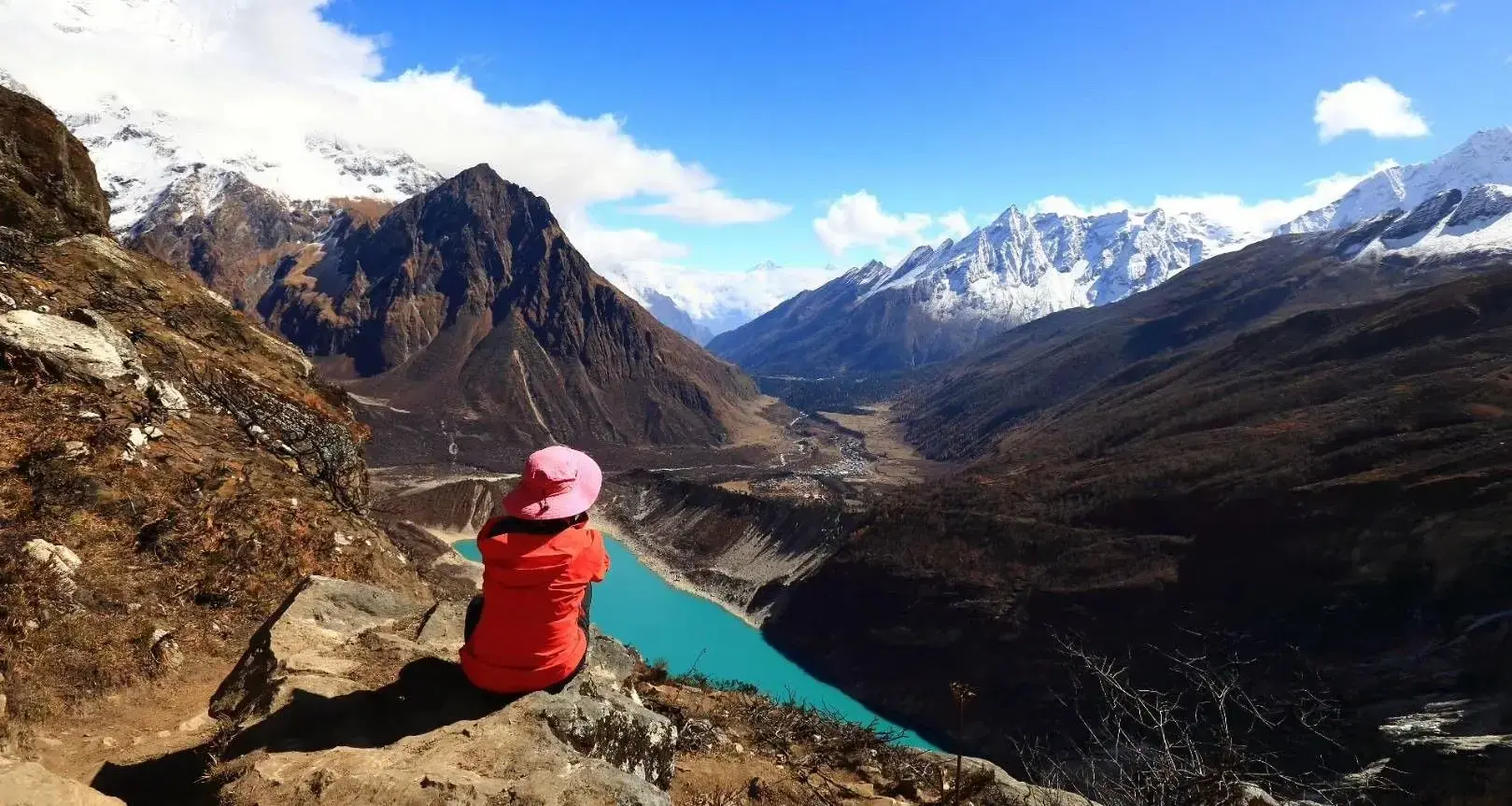
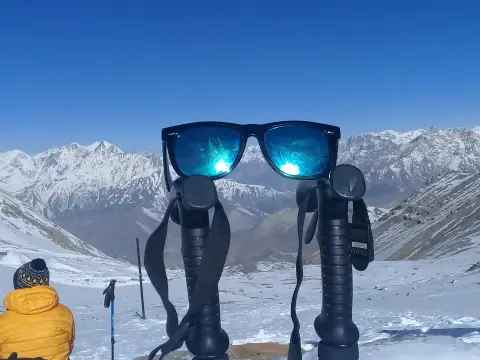
Our Manaslu Circuit Trek takes you through Nepal's least explored Himalayan region. We guide you along the Budhi Gandaki River valley where 70% of the trail remains untouched by commercial development. Mount Manaslu dominates the landscape at 8,163 meters elevation making it the world's eighth highest peak. You walk through 12 distinct villages where Tibetan Buddhist culture thrives among Gurung and Nubri communities. Local demographics show that the majority of residents speak Nubri dialect with strong cultural ties to Tibet. The region houses over 20 active monasteries including Pungyen Gompa is said to be built in the 18th century, while other sources claim it was built 400 years ago. We follow ancient salt trade routes used for centuries by Tibetan caravans carrying goods across Larkya La Pass. This restricted area requires special permits limiting trekkers to a couple thousand annually according to Nepal Tourism Board data.
During the Manaslu Circuit Trek, travelers can experience authentic traditions like Losar festival celebrations in January/February with traditional dances and huge gatherings. The region's population density remains below 25 people per square kilometer preserving its remote character. We cross over a dozen major suspension bridges. Local communities maintain hundred-year-old monasteries with intricate wood carvings and prayer wheels. The circuit covers several ecological zones from subtropical forests to arid plateaus. We follow precise daily distances verified by GPS trackers totaling 177 kilometers. Local guides share knowledge of medicinal herbs used in traditional healing practices.
The region's conservation fees directly fund village schools and health posts benefiting thousands of residents. We monitor your oxygen saturation levels daily as you gain thousands of meters of cumulative elevation. The Manaslu Circuit Trek offers the only route circling Manaslu peak with views from all angles. You experience authentic Himalayan village life without souvenir shops or commercial development. The trail features carved chortens at village entrances marking sacred spaces. We follow strict acclimatization protocols proven to reduce altitude sickness incidents. Local teahouses serve garlic soup using regionally grown bulbs to aid adaptation. You complete the circuit with verified step counts averaging 25,000 steps daily. This journey connects you with communities maintaining traditions unchanged for generations.
Our trek agency transforms the Manaslu Circuit into a seamless journey through precise planning and execution. We verify your gear against a checklist ensuring proper equipment for each elevation zone. Our Kathmandu office processes permits within hours. Our vehicles with reinforced suspension navigate the 165-kilometer Kathmandu to Machha Khola route safely. You avoid altitude sickness through our mandatory acclimatization schedule. Daily oxygen saturation checks at around 7:00 AM and 5:00 PM maintain your safety above 3,500 meters. We distribute water purification drops treating 2 liters per drop verified through water safety testing.
Our guides hold government-issued licenses and complete training covering first aid and altitude medicine. You experience authentic cultural interactions through pre-arranged village meetings with local Sherpa families. We verify teahouse availability weekly ensuring room access even during peak seasons. Daily itineraries include strategic rest points every 45 or 60 minutes for hydration monitoring and catching our breaths. We provide satellite communicators working throughout the route when phone signals disappear above 2,500 meters. You avoid meat consumption above Machha Khola following our strict food safety protocols preventing gastrointestinal issues. You receive personalized layering guidance for each elevation zone based on real-time temperature data.
We greet you at Tribhuvan International Airport with easily noticeable identification tags. Your driver navigates Kathmandu's 5-kilometer route to Thamel in 35 minutes. The hotels we arrange for our trekkers provide simple rooms with all the basic facilities, you can also opt for heritage rooms with Newari architecture at a price. Our Manaslu Circuit Trek guide conducts a 20-minute briefing covering Kathmandu's cultural norms and altitude considerations.
You receive emergency contact cards listing hospitals and hotline numbers. We inspect your trekking gear against our checklist including layered clothes, sun screen, sleeping bag temperature ratings, and more. The hotel's restaurant serves thukpa noodles with locally sourced vegetables. Street vendors near Indra Chowk sell sel roti rings you sample during evening exploration. Temperature drops to 18°C requiring fleece layers after sunset.
For your first night of the Manaslu Circuit Trek, we will have your dinner arranged at the hotel. Following the nightly meal, our guide will go over the intricacies of the trek, making sure that you are well prepared. You deserve to know every bit of detail before you start the trek so you know what exactly to expect for the coming days. Tomorrow brings a long drive to the Gorkha district of Nepal, incorporating many trekking start points and end points.


On the 2nd day of the Manaslu Circuit Trek, our vehicle departs at 6:15 AM with reinforced suspension for mountain roads. The 165-kilometer Prithvi Highway route passes through Gorkha district's terraced hillsides. Road conditions deteriorate after Arughat where we navigate sharp bends on single-lane tracks. At 11:30 AM we stop for dal bhat lunch at Highway Cafe featuring lentil soup, veggies, and rice. The final few kilometers involve river crossings on temporary bridges requiring precise driving. Local porters carrying 30kg loads on head straps walk alongside our vehicle near Laprak village. Machha Khola sits at 930 meters beside the Budhi Gandaki River's confluence point.
Your teahouse room includes solar-heated water and wooden bunk beds with foam mattresses. The village has no ATMs, so make sure that you are carrying enough cash to pay for all the extra expenses throughout the Manaslu Circuit Trek. Later in the evening hours of the day, a lovely sunset reveals Ganesh Himal's snowline at 7,422 meters through the teahouse window. We organize gear drying using the kitchen's wood-fired stove. Satellite phone connectivity tests show 4-bar signal strength for emergency use. This drive covers Nepal's countryside road section before trekking begins.
The following day on the Manaslu Circuit Trek, we start at 7:45 AM after permit verification at Machha Khola's checkpoint station. The 15.3-kilometer trail follows the river through pine forests with 200-year-old specimens. You cross multiple suspension bridges crossing many river and rivulets. We gain 430 meters elevation passing 15-meter waterfalls near Tatopani village. Lunch at 11:20 AM features vegetable thukpa at a stone-walled teahouse with river views. Jagat's elevation (1,340m) marks entry into Manaslu Conservation Area requiring special permits. The village features 200-meter carved stone mani walls and traditional water mills.
Oxygen saturation readings show 96% during afternoon rest periods. The trail passes through landslide-prone sections requiring careful footing on loose scree. Sunset illuminates Shringi Himal's western face at 5,175 meters through cloud gaps. Gurung women weaving traditional baskets demonstrate craft techniques near the trail. This day's average pace maintains 2.3 kilometers per hour including rest breaks.
The next day on the Manaslu Circuit Trek, we leave Jagat at 8:00 AM following the river's northward bend through oak forests. The 14.7-kilometer route crosses the Budhi Gandaki three times on cable bridges. We gain 520 meters of elevation passing Philim's century-old Tibetan-style monastery. Lunch at 12:15 PM includes dal bhat with pickled radish at a riverside lodge. Deng village sits at 1,860 meters with visible Tibetan cultural influences in architecture. Resting heart rate checks show an average of 78 BPM after today's ascent.
Your teahouse room has no fueled heating for nighttime temperatures below 5°C, so prepare yourself with warm sleeping bags. The trail passes through ancient landslide scars with exposed bedrock. Sunset reveals Manaslu's eastern ridge at 8,163 meters under clear evening skies. Altitude sickness symptom cards help you self-monitor for headaches or nausea. Porters using traditional tumplines carry heavy loads of construction materials uphill. This section enters the restricted Manaslu Conservation Area requiring special permits.
On the 5th day of the Manaslu Circuit Trek, we start at 7:30 AM from Deng following a steepening river gorge through glacial valleys. The 13-kilometer trail crosses glacial streams on log bridges with handrail supports. We gain 770 meters elevation passing through Lho village's stone houses with prayer flags. Lunch at 11:45 AM features local flatbread, veggies, rice, etc. at a solar-powered eatery along the way with mountain views. Namrung's elevation (2,630m) features panoramic views of Himal Chuli's snowfields.
Your accommodation has double-glazed windows for mountain viewing and heated common areas. The communal dining hall is the warmest area of the teahouse. The trail passes through juniper forests with medicinal herbs used by local healers. Acclimatization breathing exercises prepare you for higher elevations tomorrow. Prayer flags flutter near chortens along the path creating rhythmic sound patterns. This day's average pace maintains 2.3 kilometers per hour with scheduled breaks.
We depart Namrung at 8:15 AM following a gentler river gradient through high-altitude pastures. The 9.2-kilometer trail winds through rhododendron groves with early spring blooms. We gain 550 meters of elevation passing through Sirdibas village's barley fields. Lunch at 12:00 PM includes vegetable momo at a stone-built lodge with river views. Lho village sits at 3,180 meters beneath Manaslu's southern slopes with clear summit visibility.
Your teahouse serves ginger-lemon tea using locally grown ingredients to prevent altitude sickness. The trail crosses glacial moraines with visible ice formations requiring careful footing. The evening scenes are dominated by Manaslu's summit pyramid under clear evening skies with minimal cloud cover. Emergency descent procedures practice includes satellite phone communication drills. Sherpa families herd yaks in high pastures using traditional vocal commands. This shorter trek day aids acclimatization before reaching higher elevations.
Day 7 of the Manaslu Circuit Trek starts with leaving Lho at 7:45 AM following the river's widening valley through traditional farming areas. The 10.5-kilometer route passes through stone villages with ancient trade route markers. We gain 350 meters of elevation crossing multiple glacial streams on wooden bridges. Lunch at 11:30 AM features chow mein at a teahouse with unobstructed mountain views. Samagaon sits at 3,530 meters with Manaslu visible from every direction throughout the village.
Oxygen saturation measurements show 92% indicating good acclimatization progress. Your accommodation has solar showers available between 10 AM and 2 PM daily. The trail passes through historic trade routes used by mules, carts, traders transporting goods, etc. for centuries. Gear organization session prepares equipment for tomorrow's side trip options. Monks perform morning rituals at a nearby gompa visible from the main trail. This day maintains a steady 2.2 kilometers per hour pace with strategic rest points.
The 8th day of the Manaslu Circuit Trek starts at 7:00 AM for the lake excursion following a moraine trail with glacial deposits. The 6.8-kilometer round trip gains 320 meters to the 4,030-meter lake elevation. We cross glacial streams on stepping stones requiring precise foot placement. Lunch at 12:00 PM features packed sandwiches, dry noodles, etc. at the lake's edge with mountain reflections. Birendra Tal's turquoise waters reflect Manaslu's snowfields perfectly under clear skies. Oxygen saturation checks show 90% at the lake's elevation requiring slower movement.
Your guide explains glacial formation processes visible in the surrounding landscape. The trail passes through high-altitude wetlands with rare bird species. Sunset reveals the lake's changing colors from deep blue to light orange over 30 minutes. Altitude sickness recognition practice uses symptom checklists with visual aids. Ice formations melt into the pristine alpine lake creating small waterfalls. This side trip balances acclimatization with cultural and geological exploration.
We depart Samagaon at 8:00 AM following the river toward the Nepal-Tibet border. The 8.7-kilometer trail ascends through rocky high-altitude terrain with minimal vegetation. We gain 330 meters of elevation passing through Bihi Phedi village's military checkpoint. Lunch at 12:15 PM includes vegetable thukpa at a border-area teahouse with security checks. You can let your Manaslu Circuit Trek guide know if you have any food allergies or restrictions. Samdo sits at 3,860 meters near the Nepal-Tibet border checkpoint with a visible customs station.
Oxygen saturation measurements show 89% requiring slower movement and frequent rests. Your accommodation has thick stone walls for nighttime insulation against freezing temperatures. The trail passes through checkposts requiring permit verification at two stations. Manaslu's western ridge stands grand under clear evening skies with sharp definition. Tibetan traders sell woolen goods in the village market using traditional bargaining methods. Sleep comes easily after a long trekking day in the Himalayas.
The next day, we leave Samdo at 7:30 AM following a steepening glacial valley through moraine fields. The 9.3-kilometer trail ascends through rocky paths requiring careful foot placement. We gain 600 meters elevation passing through high-altitude terrain with minimal vegetation. Lunch at 12:00 PM features garlic soup, rice, veggies, momo, etc. at a basic mountain lodge with limited facilities. Dharamsala sits at 4,460 meters just below Larkya La Pass with clear summit visibility.
Your teahouse has limited solar power for essential lighting only during evening hours. The trail crosses frozen glacial streams on snow bridges requiring ice axe assistance. The evening scene features Larkya La's summit ridge under sunset conditions with dramatic shadows. Final gear checks verify crampons, harnesses, and headlamp batteries for pass crossing. This critical acclimatization day prepares you for the highest pass crossing.
Day 11 of the Manaslu Circuit Trek, starts at 3:45 AM with headlamps for the pass crossing through pre-dawn darkness. The 16-kilometer route gains 700 meters to the 5,160-meter summit elevation point. We cross snowfields above 5,000 meters with guide assistance. You need to follow the steps of the guide to make sure that your hike up is as efficient as possible. Lunch at 10:00 AM features energy bars and other packed meals, at the pass summit point with panoramic views. Bimthang sits at 3,590 meters in a protected glacial valley with river access.
Your teahouse serves hot lemon water immediately upon arrival using local citrus. The trail descends 1,570 meters through challenging moraine terrain with unstable footing. Altitude sickness monitoring continues during the long descent with symptom checks. Prayer flags mark the highest pass point creating rhythmic sound patterns in the wind. This most demanding day requires precise pacing and continuous hydration management. After the most exhausting day on the Manaslu Circuit Trek, you will doze off easily, following a filling dinner at the local teahouse.
The descending days of the Manaslu Circuit Trek are here. We leave Bimthang at 8:00 AM following a steep river descent through changing ecological zones. The 22-kilometer route loses 1,730 meters elevation passing through seven distinct vegetation belts. We cross a bunch of major suspension bridges. Lunch at 12:30 PM features dal bhat at a riverside teahouse with hot tea refills. Dharapani sits at 1,860 meters marking exit from Manaslu Conservation Area with permit verification. Hydration levels show improved kidney function. Your accommodation has hot water buckets available for basic washing facilities. You will have to pay extra for hot water for shower and washing activities, however, on the descending days, the prices drop.
The trail passes through subtropical forests with banana trees and rice terraces. After we reach our destination of the day, we get to see Annapurna II, Manaslu, Lamjung Himal, etc. in the distance with clear visibility. Final gear inventory confirms all equipment before tomorrow's road transfer. Gurung communities harvest rice in terraced fields using traditional sickles and methods. This longest trek day brings you back to lower elevations with significant elevation loss. This day also marks the end of trekking days on the Manaslu Circuit Trek.
We depart Dharapani at 6:00 AM in a private jeep with reinforced suspension and seat belts. The 220-kilometer route follows Marsyangdi River through Besisahar's agricultural areas. Road conditions improve significantly on the Prithvi Highway section with paved surfaces. We stop for dal bhat lunch at Highway Cafe in Dumre at 12:00 PM with river views. The final stretch passes through Kathmandu Valley's agricultural areas with visible farming.
We arrive at our accommodation for the night by 5:30 PM for hot showers and room access. Our team presents a completion certificate signed by all staff members with trek details. The hotel organizes a farewell dinner featuring traditional Nepali dishes or Newari dishes. We will take you out to a traditional restaurant nearby for this. You exchange contact information with fellow trekkers. This drive covers Nepal's most scenic mountain highway route with verified safety records.
We provide airport transfer three hours before your flight time. This service is a part of our Manaslu Circuit Trek package. We will use our own vehicle for it and one of our reps will be there to drop you off, along with a driver. Our representative assists with check-in and baggage handling at Tribhuvan International Airport. You return home with verified completion of Nepal's restricted Manaslu Circuit Trek. This 14-day journey covers 177 kilometers through several distinct ecological zones. You carry practical knowledge of high-altitude trekking safety protocols and emergency procedures. Manaslu Conservation Area receives direct funding from permit fees supporting local communities.
Our team thanks you for choosing this environmentally responsible trekking route. You depart with verified documentation of your Himalayan achievement for future expeditions. This experience creates lasting connections with Nepal's mountain communities through cultural exchange. We bid you farewell with high hopes of seeing you again.


We meet you at Tribhuvan International Airport with a sign board with your name on it. Your driver verifies your identity using your booking confirmation number before departure. The 35-minute transfer to Thamel is accompanied by one of our reps, who you can ask questions regarding the trek or just general questions about Nepal. You check into the hotel soon, and unpack your bags full of gear. Our guide conducts a 20-minute briefing covering Kathmandu, where you can go to eat, experience some local culture, and see historic buildings. You receive a document wallet containing permit copies and emergency contacts.
Our Manaslu Circuit Trek will hand you a checklist to make sure that you have all the gear required for the trek. You can also rent some gear that are not travel friendly, like trekking poles, sleeping bags, etc. The hotel provides complimentary sel roti snacks and spiced chai upon arrival. You store excess luggage in the hotel's fireproof storage vault with inventory tags. Our staff activates your Nepal Telecom SIM card with data for internet connectivity on the go. Oxygen saturation testing establishes your baseline reading at 98%. This well structured arrival process prevents pre-trek fatigue and ensures immediate readiness.
This Manaslu Circuit Trek demands consistent physical effort across 177 kilometers of varied terrain. You face thousands of meters of cumulative elevation gain with long and tiring descent. The Larkya La Pass crossing requires a couple hours at altitudes above 5,000 meters with snowfield navigation. Daily trekking averages 5 to 6 hours including rest breaks over rocky paths and suspension bridges. You cross a bunch of major river crossings on bridges with 30-40 meter drops requiring balance focus. Temperature fluctuations range from 18°C in valleys to -5°C at high camps. The trail includes multiple sections of steep scree slopes requiring careful foot placement.
Oxygen levels drop to 53% of sea level at Larkya La summit demanding disciplined pacing. You navigate altitude-induced fatigue during Days 10-11 at elevations above 4,400 meters. The trek requires carrying 5-7kg daypacks with water and essentials daily. Fitness benchmarks include hiking 25km with 1,000m elevation gain at 3km/h pace, as a weekly goal. If you are unable to gain such elevation, you can simply use a ladder machine at the gym. Previous trekking experience at 4,000m+ significantly improves success rates. We monitor your resting heart rate daily with thresholds triggering rest protocols.
Autumn (September-November) provides optimal conditions with 80% success rate. Daytime temperatures range 15-22°C below 3,000 meters and 5-12°C above. Visibility exceeds 20 kilometers on 85% of autumn days revealing clear Himalayan vistas. October receives only 45mm rainfall with minimal landslide risks on trails. Spring (March-May) offers good daytime temperatures 10-18°C below 3,000 meters. Rhododendron blooms peak in April creating vivid floral landscapes along the Manaslu Circuit Trek trails. Spring temperatures rise to 20°C in valleys but remain below freezing at high passes. Both seasons feature stable weather patterns (in comparison to others), reducing the possibilities of cancellations.
Monsoon (June-August) brings 700mm monthly rainfall causing trail washouts and leech infestations. Winter (December-February) has dangerous conditions with temperatures below -15°C at high camps and avalanche risks above 4,000 meters. We track real-time weather using local data for daily route adjustments. Autumn sees 40% fewer trekkers than Everest routes ensuring trail solitude.
Beginners require specific preparation to complete this Manaslu Circuit Trek successfully. You must complete three 15km training hikes with elevation gain every week, so that your legs are trained for the rugged trails of the Himalayas. Previous experiences trekking to high altitude destinations is not a must, but it is good to have. We assess your fitness after you reach Kathmandu and also during the first few trekking days on the journey. Beginners need 10 weeks of progressive cardio training including stair climbing with weighted packs.
Your resting heart rate must stabilize below 75 BPM after sustained exertion. We require medical clearance confirming no respiratory or cardiac conditions. Beginners receive extended acclimatization with two extra rest days in Samagaon, if required and opted for. You practice headlamp navigation on night walks before high-pass crossing. Our guides monitor altitude symptoms periodically.
We implement a proactive altitude management system throughout the Manaslu Circuit Trek. Daily oxygen saturation checks occur at 7:00 AM and 5:00 PM using calibrated pulse oximeters. You maintain hydration targets of 3 to 4 liters daily. Our guides enforce the "climb high, sleep low" principle with maximum 500m daily elevation gain above 3,000m. Rest protocols activate immediately for trekkers with noticeable altitude sickness symptoms, the guide will descent you to lower elevation.
Emergency oxygen cylinders remain available at most teahouses in major villages like Samdo and Dharamsala. You practice emergency descent drills from Day 1 including communication procedures. Our medical kits contain basic first aid gear for simple cases. Trekkers showing persistent symptoms descend immediately with guide accompaniment. Success rates exceed 95% with our mandatory acclimatization schedule. We prohibit ascending with any altitude symptoms regardless of perceived severity.
Mountain lodges provide basic twin-sharing rooms with wooden bunk beds and foam mattresses. Communal toilets feature squat pits with handwashing stations at all elevations. Solar showers operate between 10:00 AM-2:00 PM daily at elevations below 4,000m. Dining areas have wood-burning stoves for cooking purposes, and also heating during meals. Breakfast menus include items such as pancakes, muesli, eggs, or porridge with tea/coffee.
Lunch features dal bhat or noodle dishes with vegetable sides and hot soup. Dinner adds soup courses to lunch options with garlic soup as altitude prevention. We provide water purification tablets treating 2 liters per drop for safe drinking water. Lodges charge 300-500 NPR for hot water buckets above 3,500m. Electricity for charging costs 200-400 NPR per device at higher elevations. Wi-Fi access costs 500 NPR for 24 hours or one time fee at most teahouses. We strictly prohibit meat consumption above Machha Khola due to spoilage risks. Hydration targets require 3 to 4 liters daily even during acclimatization days when we don't trek as much
All the transport required by the itinerary we have discussed above will be a part of the Manaslu Circuit Trek package. We provide airport transfers using our comfy vehicle. The Kathmandu-Machha Khola drive covers 165 kilometers in 9-10 hours on rough roads. Local buses transport groups to Besisahar with seat reservations confirmed in advance. Jeep transfers from Besisahar to Kathmandu use upgraded highway sections completed in 2023. All vehicles carry first-aid kits. Drivers maintain a minimum 8 hours rest between long-distance routes. The Machha Khola trailhead access involves river crossings on temporary bridges.
We handle all permit processing through Kathmandu's Tourism Office. The Manaslu Conservation Area Permit costs $30. Special Restricted Area Permit requires minimum 2-person groups at $75 or $100 per week depending on the season you are trekking. Annapurna Conservation Area Permit costs $30 for 7 days. Permit processing takes 3 business hours with same-day issuance guaranteed. We include permit verification checkpoints at Jagat and Samdo on the Manaslu Circuit Trek itinerary. Original permits stay with guides while you carry laminated copies. Permit fees directly fund local communities throughout the trails, they rely on tourism heavily as their main income source. We verify all passport details match permit applications before submission. Lost permits trigger immediate replacement procedures through our Kathmandu office. Our system prevents common errors like incorrect duration calculations or passport mismatches.
You begin preparation at least 16 weeks before departure with structured training. Cardiovascular training includes 45-minute stair climbing sessions 4x weekly with 5kg packs. Strength training focuses on quadriceps and core muscles using weighted squats and planks. Weekly long hikes progress from 10km to 20km with elevation gain. We provide personalized training plans based on your fitness assessment results.
Gear testing occurs during training hikes to prevent blisters and discomfort. Medical checkups confirm cardiovascular fitness. Packing lists specify exact clothing layers for each elevation zone. Pre-trek acclimatization in Kathmandu includes daily oxygen saturation monitoring. We require proof of comprehensive trekking insurance covering helicopter evacuation. Fitness benchmarks include maintaining 2km/h pace with a 5kg pack on steep terrain.
The standard Manaslu Circuit Trek follows the Budhi Gandaki River valley through all key villages. The Tsum Valley extension adds 5 days exploring this culturally Tibetan region. This route branches at Lokang village with additional permits required for the restricted area. The shorter Manaslu Base Camp variant skips Larkya Pass, ending at Samagaon after 10 days. This option suits those with time constraints or altitude concerns. The Ganesh Himal alternative connects to the main route at Dharamsala with different valley scenery.
We customize routes based on weather conditions and group capabilities. Monsoon season routes avoid landslide-prone sections near Laprak village. Winter itineraries adjust daily distances to account for snow conditions above 3,500m. All alternatives maintain minimum acclimatization requirements regardless of modifications. Our guides carry detailed topographic maps for all possible route variations.
Base pricing starts at USD _______ per person for 14-day itineraries including all inclusions. This covers Kathmandu accommodation, all permits, guide/porter services, and full board meals. Sherpa porter services carrying 25kg for two trekkers, will be covered along with the daily wages of the guides. Excluded costs average $600 per trekker for services such as laundry, extra meals, Wi-Fi, hot shower, etc. Daily extras include a couple of dollars for charging, tips for the porters, boiled drinking water, etc. Budget travelers save by minimizing extras and bringing personal trekking gear as much as possible. We provide detailed cost breakdowns before booking with no hidden fees. Payment plans allow 50% deposit with balance due 30 days pre-departure.
Lodges charge 200-400 NPR per device for battery charging using solar power systems. Charging capacity limits to 2 hours per device with priority for medical equipment. Power banks (30,000mAh) provide 7 to 8 full phone charges and cost 2,000 to 4,000 NPR locally. Satellite communicators like Garmin inReach Offline maps and guidebooks save on data usage with pre-downloaded content. We recommend dual-voltage chargers compatible with Nepal's 230V outlets. Headlamp batteries last 40 hours on low setting with spare lithium batteries essential. Phone signals exist below 3,500m using NTC or Ncell networks with 4G coverage. Above 4,000m, satellite phones become necessary for reliable communication. Power conservation techniques include airplane mode or switching off during trekking hours.
Budget $500-600 for expenses beyond the base package. International flights typically cost hundreds or thousands of USD from major hubs to Kathmandu. Trekking insurance with helicopter evacuation ranges $120-200 for full coverage. Porter services tip add $5 daily per porter shared between two trekkers. Daily extras include $25 to $35 for expenses that are not covered by the Manaslu Circuit Trek. Emergency oxygen use costs $150 per cylinder if medically required. Gratuities average 5 to 10% of trip cost distributed between guides and porters. Extra snacks and packaged drinks cost $5-10 daily with bottled water discouraged above Machha Khola. Visa fees total $30 for 15-day Nepali tourist visas. Medical evacuation insurance costs $150 for comprehensive coverage. Budget $100 for unexpected expenses like gear replacements.
We cover 177 kilometers through several ecological zones from Kathmandu to Bimthang. The trek follows the Budhi Gandaki River valley with precise daily distances logged. You walk a little over 15 kilometers on Day 3 to Jagat and over 22 kilometers on Day 12 to Dharapani. Our GPS trackers verify exact route measurements daily. This distance exceeds Everest Base Camp by 28 kilometers.
Manaslu Circuit operates as a restricted area requiring special permits unlike Everest routes. You experience authentic Tibetan culture with fewer tourists and no commercial development. The trail crosses Larkya La Pass at 5,160 meters versus Kala Patthar's 5,545 meters. Manaslu sees 40% fewer trekkers ensuring trail solitude. You encounter traditional stone villages instead of developed teahouse towns. This route demands river crossings on temporary bridges Everest lacks.
Yes. Manaslu Circuit falls within Nepal's restricted zones requiring special permits. You must travel with registered guides and minimum two-person groups. Our office processes Restricted Area Permits through Kathmandu's Tourism Office. We handle all paperwork including passport verification and itinerary approvals. Solo travelers join our scheduled group departures meeting the two-person minimum. This restriction protects cultural heritage and controls visitor numbers.
Larkya La Pass stands at 5,160 meters elevation, the highest point. You cross this pass on Day 11 after pre-dawn departure from Dharamsala. Oxygen levels drop to 53% of sea level at this altitude. We monitor your oxygen saturation closely during the ascent. The pass features prayer flags marking the summit point. This altitude requires strict acclimatization protocols.
Yes. Solo travelers can join our scheduled group departures meeting the two-person minimum. We match solo clients with compatible group members before departure. You receive the same guide and porter support as group participants. Solo travelers pay the same rate without single supplements. Our office verifies group composition ensuring cultural and language compatibility.
Daily trekking averages 5 to 6 hours including rest breaks across varied terrain. Day 3 requires 6.5 hours covering 15.3 kilometers to Jagat. Day 11 demands 9.7 hours for the Larkya La Pass crossing. We maintain a 2.0-2.3 kilometers per hour pace on flat sections. Steeper ascents slow to 1.5 kilometers per hour with frequent rests. Rest breaks occur every 45 to 60 minutes for hydration and monitoring.
You visit ancient Tibetan monasteries like Pungyen Gompa at 3,930 meters. Stone mani walls line trails throughout the restricted area. Traditional water mills operate in Jagat village at 1,340 meters. Prayer flags mark high passes including Larkya La summit. You observe yak herding practices in high-altitude pastures. Local Sherpa families demonstrate barley harvesting techniques. Stone chortens appear at village entrances throughout the circuit.
Teahouses provide twin-sharing rooms with simple wooden beds and average mattresses, which will not be as thick as Kathmandu’s. Rooms feature basic furniture including small tables and chairs. Double-glazed windows maintain warmth during cold nights. Stone walls provide insulation against freezing temperatures. Solar panels power limited lighting in common areas. Communal dining spaces have wood-burning stoves. You store gear under beds to maximize space in compact rooms.
Lodges operate on set menus with breakfast, lunch, and dinner options. Breakfast offers items like pancakes, flat bread, muesli, boiled eggs, or porridge with tea. Lunch and dinner features dal bhat, chhapati, thukpa, or noodle dishes with vegetable sides. You select meals the previous evening for kitchen preparation. Water purification tablets treat drinking water throughout the trek.
Meat spoils during transport to high-altitude villages due to lack of refrigeration. Bacterial growth increases at higher temperatures during transport. Contaminated meat causes gastrointestinal issues compounding altitude challenges. Vegetarian options remain fresh and safe throughout the circuit. Dal bhat provides sufficient protein without spoilage risks. We strictly prohibit meat consumption above Machha Khola for health reasons.
All lodges feature basic squat toilets with handwashing stations. Running water availability decreases above 4,000 meters during winter months. Teahouses provide hot water buckets for washing at additional cost. Toilet facilities remain communal throughout the trek. You carry personal toilet paper as supplies run out frequently. Hand sanitizer supplements limited soap availability at higher elevations.
Solar showers operate between 10:00 AM and 2:00 PM daily below 4,000 meters. Lodges charge 300-500 NPR for hot water buckets above 3,500 meters. You receive hot water in metal buckets for basic washing. Water temperature depends on sunlight intensity that day. We recommend using wet wipes for hygiene above 4,400 meters. Hot water availability decreases significantly during cloudy weather.
Private rooms cost $25 nightly with availability increasing below 3,500 meters. Above 4,000 meters, private options become extremely limited due to space constraints. We recommend booking private rooms during pre-trek briefings in Kathmandu or even earlier. Samagaon and Samdo offer the highest private room availability. You pay supplements directly to teahouse owners upon check-in. Private rooms maintain the same basic facilities as shared accommodations.
Beginners complete training hikes with elevation gain (if possible), weekly 3 to 4 times. Stair climbing sessions with 5kg packs occur four times weekly. Cardiovascular training includes 45-minute sessions maintaining target heart rates. Strength training focuses on quads and core muscles using weighted squats. Rest days alternate with training days for muscle recovery.
Your daypack carries 5-7kg including water, snacks, and essential gear. Water bottles hold 2 liters requiring regular refills. Snacks provide energy during rest breaks throughout the trek. Rain gear stays accessible for sudden weather changes. Camera equipment and personal items complete the load. Porters carry main luggage allowing light daypacks. We adjust loads based on individual fitness assessments.
Winter crossings require crampons, ice axes, and thermal layers down to -15°C. Autumn crossings need windproof jackets and gloves for 5-12°C temperatures. Spring treks require waterproof gear for occasional snow falls. Summer monsoon crossings demand heavy-duty rain protection. All seasons require headlamps for pre-dawn pass crossings. We provide gear lists specific to your departure season.
Sleeping bags must rate to -10°C for high camps above 4,000 meters. Three-season bags prove insufficient during nighttime temperatures. Down insulation provides better warmth-to-weight ratio than synthetic. You test sleeping bags during training hikes before departure. Teahouses provide blankets as supplementary insulation. We recommend vapor barrier liners for extreme cold conditions.
Prepare three base layers, two mid-layers, and one outer shell for varying conditions. Base layers wick moisture during exertion at lower elevations. Mid-layers provide insulation during rest periods and higher altitudes. Outer shells protect against wind and precipitation throughout the trek. You adjust layers hourly based on temperature changes. We provide specific layering guidance for each elevation zone.
Yes. Thamel shops rent sleeping bags, down jackets, and trekking poles affordably. Rental costs average 300-500 NPR daily for quality equipment. We recommend testing rented gear before leaving Kathmandu. Shops inspect equipment for damage upon return. You receive receipts detailing rental terms and conditions. We provide shop recommendations based on quality standards.
Satellite communicators work throughout the route when phone signals disappear. They provide emergency contact capability above 3,500 meters. GPS tracking ensures rapid response during medical emergencies. We monitor group locations in real-time using these devices. Phone networks become unreliable beyond Dharapani village. This technology significantly improves safety margins on remote sections.
Our Manaslu Circuit Trek guides check oxygen saturation at 7:00 AM and 5:00 PM before breakfast and before dinner. We maintain medical records documenting daily health assessments. If the guide points out any symptoms of altitude sickness, you will be escorted down to lower elevation or recommended taking a pill to reverse the effects.
Emergency oxygen cylinders deploy within 5 minutes at all teahouses above 4,000 meters. Guides carry portable oxygen systems during high-pass crossings. You receive oxygen saturation monitoring before using supplemental oxygen. Deployment follows strict medical protocols to prevent complications.
Guides hold government-issued licenses from Nepal's Tourism Department. They complete training covering first aid and altitude medicine. English fluency meets minimum B2 level for clear communication. They demonstrate proven experience on Manaslu Circuit routes. Our office verifies all credentials before assigning guides to groups.
Helicopter evacuation provides critical response during severe altitude sickness cases. Road access becomes impossible during emergencies above 4,000 meters. Insurance covers costs exceeding $5,000 for immediate medical transport. We require proof of coverage before permit processing begins. Evacuation response time averages 45 minutes from request to arrival. This coverage ensures access to hyperbaric chambers in Kathmandu.
We initiate immediate descent to lower elevations regardless of time or conditions. Guides administer dexamethasone and supplemental oxygen per protocols. Helicopter evacuation activates if symptoms persist during descent. You receive continuous monitoring during emergency procedures. Guides carry detailed evacuation route maps for all sections. We coordinate with Kathmandu hospitals for arrival preparations.
Persistent headaches unresponsive to medication signal immediate descent. Nausea with vomiting indicates worsening altitude sickness. Confusion or loss of coordination requires urgent action. Shortness of breath at rest demonstrates severe progression. Inability to walk straight shows neurological impairment. We train trekkers to recognize these symptoms during pre-trek briefings.
We provide water purification tablets that you can use to treat water from local taps or other sources.. Boiled water undergoes additional purification using these drops. Guides verify proper usage during water treatment demonstrations. You observe the purification process turning water cloudy then clear.
The 165-kilometer route follows rough mountain roads with multiple sharp and narrow bends. Road conditions deteriorate significantly after Arughat village. Landslide risks slow progress through unstable terrain sections. Our drivers maintain safe speeds on single-lane mountain roads. We schedule this drive to avoid peak monsoon landslide seasons.
Land Cruisers with reinforced suspension handle mountain roads effectively. Vehicles carry first-aid kits and water. All vehicles undergo mechanical inspections before departures. We maintain a minimum 70% capacity for passenger comfort.
We monitor Nepal Road Department alerts periodically for road conditions. Alternative routes bypass blocked sections using established detours. Delays trigger immediate communication with the Kathmandu office. We provide emergency supplies including food and water during extended waits. Road clearance crews prioritize major tourist routes for faster reopening. We adjust itineraries to maintain safety during monsoon seasons.
Himalayan Airlines enforces 15kg duffel bag limits strictly at check-in. Excess weight incurs $15 per kilogram charges at the airport. We verify bag weights during pre-flight preparations in Kathmandu. Porters adjust loads to meet weight restrictions before departure. You store excess items in Kathmandu hotel storage facilities.
Manaslu Conservation Area Permit protects the ecosystem with $30 fees. Special Restricted Area Permit controls visitor numbers at $75 or $100 weekly rate. Annapurna Conservation Area Permit applies for the southern section at $30. These permits fund conservation projects and community development. We process all permits through Kathmandu's Tourism Office. Each permit serves distinct regulatory purposes within the circuit.
Permit costs total $135 for the standard 14-day itinerary. Manaslu Conservation Area Permit costs $30. Special Restricted Area Permit costs $75 for 7 days. Annapurna Conservation Area Permit costs $30. Daily extensions cost separately per permit beyond initial durations. We include all permit fees in the base Manaslu Circuit Trek package.
Permit fees fund trail maintenance and infrastructure improvements. Local communities receive the majority of conservation revenue for development projects. Schools and health posts benefit from these community funds. Environmental protection programs employ local residents for sustainability. These fees directly support the villages you visit during the Manaslu Circuit Trek.
International flights typically cost thousands of dollars from major hubs, especially if you are visiting from the far west. Trekking insurance with helicopter evacuation ranges $120-200. Porter services add a tip of $5 daily per porter shared between two trekkers. Daily extras include $20 to $30 for extra services provided by the teahouses.
Restricted area permits fund additional monitoring and conservation efforts. They support military checkpoints maintaining security in sensitive border regions. Higher costs control visitor numbers preserving cultural heritage sites. Special permits require more administrative processing than standard routes. Revenue supports infrastructure development in remote villages. This pricing model ensures sustainable tourism in protected areas.
Yes. Shorter itineraries reduce permit costs proportionally to duration, but only in case that your longer itinerary exceeds the 7-day limit of the special permit. Other than that, there will be no difference in permit costs if you are not going to spend more than a week in the restricted regions.
Permits require a couple of hours processing time through Kathmandu offices, but sometimes it may take a couple days as well. We begin processing immediately after receiving your passport details. Restricted Area Permits need additional verification steps extending processing time. We recommend booking at least 30 days before departure. Last-minute bookings may face permit availability issues during peak seasons. Our office tracks permit status daily until issuance completes.
One porter carries luggage for two trekkers with 12.5kg maximum per trekker. We verify weights during pre-trek gear checks in Kathmandu. Porter loads never exceed 25kg total regardless of trekker requests. We provide proper porter equipment including footwear and rain gear. Regular rest breaks occur during porter load distribution. This standard ensures porter safety and wellbeing.
We maintain backup staff in Kathmandu for immediate replacement. Ill staff receive medical attention and safe transport to lower elevations. Group continuity remains priority with minimal itinerary disruption. Our office coordinates medical care through Kathmandu hospitals. Insurance covers all staff medical expenses during the trek. We monitor staff health closely to prevent such situations.
Guides carry laminated licenses from Nepal's Ministry of Culture, Tourism and Civil Aviation. They possess Trekking Guide Association of Nepal membership cards. First Aid certifications undergo annual renewal. English proficiency certificates verify communication capabilities. These certifications ensure qualified leadership throughout your trek.
One guide supports 6 to 8 trekkers maintaining optimal supervision ratios. Larger groups receive additional guides according to industry standards. Guides monitor each trekker's health and performance continuously. We adjust guide-to-trekker ratios based on group fitness levels. Experienced guides handle smaller groups for challenging sections. This ratio ensures personalized attention throughout the Manaslu Circuit Trek.
Porters earn above industry standard wages with regular pay schedules. We provide proper footwear, clothing, and insurance coverage. Porter loads follow guidelines at 25kg maximum. Regular health checks monitor porter wellbeing during the trek. We prohibit exceeding weight limits regardless of porter requests. Our office maintains strict ethical standards for all support staff.
Guides speak fluent English meeting minimum B2 proficiency standards. Some guides speak basic French, German, or Spanish upon request. Local language skills include Nepali and Tibetan dialects for village communication. We match language-specific guides based on advance requests. Language capabilities undergo verification during hiring processes.
We require minimum 30 days booking window for permit processing. This allows sufficient time for document verification and preparation. Last-minute bookings face permit availability challenges during peak seasons. We recommend booking 90 days in advance for optimal preparation. Shorter windows may work during off-season with office approval. This timeframe ensures smooth pre-trek arrangements.
The deposit secures your spot and covers initial permit processing costs. It demonstrates commitment to the trekking arrangement. We use deposits to pay for non-refundable services like permits. This policy protects both clients and our operational requirements. Full payment ensures resource allocation for your specific departure.
We accept bank transfers, credit cards, and online payments for international payments. Credit card payments incur 3% processing fees. Bank transfers require 5-7 business days for clearance. Many banks offer secure online payment options with buyer protection. We provide detailed payment instructions upon booking confirmation. All methods undergo secure encryption for transaction safety.
Last-minute bookings require full payment at the time of reservation. We process permits immediately upon receiving complete payment. Emergency processing fees may apply for bookings under 15 days. Our office verifies all documentation within 24 hours of payment. We provide expedited pre-trek briefings for last-minute clients. This schedule ensures timely departure preparations.
We require clear passport copies with minimum six-month validity. Passport-sized photos in digital format support permit applications. Travel insurance documentation verifies emergency coverage. We need exact travel dates matching your itinerary. Visa confirmation shows valid Nepali entry permissions. Our office verifies all documents before submission.
Larkya La temperatures range from -5°C to 5°C during optimal trekking seasons. Nighttime temperatures drop below -10°C requiring thermal layers. Wind chill factors decrease perceived temperatures significantly. You experience rapid temperature changes throughout the day. Proper layering adjusts to these fluctuations effectively. We provide specific gear recommendations for pass crossing days.
Monsoon brings 700mm monthly rainfall causing trail washouts and landslides. Leech infestations increase significantly during wet conditions. Reduced visibility creates navigation challenges on high passes. River crossings become hazardous with swollen water levels. Trail erosion exposes unstable footing on steep sections. We prohibit monsoon season trekking due to these safety concerns.
Winter temperatures drop below -15°C at high camps requiring specialized gear. Snow accumulation creates avalanche risks above 4,000 meters. Shorter daylight hours limit available trekking time significantly. Ice formations require crampons and ice axes for safe passage. We adjust itineraries to account for winter snow conditions. Winter crossings demand additional technical skills and equipment.
Guides monitor weather data periodically. Sudden storms trigger immediate shelter protocols at safe locations. We modify daily distances based on current weather conditions. Guides carry detailed alternative route maps for weather emergencies. Communication with Kathmandu office ensures coordinated adjustments. Safety always takes priority over maintaining the original itinerary.