Home to the world's highest peak, Mount Everest (8,848m), the Everest Region is the most iconic trekking destination on Earth and one of the most rewarding. Wind through legendary Sherpa villages like Namche Bazaar and Tengboche, cross high-altitude passes, and stand face to face with giants including Lhotse, Cho Oyu, and Makalu. Whether you're chasing the classic Everest Base Camp trek, the turquoise waters of Gokyo Lakes, or the demanding Three High Passes circuit, this region delivers unmatched Himalayan scenery, deep Buddhist culture, and a genuinely once in a lifetime adventure.
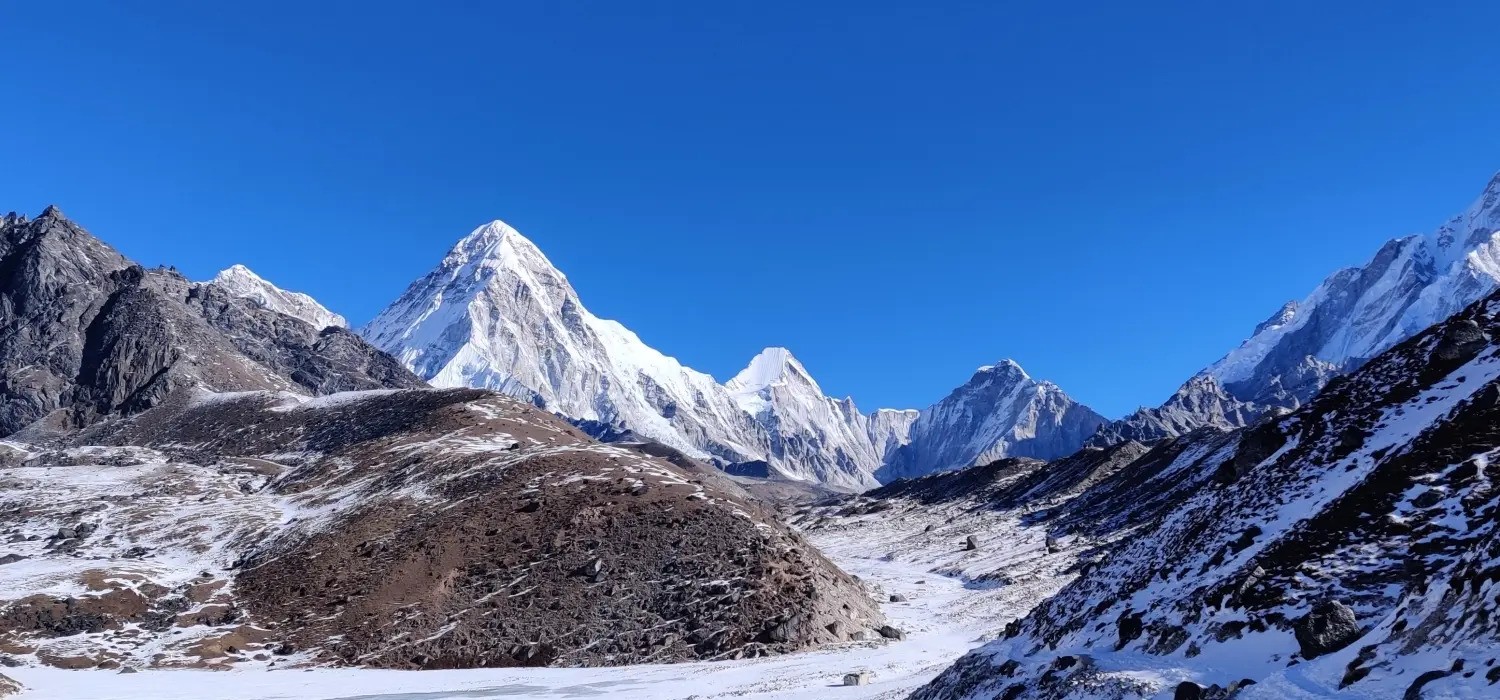
Almost every journey into the Khumbu begins the same dramatic way: a short, scenic mountain flight from Kathmandu to Lukla, followed by a gradual climb up the valley through Phakding and into Namche Bazaar, the region's bustling Sherpa capital and the traditional stop for your first acclimatisation day. From there, trails fan out toward Everest Base Camp, the glacial lakes of Gokyo, and the high passes of Kongma La, Cho La, and Renjo La each route passing through centuries-old monasteries, prayer-flag-strung ridgelines, and villages where mountaineering history is still part of everyday life.
What makes this region so enduringly popular isn't just Everest itself, but how much variety sits around it. Trekkers with limited time can get sweeping mountain views on a 9-day route without ever pushing to altitude; those chasing a bigger challenge can combine Base Camp with Gokyo Lakes, tackle all three high passes in one demanding circuit, or add a guided summit of Island Peak for a genuine climbing component. Reliable teahouse infrastructure, well-marked trails, and decades of trekking tourism make the logistics more manageable than the region's remoteness might suggest while the scenery, culture, and sense of achievement remain as significant as ever. Best trekked in spring (March–May) or autumn (September–November), when skies are clearest and trails are at their most stable.
A short, scenic introduction to the Khumbu for trekkers with limited time or without prior high altitude experience. The route climbs gradually through Sherpa villages like Phakding and Namche Bazaar to Everest View Hotel, delivering sweeping views of Everest, Ama Dablam, and the surrounding peaks without pushing above 3,900m.
The ultimate Khumbu challenge, linking Kongma La, Cho La, and Renjo La in a single demanding circuit. Along the way it takes in Everest Base Camp and the glacial lakes of Gokyo, making it the most complete and most physically demanding trekking route the region has to offer.
A quieter alternative to the main Base Camp trail, following the Dudh Koshi valley to the turquoise glacial lakes of Gokyo. The climb to Gokyo Ri (5,357m) rewards trekkers with a 360° panorama that includes four of the world's six highest peaks, with far fewer crowds than the standard EBC route.
A true Everest region expedition that combines the demanding Three Passes circuit with a guided summit attempt on Island Peak (6,189m). Ideal for trekkers who want a genuine climbing component crampons, fixed ropes, and a pre-dawn summit push layered onto an already challenging trek.
Trek to Base Camp on foot at the standard, well-acclimatized pace, then trade the multi day walk back for a scenic helicopter flight to Kathmandu. A good option for trekkers with limited time or those who'd rather not retrace the same trail twice.
The classic Base Camp route at a lower price point, using simpler teahouse accommodation and shared logistics to cut costs without cutting corners on experienced guides, safety, or acclimatisation days.
The original, most popular route to Base Camp, following the classic trail through Namche Bazaar, Tengboche, and Dingboche with a well paced acclimatisation schedule. This is the benchmark itinerary most trekkers picture when they imagine trekking to Everest Base Camp.
The same classic route to Base Camp, upgraded with the best available lodges along the trail, more comfortable rooms, and better food for trekkers who want the full Everest experience without sacrificing comfort each evening.
Combines two of the region's biggest draws in one itinerary Everest Base Camp and the Gokyo Lakes linked by a crossing of the Cho La Pass (5,420m). One of the most complete and rewarding routes in the Khumbu for trekkers with the extra days to spare.
All three high passes of the Khumbu Kongma La, Cho La, and Renjo La in a single, physically demanding circuit that also takes in Everest Base Camp and Gokyo Lakes, making it one of the most comprehensive ways to experience the region on foot.
No other trekking destination on Earth combines scale, culture, and accessibility quite like the Khumbu. This is the region that put Himalayan trekking on the map, and it continues to deliver an experience few other trails can match.
With ten different itineraries in this region, choosing the right one comes down to three questions: how much time you have, how much altitude challenge you want, and whether you're aiming to just see Everest or stand at its base.
| If you want… | Consider |
|---|---|
| A short trip with Everest views but no Base Camp push | Everest View Trek (9 days) |
| The classic, most iconic route to Base Camp | Everest Base Camp Trek (14 days) |
| Base Camp without a lower budget or without a return trek | Budget Everest Base Camp Trek or EBC with Helicopter Return |
| More comfort along the way | Luxury Everest Base Camp Trek (14 days) |
| Base Camp plus glacial lakes and a quieter alternate route | Everest Base Camp Trek via Gokyo Lake (15 days) |
| Gokyo Lakes without necessarily continuing to Base Camp | Gokyo Ri Trek (10 days) |
| The toughest classic trekking circuit in the region | Everest Three Passes Trek or Everest Three High Passes Trekking (18–19 days) |
| A trek combined with a peak climbing summit | Island Peak With Everest 3 Passes Trek (18 days) |
Spring (March–May) brings warming temperatures, blooming rhododendrons at lower elevations, and generally stable weather making it one of the two peak trekking seasons.
Autumn (September–November) is the region's most popular season, with the clearest skies of the year and the most reliable mountain views, particularly in October and early November.
Winter (December–February) is possible for lower and shorter routes like the Everest View Trek, but high passes and longer circuits become more difficult due to snow and cold, and some teahouses at higher elevations close for the season.
Monsoon (June–August) brings heavy rain, leech prone lower trails, and frequently obscured mountain views, and is generally not recommended for this region.
All treks in this region require two permits:
Both permits are typically arranged by your trekking agency and checked at entry points along the trail, including Monjo.