Need help with booking? Send us a message.
Witness the majesty of the ancient Tibetan Kingdom, experience the countryside of Nepal, and walk through the barren landscapes of Jomsom and Muktinath. Seize the opportunity.
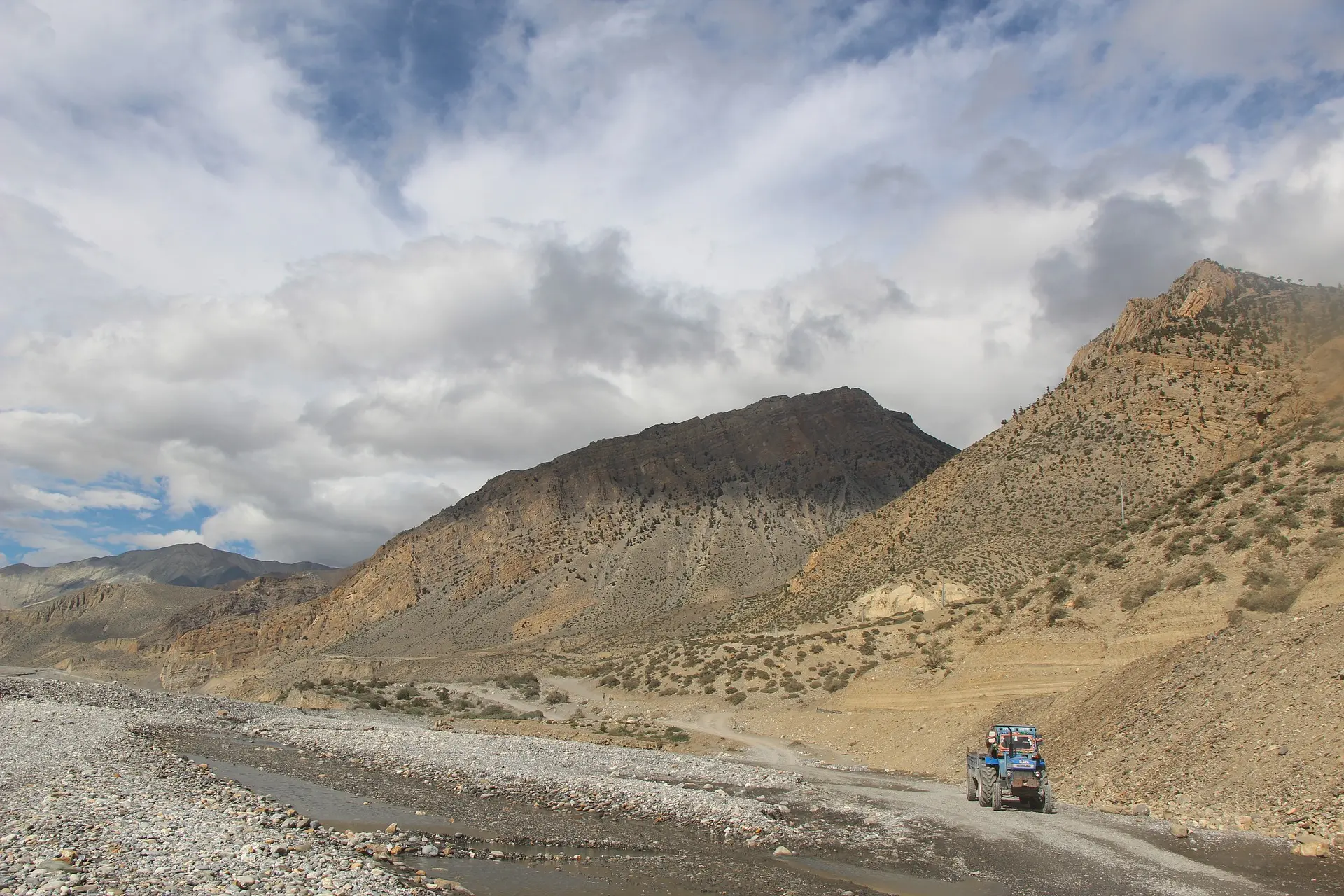
Upper Mustang Trek is a restricted area trekking in Nepal. The rain shadowed part of Nepal; Upper Mustang is an all-season trekking route in Nepal. The less crowded trekking; it is suitable for all levels of the trekkers. The mini-Tibet of Nepal; Mustang is considered as the hidden jewel of Nepal. In fact, Mustang is the last forbidden kingdom of Nepal. The culture and the living style of Mustang people are well influenced by the Tibetan culture and the traditions. The living style is so related to the Tibetan cultures and religion is influenced by Tibetan Buddhism as well.
The maximum elevation the trekkers will get during the trek is 3800 meters above the sea level at Lo Manthang. Lo Manthang still has the kings’ palace even today. Upper Mustang trek offers to collect the best views of Annapurna and Dhaulagiri ranges as well. The diverse landscapes and the deserted part of the Nepal is wonderful to watch.
Basically, two permits are needed for Upper Mustang trek. The first one is Annapurna conservation area permit (ACAP) and restricted area permit. The total amount the trekkers need to US$ 30 and US$ 500 respectively. And the trekkers must go through government licensed trekking company with minimum of two travelers and should hire a licensed trekking guide.
Upper Mustang is a rain shadowed area of Nepal. The best seasons to trek Upper Mustang are Spring (March to May) and Autumn (September to November). But the Upper Mustang Tour package can be done in Monsoon as well. Trekking Mustang is winter is not recommended due to the heavy snowfall. The Upper Mustang weather is in between of 5 to 15 degree Celsius in three seasons (Spring, Autumn and Monsoon). Though the temperature of Upper Mustang goes to minus in the winter time.
Because the trekking path has been impacted in certain places by the lack of road accessibility in the Mustang region, our usual schedule might be slightly different from the norm. Keeping this in mind, we have also customised the journey while putting the drive in a moderate area. As a result, the schedule is a hybrid of driving and walking, with an emphasis on the latter so as to see the region's top sights the monasteries and the King's Palace without having to worry about driving too much.
We cannot control, on the other hand, unforeseen circumstances and occurrences such as the absence of teahouses along the paths and basic lodging amenities. Possible factors include flights being cancelled or delayed, bad weather, natural disasters, newly enforced government regulations, political unrest, health issues of trekkers, and so on. By considering all of the potential outcomes, we can go back to trekking as soon as we can.
We are counting on your cooperation and adaptability at this time.The best way to prepare for the journey is to arrive at least one day before the start date. This will give you time to relax and shop for the necessary clothing, gear, and equipment. To account for potential airline cancellations or delays, it is recommended to arrange your flights with extra days in Nepal to accommodate this trek. In addition, you can personalise your vacation by adding on things like a sightseeing tour of Kathmandu or Pokhara, other adventure sports, or day visits throughout the nation either before or after the hike.
The Kathmandu valley sightseeing is dedicated to exploring the four of the UNESCO World Heritage-listed sites of Kathmandu. Those four sites you will be visiting are; Soyambhunath Temple, Pashupatinath Temple, Boudhanath Stupa and Kathmandu Durbar Square. After the sightseeing, you can then go and pack your trekking equipment. If you need any the equipment then it can be either rented or can be bought in Thamel.
Meals: Breakfast Included
Accommodation: at a 3-star hotel on twin/double sharing basis.
After breakfast in the hotel, you will be picked up by your guide to starting your journey to Pokhara. The bus travel from Kathmandu to Pokhara will be of six to seven hours journey. There will be several breaks for the toilet and a lunch break will be taken as well. Upon your arrival in Pokhara, you will be transferred to the hotel. In your free time, you can walk around the famous Phewa Lake and also collect the super views of mountains and the sunset from the Phewa lakeside.
Meals: Breakfast Included
Accommodation: at a 3-star hotel on twin/double sharing basis.
With the morning flight, get to Jomsom, the district headquarters of Mustang. Then the trek to Kagbeni starts through the worlds deepest gorge of Kali Gandaki. The best views of Mount Annapurna and Dhaulagiri is amazing along the way.
Meals: Breakfast Included
Accommodation: at a 3-star hotel on twin/double sharing basis.
Complete the permits process, then start the trekking to Chele. Along the way, the best views of Nilgiri mountain can be witnessed. The wonderful landscapes are amazing to watch along the way. Upon your arrival at Chele, you can take a good rest. Chele is a small beautiful settlement from where u can overlook the valley with its picturesque setting.
Meals: Breakfast Included
Accommodation: at a 3-star hotel on twin/double sharing basis
Today’s walk is more into undulating trails with a couple of steep climb and descents. Despite 6 hour walk the tremendous canyons with its unusual color that opens out is extraordinary. In this bizarre the farming fields with rich red buckwheat and brilliant green and the south view offering you a panorama of Nilgiri, Annapurna, Tilicho Peak, and YakawaKang adds up to its magnificence.
Meals: Breakfast Included
Accommodation: at a 3-star hotel on twin/double sharing basis
The route from Syanboche to Ghami is a scenic trail as the greater views of Nilgiri, Tilicho and Annapurna mountain can be seen. The Buddhist monastery is wonderful to explore around. Ghami is a small settlement at the lap of the Himalayas.
Meals: Breakfast Included
Accommodation: at a 3-star hotel on twin/double sharing basis
This short trek to Tsarang takes us into the ‘Land of Chortens”. This trail marks the history and legend of the Indian saint Padmasambhava (750-810 AD), the founder of Tibetan Buddhism who created a fusion of Buddhism with the original Shamanistic religion of Tibet called Bon – whose influence upon the Indian Buddhism makes Tibetan Buddhism so fascinating.
Meals: Breakfast Included
Accommodation: at a 3-star hotel on twin/double sharing basis
With four hours trekking, you will get to Lo Manthang. Lo Manthang is the capital city of Mustang. The walled city of Lo, the kingdom with a single entrance is a welcome sight! The king, “Lo Gyelbu”, named Jigme Palbar Bista, still resides at his four-storied palace inside the walled city of Lo Manthang.
Meals: Breakfast Included
Accommodation: at a 3-star hotel on twin/double sharing basis
Lo Manthang the capital city of Mustang contains about 150 houses and has some of the largest and finest Tibetan Buddhism gompas in Nepal. The city itself is absolutely fascinating place with four major ancient Monasteries which are impressive and an enormous 14th-century palace imposing a 4-story building in the center of the city.
Meals: Breakfast Included
Accommodation: at a 3-star hotel on twin/double sharing basis
After the wonderful days in Lo Manthang today, you will leave for Dhakmar. Along the way, you will get a chance to explore the worlds’ oldest monastery built around the 7th century by the incarnated monk Padmasambhava. Dhakmar, a land of red cliffs is one of its kind where overnight is worth it.
Meals: Breakfast Included
Accommodation: at a 3-star hotel on twin/double sharing basis
We will retrace the same way back to Syanboche.
Meals: Breakfast Included
Accommodation: at a 3-star hotel on twin/double sharing basis
We again trace back our trail towards the south. We start early today to visit the Chungsi Cave. The monastery is one of the most attractive among all cave monastery of Mustang where Saint Padmasamvaba meditated around the 7th century. Enjoy the scenic walk.
Meals: Breakfast Included
Accommodation: at a 3-star hotel on twin/double sharing basis
From Chusang, trek further down to Kagbeni for the overnight.
Meals: Breakfast Included
Accommodation: at a 3-star hotel on twin/double sharing basis
Follow the same route back from Kagbeni to Jomsom. Enjoy the scenic walk.
Meals: Breakfast Included
Accommodation: at a 3-star hotel on twin/double sharing basis
After breakfast, you will be transferred to the airport. From there you will be taking a scenic flight back to Pokhara. In Pokhara, you can explore around the Pokhara city to witness the natural and man-made wonders of Pokhara city.
Meals: Breakfast, Lunch, and Dinner Included
Accommodation: at a local tea house on twin/double sharing basis.
After breakfast, you will be transferred to the Pokhara tourist bus station. The journey from Pokhara to Kathmandu will be of six to seven hours a bus drive. There will be several toilet breaks and a lunch break. Upon your arrival in Kathmandu, you will be transferred to the hotel. Later, you can do the last-minute shopping in Thamel.
Meals: Breakfast Included
Accommodation: at a 3-star category hotel on twin/double sharing basis.
After the finest trekking in Nepal; today you will be transferred to the Kathmandu International airport to catch your returning flight. Our representative will do the farewell with the hope to welcome you back in Nepal soon.
Meals: Breakfast Included
Accommodation: not included this day.
The main means of transportation departing from the Jomsom airfield are Twin Otters. Generally speaking, this service is reliable. Mountain weather or other technical issues might cause flights to be cancelled on occasion. If this happens, All the himalayan Team will arrange for the next best road transportation option so that you can make it to your international flight on time.
Additionally, for your return ground transportation from Pokhara to Jomsom, we make use of cars that are readily available in the area, primarily Indian models such as the Mahendra Scorpio and Bolero. The reimbursement received from the aircraft ticket, after deducting the cancellation price, will be used to cover the expense of the road transport. It is important to mention that in the event that the alternative road transportation is consolidated, the flight from Jomsom to Pokhara will not be refundable.
Supplementary Items for the Upper Mustang Trek
Before commencing your expedition, you may acquire these advantageous items in Thamel, Kathmandu:
The 18-day Upper Mustang Trek is an enthralling expedition into Nepal's concealed kingdom, which is also referred to as the "Last Forbidden Kingdom" or "Mini Tibet." A genuinely unique experience is created by the ancient Tibetan culture, Buddhist traditions, traditional villages, dramatic cliffs, and barren Himalayan valleys of Mustang, where this moderate trek takes you through the remote, rain-shadowed landscapes.
The voyage commences in Kathmandu with sightseeing and trek preparation, followed by a drive to Pokhara. Jomsom, the entryway to Upper Mustang, is reached via a scenic flight from Pokhara. The trek then proceeds through traditional villages such as Kagbeni, Chele, Syangboche, Ghami, and Tsarang before arriving at Lo Manthang, the cultural hub of Upper Mustang. Lo Manthang, situated at an elevation of approximately 3,810 metres, is renowned for its ancient monasteries, traditional houses, historic King's Palace, and substantial Tibetan influence.
An exploration day in Lo Manthang offers the opportunity to explore the region's distinctive culture, monasteries, local lifestyle, and adjacent landscapes. The return journey involves a flight to Pokhara and a subsequent drive to Kathmandu, passing through Dhakmar, Syangboche, Chusang, Kagbeni, and Jomsom. Trekkers can savour breathtaking vistas of the Annapurna and Dhaulagiri mountain ranges, as well as dry valleys, colourful rock formations, and desolate Himalayan scenery, as they traverse the trail.
One of the few trekking regions in Nepal that can be visited during the monsoon season is Upper Mustang, which is situated in a rain-shadow area. Spring (March–May) and autumn (September–November) are the optimal seasons for trekking. The winter season is frequently less suitable due to the cold temperatures and snowfall.
Upper Mustang is a restricted trekking area, necessitating that travellers obtain the necessary permits and trek through a government-authorized trekking company with a licensed guide. A minimum of two trekkers is necessary. The trek is appropriate for travellers seeking a culturally rich and less crowded Himalayan excursion, as it reaches a maximum elevation of approximately 3,810 metres (12,500 feet,).
Accommodation in 3-star hotels in Kathmandu and Pokhara, as well as teahouses or lodges during the trek, are included in the 18-day package. Breakfast is included in the trekking portion, while all meals are provided in Pokhara and Kathmandu. The itinerary integrates scenic flights, ground transportation, and walking to ensure a memorable and comfortable voyage through one of Nepal's most captivating and culturally preserved regions.
Upper Mustang is the former Kingdom of Lo, a restricted region in northern Nepal beside the Tibetan border. The trek follows the ancient trade route from Jomsom to the walled city of Lo Manthang. Along the way you pass cave monasteries, red cliffs, chortens, mani walls and Tibetan Buddhist villages.
Foreigners were banned from the region until 1992. Its remoteness has kept the Tibetan-influenced culture, language, architecture and festivals largely intact.
It is moderate. Daily walks are usually 5-7 hours on dry, open trails. The challenge is altitude, wind and long stretches without shade rather than technical terrain. Good fitness and a steady pace are enough, and no mountaineering experience is needed.
You spend most of the trip at 2,800-3,900 m. Lo Manthang sits at about 3,800 m, and the trail crosses passes of roughly 4,000 m or a little higher. Our itinerary builds in acclimatization time.
Our 18-day schedule includes Kathmandu arrival and sightseeing days, Pokhara transit, flights, permit processing, acclimatization, a rest and exploration day in Lo Manthang, and buffer days for weather-related flight delays.
You need two:
The fee has traditionally been USD 500 per person for the first 10 days, plus USD 50 per additional day. Fees are set by the Nepal government and can change, so we confirm the current rate when you book.
No. Upper Mustang is a restricted area, so you must trek through a registered agency with a licensed guide. The minimum group size for the permit is two people.
Typically included are permits, airport transfers, hotel nights in Kathmandu/Pokhara, domestic flights or transport, a licensed guide and porters, teahouse accommodation, meals during the trek, and government taxes. See the Cost Includes/Excludes section on the trek page for the exact inclusions for your departure.
Typically excluded are international flights, Nepal visa fees, travel insurance, personal gear, drinks, hot showers, battery charging, laundry, tips, and meals in Kathmandu and Pokhara beyond those listed.
Yes. Solo travelers can join a group departure so the two-person minimum is met. Ask us about fixed-departure dates.
Plan roughly USD 10-15 per day for personal expenses (drinks, snacks, charging, hot water). Tips for guides and porters are customary at the end of the trek. We can suggest guideline amounts.
Start training 6-8 weeks before. Combine cardio (hiking, running, cycling, stair climbing) with leg and core strength work. Practice day hikes with a loaded pack, and build up to 5-6 hours of walking.
You can rent items like sleeping bags and down jackets in Kathmandu.
Yes. Nights in Lo Manthang and the higher villages are cold even in good seasons, so bring a warm sleeping bag and a down jacket. We can arrange rentals if you prefer not to carry your own.
Porters typically carry up to about 20 kg total, shared between two trekkers (about 10 kg each). Pack your day essentials in a daypack: water, camera, sun protection, layers and snacks.
Yes, it’s possible above 3,000 m. Reduce the risk by walking slowly, drinking plenty of fluids, avoiding alcohol, and telling your guide about any symptoms early. Our itinerary includes gradual ascents and an acclimatization day.
No specific vaccinations are mandatory for Nepal, but check with your doctor about routine and travel vaccines. A medical check-up before a high-altitude trek is recommended, especially if you have heart, lung or blood pressure conditions.
In simple teahouses and lodges, generally on a twin-sharing basis with basic beds and blankets. Lodges in Lo Manthang tend to be a little more comfortable. In Kathmandu and Pokhara we use tourist-standard hotels.
Teahouse menus typically include dal bhat (rice, lentils and vegetables), noodles, momos, soups, pasta, eggs, pancakes, porridge, and tea. Dal bhat is a good energy meal and often includes refills.
Yes. Meals are cooked fresh and vegetarian choices are common. For vegan, gluten-free or other dietary needs, let us know at booking so we can plan ahead. Options may be more limited in remote villages.
Buy boiled or filtered water at teahouses, or bring purification tablets or a filter bottle. We discourage buying single-use plastic bottles to protect the local environment.
Hot showers are available in some lodges for an extra fee, and are less reliable in higher villages. Electricity is mostly solar and sometimes limited, so bring a power bank. Wi-Fi and mobile signal are patchy and often unavailable in remote stretches.
Single rooms can sometimes be arranged in Kathmandu and Pokhara, and occasionally on the trek, subject to availability. Ask us about a single supplement.

Travel inspiration, new treks and exclusive offers, straight to your inbox.