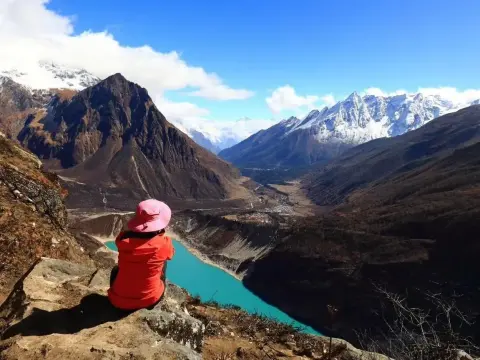
The Manaslu Region is Nepal's premier off the beaten path trekking destination, circling the world's eighth highest peak, Mount Manaslu (8,163m). Unlike Everest or Annapurna, this is a restricted trekking area with a limited number of daily permits issued, which keeps trail traffic low and the sense of remoteness intact even during peak season.
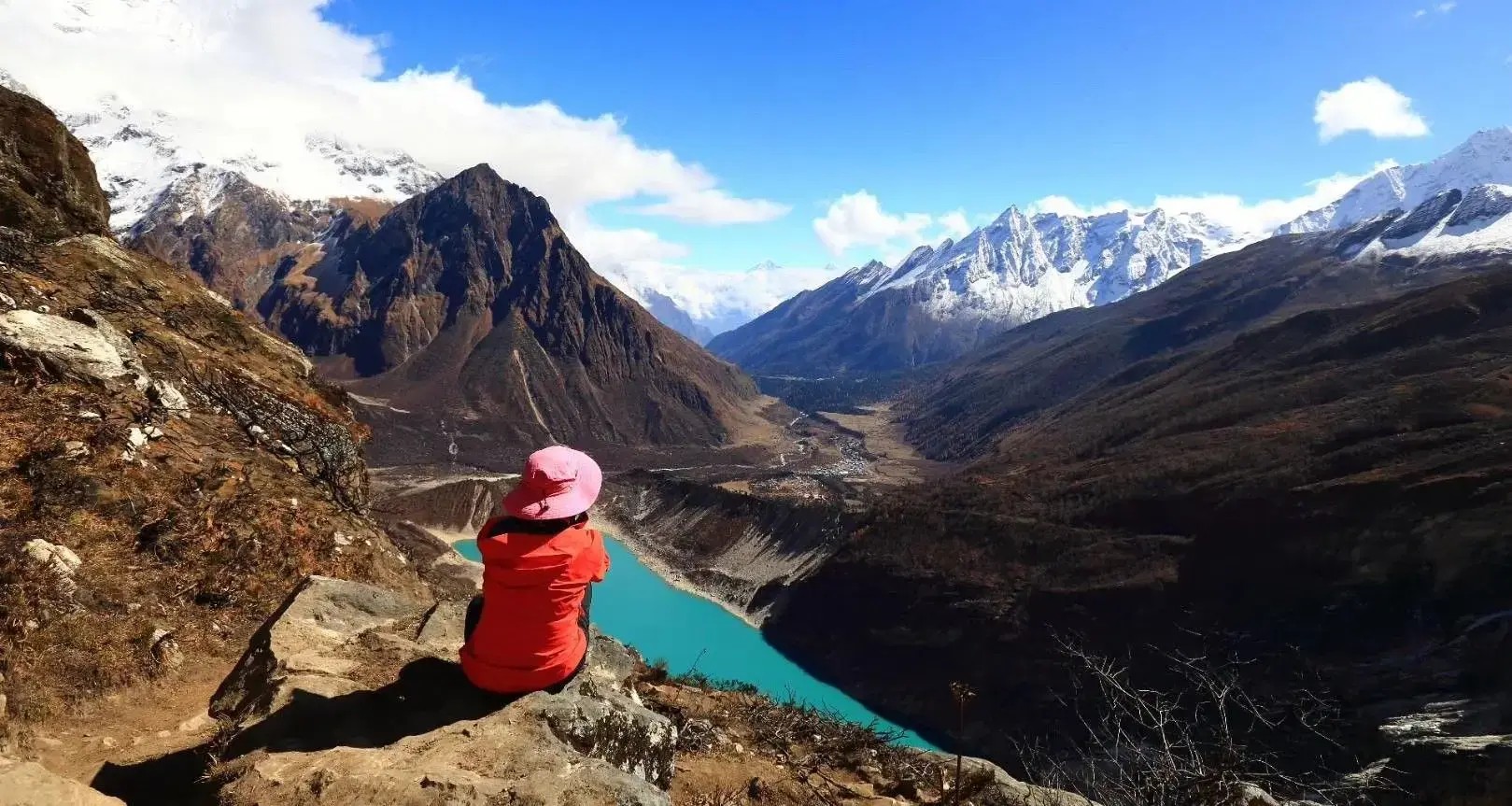
The Manaslu Circuit Trek winds through the Nubri and Tsum valleys, home to villages with deep Tibetan Buddhist roots, centuries old monasteries, and a culture that has changed comparatively little in recent decades. The route climbs gradually alongside the Budhi Gandaki River before crossing the dramatic Larkya La Pass (5,160m), one of the more demanding high passes in the Nepal Himalaya, then descends toward the Annapurna region on the other side.
What sets Manaslu apart is the combination of raw wilderness and spiritual depth found nowhere else at this scale in Nepal. With far fewer trekkers than Everest or Annapurna, longer stretches between villages, and a landscape that feels genuinely untouched in places, this region suits trekkers who've done a major Himalayan trek before and are looking for something quieter and more remote for their next one. Because it's a restricted area, a special permit and a minimum group size are required making advance planning with a licensed trekking agency essential. Best trekked in spring (March–May) or autumn (September–November), when the high pass is most reliably clear of heavy snow.
The complete circuit around Mount Manaslu, following the Budhi Gandaki River through remote Nubri and Tsum villages before crossing the dramatic Larkya La Pass (5,160m). A restricted area trek offering some of the most authentic, least crowded high mountain scenery in Nepal.
Manaslu offers an experience increasingly hard to find in Nepal's more established trekking regions: genuine remoteness, without sacrificing the scale and drama of high Himalaya scenery.
The Manaslu Circuit Trek unfolds in three broad stages, each with a distinct character.
The lower Budhi Gandaki valley. The trek begins with a gradual climb alongside the Budhi Gandaki River, passing through terraced farmland, subtropical forest, and small Gurung and Ghale villages a gentler introduction before the trail turns toward higher, more remote terrain.
The Nubri and Tsum valleys. As the route gains altitude, it enters territory shaped by Tibetan Buddhist culture, with villages like Samagaon and Samdo serving as key acclimatisation stops. Ancient monasteries, prayer wheels, and mani walls become a constant presence, and side trips into the Tsum Valley (where permitted) offer an even deeper look at this cultural heritage.
Larkya La Pass and the descent. The trek's high point, both literally and figuratively, is the crossing of Larkya La Pass (5,160m) a long, demanding day that rewards trekkers with sweeping views of Manaslu, Himlung Himal, and the surrounding peaks before descending toward Bimthang and eventually linking toward the Annapurna region.
Spring (March–May) offers milder temperatures and generally stable conditions for the Larkya La crossing, making it one of the two peak seasons for this trek.
Autumn (September–November) is the most popular season, with the clearest skies and most reliable weather window for crossing the high pass.
Winter (December–February) becomes significantly more difficult due to heavy snow at Larkya La, and the pass may be impassable or considerably more hazardous during this period.
Monsoon (June–August) brings heavy rain, landslide risk on lower sections of the trail, and poor visibility at higher elevations, and is not recommended for this route.
As a restricted trekking area, Manaslu requires more permits than most other regions in Nepal:
Because of the restricted area status and minimum group size requirement, this trek cannot be arranged as a fully independent solo trip permits and logistics are handled through a licensed trekking agency, which also arranges the required guide.