Our guides have walked the Island Peak With Everest 3 Passes Trek trails for years. They recall how Namche Bazaar transformed from a fairly busy trading post to the Sherpa capital that it has become today. During your time there, you can see this change daily. Saturday markets still buzz with villagers from remote settlements like Thame and Khumjung. Stone houses with hand-painted blue window frames guard against mountain spirits. This tradition continues despite satellite phones and solar panels.
The Khumbu Valley shelters tens of thousands of Sherpa residents across 45 major villages. Their language carries Tibetan roots. Most practice Nyingma Buddhism alongside ancient mountain worship. One of the notable Nyigma monasteries, the Tengboche Monastery, has had its wooden beams survive an earthquake. Inside, butter lamps illuminate centuries-old thangka paintings. On the same note, Khumjung Monastery houses an alleged Yeti scalp that is set on display for visitors to look at. There, local monks still perform healing rituals using juniper smoke.
We cross trails carved by yak caravans centuries ago. These paths connect sacred lakes and high passes. Gokyo's six turquoise lakes form one of the world's highest freshwater systems. Sherpas perform water blessing ceremonies here each spring. En route, the Ngozumpa Glacier stretches 36 kilometers below us. Its crevasses swallow entire yaks during sudden snowfalls. Our porters know which ice trails are safe each season.
Three high passes challenge even seasoned trekkers. Renjo La at 5,360 meters offers our first clear view of Everest. Cho La's icy slope demands crampons and fixed ropes. Kongma La at 5,535 meters reveals Makalu's perfect dome shape. Island Peak or Imja Tse serves as a training ground for Everest climbers. Sherpa guides have led thousands of attempts and over 70% of them have been successful. Their knowledge saves lives when the weather turns bad suddenly.
Sherpas born and raised in Khumbu are well adapted to the climatic conditions. Notably, Thame village produces more Everest summiteers than any other settlement. Children still learn traditional songs alongside modern subjects. Mani Rimdu festival fills monastery courtyards with masked dancers each autumn. UNESCO designated this region a World Heritage Site in 1979. Our tea house hosts share stories over garlic soup and Chyang beer. They remember when flights didn't exist and journeys took almost 30 days from Kathmandu. This trek honors their resilience while walking the same sacred ground.
Day 1 of the Island Peak With Everest 3 Passes Trek starts at 5 in the morning. We drive to Manthali Airport the day before the flight and stay the night there. This small airstrip serves as Everest's seasonal gateway when Tribhuvan Airport does not seem to be functioning well. We board a Twin Otter aircraft carrying 15+ passengers. The pilot flies through narrow Himalayan valleys. Snow peaks appear below our windows. Lukla Airport sits at an elevation of 2,860 meters. Its steep runway demands expert piloting skills.
We land safely on the mountain strip. Our trekking team greets us on the tarmac. Porters collect the group's equipment immediately. We begin walking within 30 minutes of landing. The trail drops sharply from Lukla's high point. We cross the Tenzing-Hillary suspension bridge. This metal structure spans a deep gorge. Prayer flags wave above the roaring Dudh Kosi River and Pine forests surround the initial path. Sherpa villages appear at regular intervals as we pass Chheplung and Tok Tok settlements. Teahouses line the route every few kilometers.
Today's Island Peak With Everest 3 Passes Trek covers approximately 8 kilometers total distance. We descend from 2,860 meters in Lukla to 2,610 meters at Phakding. This elevation loss helps our bodies adjust gradually. Stone steps dominate the first section and forest paths replace stairs later. We cross three major suspension bridges today. Each bridge offers views of the milky river water. Waterfalls pour down distant cliff faces. We observe dzopkyos grazing near the trail edges. These yak-cow hybrids carry local supplies.
We walk for 3 to 4 hours at a steady pace and also stop often to drink water and capture photos. Phakding village rests on a flat riverbank. Stone houses cluster along the Dudh Kosi riverbanks. Our lodge provides basic accommodation. Rooms have shared bathroom facilities, hot showers require extra payment, and nightly dinner features dal bhat or noodle soup options. Tibetan bread appears at breakfast tomorrow. We will sleep early tonight as tomorrow brings the climb to Namche Bazaar. Today tests our stamina gently and builds anticipation for higher mountains ahead.


We rise early in Phakding for the 2nd day of our Island Peak with Everest 3 Passes Trek. Breakfast includes porridge and eggs at our teahouse. We pack quickly as the sun warms the valley. The trail follows the Dudh Kosi River upstream. We cross a total of five suspension bridges before reaching Monjo. Each bridge sways gently over slightly murky waters due to the sediments mixed in the water. Monjo houses the Sagarmatha National Park checkpoint. We present permits here for inspection and wait as rangers verify our entry documents thoroughly.
The path turns steep after Monjo. Stone steps climb relentlessly toward Namche. This final ascent tests our leg muscles. We gain 600 meters of elevation in two hours. Porters pass us carrying heavy loads. They move with impressive speed and balance. We stop frequently to catch our breath as the views open to Thamserku and Kantega peaks. Yaks graze on terraced slopes above us. The trail winds through rhododendron forests. We smell pine needles underfoot.
Namche Bazaar emerges suddenly on a hillside ledge. This Sherpa trading hub bustles with activity. We check into lodges with mountain views. Hot water costs extra after our tiring climb and lunch options include momo dumplings, dal bhat, fried rice, and other filling dishes. We rest our feet on wooden benches as afternoon clouds often roll into the valley. We prepare gear for tomorrow's acclimatization day. Our bodies need time to adjust to 3,440 meters above sea level. Sleep comes easily after six hours of trekking. Tomorrow brings rest and short hikes and Namche's Saturday market might be active if timing aligns. We observe Sherpa families selling handicrafts as this stop fuels our journey toward the high mountains.
We spend day three of the Island Peak with Everest 3 Passes Trek resting in Namche Bazaar. Our bodies need time to adjust to an elevation of 3,440 meters. We avoid sleeping during daylight hours; this rule helps our acclimatization process significantly. Morning brings a short hike to the Everest View Hotel. This walk takes about an hour each way. We gain around 400 vertical meters during this excursion. The hotel terrace offers a great, clear, wide view of Everest. Ama Dablam and Thamserku peaks dominate the skyline as well. We drink Sherpa tea while observing the panorama. Our guides check our oxygen saturation levels regularly.
Afternoon activities focus on cultural exploration. We visit the Sherpa Culture Museum near the market square. Exhibits showcase traditional climbing equipment while photographs document early Everest expeditions. We learn about Tenzing Norgay's achievements here. The museum charges a small entry fee. We browse local handicraft stalls nearby where artisans sell hand-knitted hats and carved prayer wheels. Bargaining remains expected but keep it respectful.
We meet our guides for an equipment check after lunch. Many trekkers purchase additional gear in Namche but it will be expensive compared to renting or buying gear from Kathmandu. The town has several well-stocked outdoor shops. We test our headlamps and spare batteries at Island Peak with Everest 3 Passes Trek guides brief us on the upcoming high passes. Water purification tablets become essential from this point. We fill our bottles from lodge taps and use tabs to purify them well.
Evening brings a team meeting at our lodge where the guides explain the route to Thame village tomorrow. They emphasize the importance of slow pacing as we must practice using trekking poles on steep sections. Dinner features Tibetan bread with honey, dal bhat, stir-fried veggies, and many more options. We sip garlic soup to prevent altitude sickness. Our group shares stories from previous mountain experiences as we head to bed one by one. We feel stronger already after proper acclimatization. Tomorrow's trek to Thame awaits our fresh legs.
We leave Namche Bazaar after breakfast, starting the day of the Island Peak with Everest 3 Passes Trek. The trail heads north away from the Everest crowds. We cross a suspension bridge over the DudKosisi River. This marks our departure from the main Everest route. The path climbs steadily through pine forests. Rhododendron bushes line both sides of the trail. We pass small Sherpa farms with stone walls. Khumjung village appears after two hours of walking. This settlement houses the famous Khumjung monastery. We visit the monastery's Yeti scalp exhibit briefly. Local monks explain its cultural significance. We contribute a small donation for preservation efforts. The village school founded by Sir Edmund Hillary stands nearby. Children wave as we continue our ascent.
The trail becomes steeper after Khumjung. We gain elevation quickly through rocky sections. The stone steps test our leg strength today. Views open to Kongde Ri peak on clear days. We spot Himalayan thars grazing on distant cliffs. The Bhote Kosi River flows below our path. Its sediment-rich waters roar through narrow gorges. We refill water bottles at a clean mountain spring. Thame village sits in a high valley bowl. We arrive by early afternoon after five hours of walking. The settlement houses traditional Sherpa stone homes. Prayer flags stretch between rooftops across the valley. Our lodge offers rooms with views of Thamserku peak. Hot water remains limited at this altitude. We wash faces with cold mountain water instead. Dinner features local buckwheat pancakes tonight.
As always, evenings bring a group briefing about tomorrow's challenges, and the guides explain the route to Lumde village. Our sleeping bags feel colder at 3,800 meters above sea level. We drink ginger tea before bedtime. Tomorrow requires an early start for the long trek ahead. Tonight's rest prepares us for the journey toward Renjo La pass. We sleep soundly under thick wool blankets. The stars shine brightly above Thame's quiet valley.
We wake before sunrise in Thae, to get started with the following day of the Island Peak Everest 3 Passes Trek. Our bodies feel stronger after yesterday's rest. We pack extra snacks for today's long journey. The trail leaves Thame Valley heading east. We cross a high suspension bridge over the Thame Khola. This bridge sways slightly in the morning wind. The path climbs steadily through alpine meadows. Yaks graze freely on sparse mountain grass.
Stone chortens mark important trail junctions. We pause at each one to catch our breath as the air grows thinner as we gain elevation. We stop every forty-five minutes or so to hydrate. Our water bottles can freeze slightly at higher points. We wear sunglasses against the strong sun glare. The trail follows the river upstream for three hours. Small glacial streams feed into the main waterway.
Marming village appears around midday. This tiny settlement has just around five stone houses. We eat lunch at a basic teahouse here. Dal bhat and boiled potatoes fuel our afternoon climb. The owner offers us warm butter tea. We refill water bottles from a clean source. The final ascent to Lumde tests our stamina. Steep sections require deliberate footing as loose scree covers parts of the upper trail.
Lumde sits on a rocky plateau at 4,380 meters. We arrive after six and a half hours of walking over rugged trails. The village has minimal facilities for trekkers. Our lodge provides simple bunk beds with thick blankets. Solar panels power small lights in common areas. Dinner consists of noodle soup, Sherpa stew, Tibetan bread with veggies, etc. We eat early and head to bed to conserve energy. Guides check our oxygen levels after dinner. The guides head to their beds after everyone shows good acclimatization signs.
We prepare gear for tomorrow's Renjo La crossing. Warm gloves and windproof layers are essential. We discuss the early 5 AM start time at least once before heading off to individual beds. The pass sits at 5,360 meters elevation so proper rest is critical for high altitude performance. We sleep in layers despite the cold room as wind howls outside our small wooden windows. Tomorrow brings our first major Himalayan pass.
We rise at 4:30 AM in Lumde. Headlamps illuminate our packs as we dress quietly. Breakfast is simple porridge and black tea. The cold air bites our faces outside the lodge. We begin climbing before first light. Headlamp beams cut through the darkness ahead as the trail ascends sharply from Lumde's plateau. Stone steps give way to rocky moraine terrain.
Dawn reveals the massive Ngozumpa Glacier to our right. This river of ice stretches for 36 kilometers. We navigate around deep crevasses carefully. Our guides lead a single file through tricky sections. The path winds up a steep scree slope. Well-defined and marked tracks help us climb the final pass approach. Each step requires deliberate breathing at this altitude. We pause often to monitor our condition.
Renjo La Pass appears suddenly at 5,360 meters above sea level. Prayer flags crisscross the summit cairn. The view stops us completely, we see Everest, Lhotse, and Makalu peaks clearly. Gokyo Lakes spread below like turquoise jewels. Ama Dablam dominates the southern horizon. We spend thirty minutes absorbing this magnificent panorama. You capture the moment without removing gloves if you have a digital camera.
The descent to Gokyo demands careful footing. Loose rocks slide under our boots unpredictably. We zigzag down steep sections slowly. The trail passes two smaller glacial lakes first. Yaks graze near the third lake's edge. Their bells jingle across the water's surface. Gokyo village appears after four hours of downhill walking. Stone huts cluster near the largest lake shore. Our lodge has basic dormitory rooms, where we dry wet boots near the stove. Dinner is simple noodle soup and bread, which we eat early to digest before sleeping. Stars reflect perfectly in the still lake water. Our bodies feel tired but accomplished today as we conquered our first high Himalayan pass.
The pre-dawn cold bites our fingers as we tighten boot laces for the 7th day of the Island Peak Everest 3 Passes Trek. Our headlamps create small circles of light on the rocky path. We climb directly above Gokyo's third lake. The trail disappears into darkness ahead. Each step requires focus on loose scree and icy slopes. Our breathing sounds loud in the thin air. We gain 550 vertical meters to reach Gokyo Ri's summit. This climb takes two hours of steady effort.
Sunlight floods the Himalayas as we reach the top of the ridge. Many of the world's highest peaks surround us completely. Everest, Lhotse, and Makalu pierce the morning sky as four turquoise Gokyo Lakes spread below like scattered gems. The Ngozumpa Glacier stretches endlessly toward Cho Oyu. We spend twenty minutes enjoying this one-of-a-kind scene. No words capture such vastness and beauty.
We descend quickly to Gokyo village for a late breakfast. Thaknak lies seven hours west across rocky terrain. Today's Island Peak with Everest 3 Passes Trek trail follows the glacier's edge initially. We cross several freezing streams over makeshift log bridges. The path narrows along steep valley walls. Loose rocks demand constant attention. We refill water bottles at clean glacial springs. Lunch happens at a small stone shelter near the valley floor.
Thaknak appears as a group of stone huts at 4,750 meters above sea level. We arrive exhausted after eight hours of walking. Our lodge has basic wooden beds and thick blankets. Hot water is available only in a bucket, as the water pipes tend to freeze. Dinner consists of simple soups, some form of carbs, and perhaps some vegetables.
On the 8th day of the Island Peak With Everest 3 Passes Trek, we leave Thaknak after the sun rises over the horizon. The temperature hovers around minus ten degrees Celsius. Our guides lead us across frozen terrain toward Cho La Pass. The glacier approach requires careful foot placement. Ice axes provide stability on steep sections. We follow rope lines through crevasse fields. The air thins noticeably over 5,000 meters above sea level.
Cho La summit sits at 5,420 meters of elevation. Prayer flags mark this second high pass crossing of the Island Peak With Everest 3 Passes Trek. Everest and Ama Dablam appear through clearing clouds. We spend fifteen minutes taking photos as our fingers stiffen quickly in the cold. Guides check everyone's condition before descent. The western slope demands technical skill. We slide down the snow slopes carefully. Our crampons bite into the hard surface. The trail drops sharply toward Dzongla village. Rock walls replace glacier ice after three hours. We remove crampons near the valley floor. Dzongla offers a brief lunch stop at a stone teahouse. Thukpa soup warms our chilled bodies.
Afternoon brings the longest section of the Island Peak With Everest 3 Passes Trek to Lobuche. The path follows the Khumbu Glacier's edge. Moraine ridges create uneven walking surfaces. We cross several glacial streams on narrow bridges. Afternoon sun softens the snow underfoot. Porters pass us carrying heavy loads. Their stamina impresses us at this altitude. Lobuche appears as stone huts on a barren plateau. We reach our destination after eight and a half hours of walking. Dinner features simple dal bhat and garlic soup. Hot water bottles go under sleeping bags tonight since the cold penetrates even thick down jackets. Sleep comes slowly at 4,940 meters of elevation. We listen to the wind howling outside our window. Today's effort proves that our bodies have adapted well to high altitude.
Day 9 of the Island Peak With Everest 3 Passes Trek requires us to wake up at 6 AM in Lobuche. Breakfast consists of porridge and black tea at 6:30 AM. We leave the stone lodge by 7 AM sharp. The trail climbs steadily toward Gorakshep. We gain 300 vertical meters over rocky moraine terrain. Our crampons fix into icy patches along the Khumbu Glacier edge. We walk in a single lane to avoid congesting the tracks. Gorakshep appears after two hours of climbing. This small settlement sits at an elevation of 5,164 meters. We enter a stone teahouse for quick refueling. Hot ginger tea and Tibetan bread warm our hands as the guides check pulse oximeter readings on all team members. Oxygen saturation must stay above 85 percent for safety against altitude sickness.
We depart Gorakshep at 9:30 AM for Everest Base Camp. The route crosses the Khumbu Glacier's rocky surface. Yak bells mark expedition supply trains ahead of us. We navigate around blue ice walls and glacial pools. Everest Base Camp sits at 5,364 meters of elevation. We arrive at 11 AM after three hours of careful walking. Colorful expedition tents cluster near the official marker stone. Climbers prepare gear for their summit attempts here. We spend around sixty minutes at Base Camp.
We drink water and keep ourselves hydrated throughout the day, especially during our rest stop. Guides watch for altitude sickness symptoms closely. We photograph the Khumbu Icefall's towering walls. Nuptse ridge blocks Everest's summit from this viewpoint. We leave Base Camp at noon for our return trek. The descent to Gorakshep takes two hours. Our legs feel heavy on the uneven glacial terrain. We reach the teahouse by 4 PM for a light supper. Simple dal bhat and noodle soup restore our energy.
We sleep deeply despite the thin air at 5,164 meters. Today's effort covered nine kilometers of total distance, which is substantial at this kind of elevation and environmental conditions. We gained 400 meters of elevation from Lobuche to Base Camp and ultimately ended the day at Gorakshep, about 200 meters above our starting point of the day.
The next day on the Island Peak With Everest 3 Passes Trek, we wake at 4:30 AM in Gorakshep's icy darkness. After freshening up, we will have an energizing morning meal to start the day. Breakfast consists of hot porridge and black tea. We dress in all available warm layers. Gloves freeze stiff when touched to metal buckles. The trail begins climbing immediately from our lodge. Kala Patthar summit sits 5,545 meters above sea level. This pre-dawn ascent requires careful pacing.
Stone steps give way to loose scree slopes. Our breathing grows labored above 5,000 meters. We pause every twenty minutes to rest. The eastern sky lightens as we climb higher. Stars fade slowly over the Himalayan range. Everest's shadow appears first against the dawn. Then the sun strikes the highest peaks, turning them a shade of gold. We reach Kala Patthar's rocky summit at sunrise. The view stops all conversation completely. Everest stands directly across the valley while Nuptse and Lhotse form a massive barrier wall. The Khumbu Glacier spreads below like cracked clay. We spend forty minutes taking in this absolutely stunning view.
The descent to Gorakshep takes one hour. We eat a late breakfast of eggs and chapati bread. The trek back to Lobuche begins at 9 AM. This route follows the valley floor westward. Afternoon sun melts the ice off the frozen trail surface. We cross several small glacial streams as we head towards our destination of the day. Each bridge requires careful stepping on ice. The path passes the Thukla Pass memorial chortens. Stone monuments honor climbers lost on Everest. We stop briefly to read the plaques. Lobuche appears after five hours of steady walking.
We have to wake up at around 4 in the morning, at Lobuche's stone huts to start the 11th day of the Island Peak With Everest 3 Passes Trek. Headlamps illuminate frozen gear laid out the night before. Breakfast is dry chapati bread and weak tea. Our bodies remember yesterday's Kala Patthar climb. Today brings Kongma La, our third high pass crossing. We strap crampons tightly over stiff boots and ice axes feel familiar in our gloved hands. The trail climbs directly above Lobuche village. Moonlight reveals massive moraine ridges ahead. We navigate boulder fields in pre-dawn darkness. Our guides lead a single file through narrow passages. Fixed ropes appear at the steepest sections. Altitude affects everyone above 5,000 meters. We pause every thirty minutes to make sure that we are getting enough oxygen into our system and also to hydrate ourselves
Kongma La summit sits at an elevation of 5,535 meters. Prayer flags flutter loudly in the fierce wind. This pass feels more exposed compared to the previous crossings. Everest's South Face dominates the eastern view. Makalu appears clearly to the southeast. We spend only ten minutes at the top since frost forms quickly on our eyelashes and beards. Guides count heads before the descent begins. The western slope requires careful technique. Hard ice covers the initial descent route. Crampons keep us stable with each downward step. We traverse beneath massive ice cliffs. Ice walls loom dangerously above the trail. Our guides watch the ice constantly. The path drops sharply toward the Chhukung valley. Snow gives way to a rocky scree after about two hours of trekking.
Chhukung appears as a green oasis below. We descend 800 vertical meters from the pass summit. Afternoon sun warms our faces finally. The Imja River flows clean and cold through the valley. We refill water bottles at its edge. Stone houses with blue window frames mark village boundaries. Our lodge has surprisingly comfortable beds tonight. Hot showers function using solar-heated water. Dinner features fresh vegetables after days of simple meals. Evening brings equipment checks for tomorrow's climb. We inspect harnesses and carabiners carefully. Acclimatization has prepared us well for high altitude. Our bodies move more efficiently at 4,730 meters now. We sleep early knowing tomorrow brings serious climbing preparations.
Today is an exciting day on the Island Peak With Everest 3 Passes Trek. We spend the morning preparing climbing gear in Chhukung. Guides lay out ropes and harnesses on wooden tables. Each climber receives personal equipment checks. We practice using crampons on flat rocks nearby. Ice axe arrest techniques get reviewed thoroughly. These skills become vital for Island Peak's steep sections. The hike to Chhukung Ri starts after lunch. We ascend the valley's western ridge slowly. Loose scree makes footing tricky in places. Our guides set a deliberate pace uphill as we gain 800 meters of elevation over three hours. The trail passes frozen streams and small glacial ponds. Yaks graze on sparse vegetation higher up.
Chhukung Ri summit sits at 5,550 meters above sea level. The view rewards our effort completely. Ama Dablam dominates the southern horizon while Island Peak's distinct pyramid shape appears clearly to the north. We see the entire Imja Valley spread below us. Makalu's summit pierces the distant sky on clear days.
After such an incredible experience, the midday hours bring focused climbing briefings back at base camp. Guides describe fixed rope sections, crevasse zones, and the overall climbing experience so that you are mentally prepared for what's about to go down in the coming days. Weather windows determine our summit attempt timing. We pack daypacks with essential items only. Warm gloves, extra socks, and high-energy snacks go in first. Water bottles must be insulated against freezing. After some hours evening discussions cover emergency protocols thoroughly. We review hand signals for communication in the wind, when nothing can be heard clearly.
Guides assign rope team partners for the climb. Everyone practices putting on helmets quickly. We test oxygen masks briefly though most climbers won't need them. Dinner features extra carbohydrates for energy storage. Our bodies need maximum fuel for tomorrow's effort. Sleep comes early and easily after this preparation day. Our lodge sits at 4,730 meters above sea level. Windows rattle slightly in the evening breeze.
Day 13 of the Island Peak With Everest 3 Passes Trek is the start of the climb. We leave Chhukung at 8 in the morning. Our lead guide checks the weather forecast on his satellite phone. Hopefully, clear skies will favor our climb to the summit tomorrow. He points toward Island Peak's ice wall and relays the start of the hike to the base camp. The trail crosses the Imja Khola on a swaying metal bridge. Porters carry our base camp supplies ahead of us. They move with a steady rhythm despite heavy loads. A few of our porters have worked these mountains for over ten years. Additionally, our guides are very familiar with the routes, the terrain, and the plethora of tiny details that you might have otherwise missed.
Morning sun warms the valley floor as we pass grazing yaks with bells around their necks. Their owners wave from stone huts. These villagers supply our base camp with fresh milk and other produce. There are no tea houses at the base camp, so our guide is our cook for the time being. Some locals and guides stop to collect medicinal plants near the path. The base camp sits on a rocky plateau at 4,970 meters above sea level, where our porters will erect tents immediately upon arrival, while you can roam around near the camp. Our sleeping quarters face the mountain directly. Summit teams need to see weather changes instantly, so our guide will keep up with frequent weather updates.
After having the camps set up, our climbing guide demonstrates ice axe arrest techniques on a snow patch. His movements are precise and economical. He learned these skills from years of mountain climbing experience. Everyone practices securing harnesses and testing crampons. After this session, the porters serve hot garlic soup in the dining tent. They might just add extra ginger for warmth. Safety matters more than summit success, so we will go over the basics of safety once more before the night sets in. Evening temperatures drop rapidly so keep yourself as warm as possible to avoid getting cold.
Our headlamps stand out in the darkness at 3 in the morning, starting the summit day of the Island Peak With Everest 3 Passes Trek. Our climbing guide checks oxygen levels before we leave base camp. His weather radio crackles with hourly updates. Wind speeds remain below 20 kilometers per hour, preferably and hopefully. This qualifies as perfect summit conditions. The glacier approach requires crampons and fixed ropes. We follow the guide's footprints in the snow. His pace allows three steps of breathing. This rhythm prevents altitude exhaustion. The ice wall appears at 5,800 meters above sea level. Headlamps illuminate blue ice formations glowing like crystals in the dark. Climbers ahead look like fireflies on the steep slope.
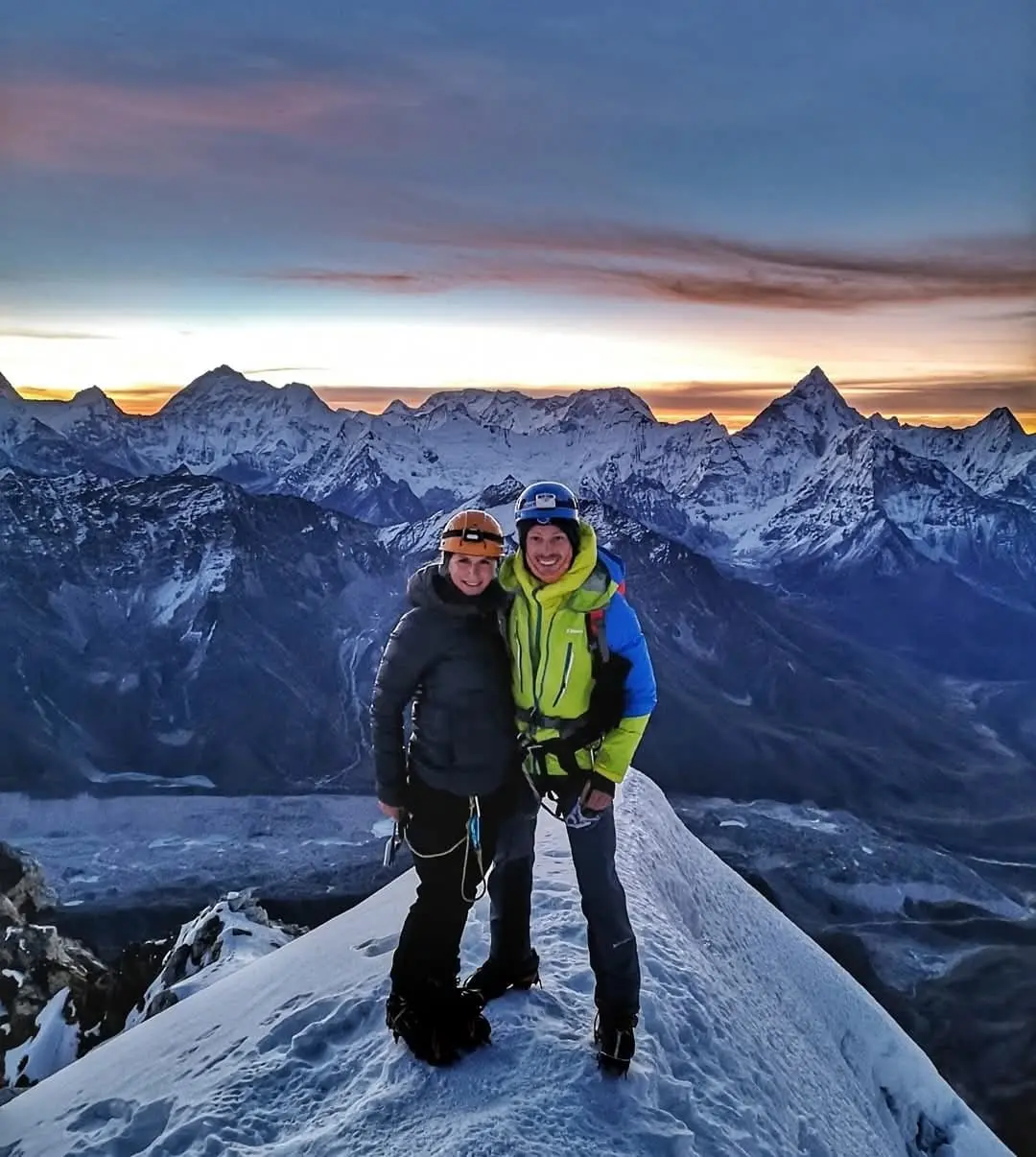
The climbing guide anchors the rope team at the base of the ice wall. He places ice screws with practiced precision. Each climber clips into safety lines methodically. The wall grades at 50 degrees near the top. Summit ridge arrives at 7:45 AM. First light reveals Everest's summit glowing pink. Lhotse and Makalu appear clearly in the dawn. We spend approximately twenty minutes on top. The guide watches for frostbite signs on exposed skin as the temperature reads minus 22 degrees Celsius.
After enjoying a once-in-a-lifetime sunrise scene from the top, featuring many of the world's highest summits, we have to get back down. Descent begins immediately after group summit photos are taken by the guide, proving that you completed the Island Peak with Everest 3 Passes Trek. Rappelling down the ice wall requires full concentration. As the leader of the group, the guide tests each anchor point before we commit weight. Base camp appears at 11 AM. Hot soup waits in the dining tent, where the porters await us and serve extra butter tea for warmth. Staff pack tents while we rest briefly. The return trek to Chhukung starts at 1 PM. Glaciers melt noticeably during our descent hours as we will be moving down during the afternoon hours.
Chhukung village welcomes us at 5 PM. Lodge owners prepare celebration meals. The guide receives phone calls from other guides checking conditions. His summit success rate stands at 80 percent over ten years. This statistic matters to serious climbers. We are eating dal bhat with extra portions tonight, as we have had a long and exhausting day. Muscles need replenishment after over twelve hours of effort. Evening brings gear drying and injury checks.
On day 15 of the Island Peak With Everest 3 Passes Trek, we wake up late in Chhukung after yesterday's summit effort. Muscles ache pleasantly under warm blankets. The guide notes down your orders for breakfast the night before so that the teahouse owners have plenty of time to prepare meals for everyone. Our bodies need protein after burning thousands of calories yesterday. After a leisurely breakfast session, the trail descends sharply from Chhukung Valley. Morning sun warms our backs as we lose elevation. We cross the Imja Khola bridge one final time.
Stone steps replace the rocky moraine after three hours. Our knees welcome the change from yesterday's technical climb. Pangboche village appears suddenly around a bend. Ancient juniper trees surround the settlement. Some of these sacred trees predate the oldest monastery. Villagers wave from terraced fields where they grow barley and potatoes. Their stone houses have mostly blue window frames painted with protective symbols. Pangboche Monastery stands on the village edge. Many visitors contribute to monastery preservation.
Our lodge offers proper beds with thick mattresses. Hot showers function using hydroelectric power from the river. After reaching our destination of the day, a few minutes of gentle stretching exercises is the best way to cool down your hot muscles. These post-summit days require careful recovery management. We practice deep breathing techniques to rebuild lung capacity. Oxygen saturation levels improve noticeably by dinner time. Dal bhat portions double tonight. Carbohydrates replenish depleted energy stores. Sleep comes easily at a lower altitude compared to our nights at higher villages. Pangboche's elevation allows for deeper rest than Chhukung. Tomorrow begins our return journey toward Namche Bazaar.
The morning light filters through Pangboche's ancient juniper trees on the 16th day of the Island Peak With Everest 3 Passes Trek. Our knees feel stiff after yesterday's descent but ready for today's journey. The guide examines the trail map drawn in his notebook. He points toward Namche Bazaar's distant ridge. The path drops sharply into the Dudh Kosi Valley. Stone steps carved by generations of Sherpa feet guide our descent. The guide leads the group in singing traditional herding songs.
Tengboche Monastery appears after a little over two hours of walking. The monastery survived the devastating 2015 earthquake with little damage and has been renovated. Lunch happens at a teahouse in Phunki Tenga. This spot has provided rest for climbers since the 80s. The final climb to Namche tests tired legs. The guide times our rest stops precisely, as many of the novice trekkers often find it exhausting to reach Namche today.
Namche Bazaar emerges suddenly around the last ascent. Solar panels glint on modern lodges beside traditional stone houses. Our teahouse for the night offers real mattresses and working showers. We recommend having some warm garlic soup to prevent evening chills and altitude sickness. After settling in, you can explore the nightly vibe of Namche, which features the highest pub in the world and also the highest live music bar in the world, which is a new addition to the region. While we recommend avoiding alcohol during the trek, you may have a couple of drinks to celebrate a successful journey summiting Island Peak.
The following day, on the Island Peak with Everest 3 Passes Trek, we wake up refreshed in Namche Bazaar after proper rest. Our packs feel lighter after washing clothes yesterday. The guide checks the weather radio before breakfast. Clear skies favor our final trekking day for the most part, if we are trekking at the right season. He reminds everyone to tighten boot laces for downhill walking. Knee strain causes most injuries on descent days. The trail drops sharply from Namche's ridge. The guide leads at a deliberate pace. Two hundred steps walking, thirty seconds breathing. This rhythm prevents knee fatigue. We pass rhododendron forests in full bloom. Their red flowers contrast against the blue mountain skies.
Monjo checkpoint appears after about three hours of trekking from Namche. Rangers stamp our permits for the final time. This small post gets to see tens of thousands of trekkers every year. The bridge crossing here sways less than others. Engineers reinforced it after the earthquake damage. Phakding village greets us at lunchtime. We eat dal bhat at the same teahouse from day one. The owner remembers our faces and serves extra pickles. Children play soccer on the flat riverbank. Their laughter echoes differently now after the high mountain silence. The guide points to fresh landslide scars on valley walls. These marks show why April and October are the safest trekking months.
The final climb to Lukla surprises many trekkers. We gain 200 meters after hours of descent. Our legs feel heavy but motivated to reach the end of the Island Peak With Everest 3 Passes Trek. Lukla's airstrip appears suddenly through pine trees. Pilots test engines on the tarmac below. The smell of aviation fuel mixes with pine forest air. Tenzing counts team members carefully at the landing strip edge. Our lodge has hot showers, modern amenities, and a great view of the valley. The guide arranges celebratory butter tea with the owner. Porters receive extra tips for their strong work. The tea house owner prepares garlic soup one last time for us as we pack carefully for tomorrow's flight. Sleep comes in like a long-awaited reunion after six hours of trekking through undulating tracks. The mountains remain behind us, their lessons carried forward.
On the last day of the Island Peak With Everest 3 Passes Trek, the dawn arrives quietly over Lukla's airstrip. Our final morning begins with steaming cups of ginger tea. The attentive guide counts passports carefully on the wooden table. His hands show decades of mountain work. The Twin Otter aircraft arrives from Kathmandu at around 6:30 AM. Pilots exchange weather updates with the guide in Sherpa dialect. Aviation history lives in these Himalayan skies. We board twenty minutes later after final gear checks. The guide insists on weighing each bag personally since overweight fines cost more than porter wages sometimes.
Engines roar as we lift off Lukla's steep runway. The valley drops away revealing yesterday's trekking route. We spot Namche Bazaar like a tiny Lego village. Everest disappears behind clouds as we turn south. Our guide points to visible landmarks through the window. The pioneer trekkers and mountaineers walked these trails before planes existed. Modern travel compresses weeks of walking into thirty minutes. Landing at Manthali feels strange after the mountain air. The heat hits us immediately at 25 degrees Celsius. The Island Peak With Everest 3 Passes Trek guide arranges transport for our group efficiently. Our crew members receive final payments with extra bonuses for good service. These porters carried 25-kilogram loads daily for eighteen days.
Kathmandu traffic swallows us by afternoon. Dust replaces mountain snow on our clothes. Our representative books our hotel rooms near Thamel. He warns about pickpockets in crowded streets. We shower properly for the first time in days. Water pressure feels luxurious after mountain lodges. Evening brings a celebration dinner at a nearby cultural restaurant where different local and cultural cuisines are served on a daily basis. The guide orders Chyang beer for everyone open to trying some locally made alcohol. He shares stories from the toughest days he experienced while on the job and also talks about the experience that you had in the mountains just days ago.
After a lively celebratory dinner, packing happens quietly before bed. The guide collects remaining equipment. He will send it for cleaning and repairing everything for next month's group. We exchange contact information knowing many will return. The next day brings flights home but tonight belongs to memories. The journey ends but the mountains stay inside us now.


Excess baggage of more than 10 kg for Lukla flight.
Our Island Peak With Everest 3 Passes Trek starts before dawn at Kathmandu hotels. We drive three hours to Manthali Airport in shared jeeps. This new airstrip replaced Kathmandu flights during peak seasons. We board small Twin Otter planes seating over 15 passengers. These aircraft fly through narrow Himalayan valleys. Snow peaks appear below our windows during the 35-minute flight. Lukla Airport sits at 2,860 meters with its steep runway, one of the most dangerous airports in the entire world. Landing requires exceptional pilot skill on this mountain strip. We meet porters immediately after touchdown. The trek begins after about 30 minutes of landing at one of the highest airports in the world. We descend sharply from Lukla crossing suspension bridges. Prayer flags flutter above the roaring Dudh Kosi River. We walk three to four hours reaching Phakding by lunchtime. This first day tests stamina gently while building mountain excitement.
The Island Peak With Everest 3 Passes Trek ranks as strenuous. High altitude creates the greatest challenge. We cross three passes above 5,300 meters above sea level. Long walking days test physical endurance. Summit day on Island Peak requires technical climbing skills. Steep ascents demand strong leg muscles. Rocky trails challenge ankle stability constantly. Glacier crossings need careful foot placement. The weather changes rapidly above 4,000 meters in the mountains. Proper acclimatization prevents altitude sickness effectively. Our experienced guides monitor health closely throughout so that you do not fall into the deep effects of altitude sickness. Previous trekking experience proves essential. Good cardiovascular fitness matters most. We walk six to nine hours daily. This journey suits determined adventurers only.
Spring and autumn offer ideal trekking conditions for the Island Peak With Everest 3 Passes Trek. March through May provides stable weather patterns. Daytime temperatures reach 15 degrees Celsius at lower elevations. Rhododendron forests bloom vibrantly along trails while clear skies reveal mountain panoramas consistently. October and November bring crisp air after the monsoon rain clears the dust in the atmosphere. Visibility improves dramatically during these months. Temperatures remain comfortable for strenuous activity. Winter months freeze high passes making travel dangerous. Summer monsoons bring heavy rain and landslide risks. Flight cancellations increase from June through September. December through February sees extreme cold at high camps. Proper gear becomes critical during shoulder seasons. We avoid monsoon months completely for safety reasons. These two seasons provide optimal mountain experiences.
The Island Peak With Everest 3 Passes Trek demands serious preparation. Beginners should reconsider joining immediately. We require prior high-altitude trekking experience. You must have walked for multiple days above 4,000 meters previously. Physical fitness standards are non-negotiable. We test cardiovascular endurance before departure. Summit day on Island Peak involves technical climbing. You need to use crampons and ice axes confidently. Three high passes exceed 5,300 meters in elevation. Long days challenge even experienced trekkers. We turn back unfit participants at the start of the trek. Our guides enforce strict fitness requirements. Beginners should start with lower altitude routes first. Consider the Everest Base Camp trek alone initially. Proper training takes a minimum of six months for this journey.
Altitude sickness threatens every high mountain trekker; your experience in the mountains, your age, physical conditioning, etc., don't matter. We monitor symptoms carefully throughout the Island Peak With Everest 3 Passes Trek. Headache and nausea signal early warning signs. Our guides check oxygen saturation levels twice daily. Diamox medication helps prevent severe symptoms. We build acclimatization days into the itinerary schedule. Slow ascent rates reduce sickness risk effectively. Immediate descent remains the only cure for serious cases. We carry emergency oxygen bottles over 4,500 meters above sea level. Sleeping high but climbing higher follows proven protocols. Hydration prevents many altitude-related problems. We drink two to three liters minimum daily. Recognizing symptoms early saves lives. Our team carries comprehensive medical training certifications.
Teahouses provide basic accommodation throughout the Island Peak With Everest 3 Passes Trek. Rooms feature wooden beds with thin mattresses. Shared toilets lack running water at higher elevations; instead, water is stored in a bucket, or you can simply use toilet paper. Sleeping bags rated minus twenty degrees are essential. We eat dal bhat twice daily for energy. This lentil soup with rice sustains Himalayan porters for the entire trek and so should you. Vegetable curry appears when supplies allow access. Meat dishes carry contamination risks above Namche. We drink only purified or boiled water and hot beverages. Garlic soup prevents altitude sickness effectively as per the experiences of our guides and porters. Butter tea provides warmth during cold evenings. Bottled water costs increase with elevation gain. Lodges charge extra for hot showers above 2,500 meters. Solar panels power limited lighting after dark. We carry hand sanitizer for basic hygiene needs. Simple food fuels extraordinary mountain journeys in the remote and limitedly resourced Himalayas.
We begin the Island Peak with Everest 3 Passes Trek with a three-hour jeep ride from Kathmandu to Manthali Airport. This replaces Kathmandu flights during peak seasons. Twin Otter planes carry us to Lukla daily. These aircraft seat over fifteen passengers excluding the crew members. Flight schedules depend entirely on weather conditions. Delays happen frequently during monsoon months. We walk between villages throughout the trek. Porters carry group equipment on their backs. Helicopter evacuations cost thousands of dollars. We avoid these by proper acclimatization. Return flights from Lukla land at Manthali or Kathmandu. We arrange airport transfers through our agency. Shared jeeps transport us back to the city hotels. Traffic in Kathmandu adds two hours to arrival times. We book flights only after reaching Lukla safely. Mountain weather controls our entire transportation schedule.
Three permits are mandatory for the Island Peak With Everest 3 Passes Trek. We obtain them in Kathmandu before departure. Sagarmatha National Park entry costs 3000 Nepalese rupees. Khumbu Pasang Lhamu Rural Municipality permits cost 2000 per person. Lastly, you will require a mountain climbing permit from the NMA to attempt the summit of Island Peak. We show these documents at checkpoints in Monjo and Thame. Rangers verify passport photos match our faces. Permits get stamped at each major village. Lost permits require expensive replacements. We carry photocopies as backup documents. Guides collect permits the night before trekking starts. Children under ten receive free park entry. We always keep permits in waterproof bags. These papers grant legal access to protected areas. Rangers turn back trekkers without proper documentation.
Six months of training prepare your body adequately for the Island Peak with Everest 3 Passes Trek. We hike with twenty-kilogram backpacks weekly. Stair climbing builds essential leg strength. Swimming improves cardiovascular endurance significantly. You must walk five to six hours daily with slight elevation gain if possible. Previous high altitude experience proves necessary. We test fitness levels during initial trek days. Weak participants return from Kathmandu. Proper boots prevent blisters on rocky terrain. Down jackets keep you warm above five thousand meters. We check gear quality before departure since broken equipment fails in extreme conditions. Mental preparation matters as much as physical training. Altitude affects sleep and appetite patterns. We recommend trekkers practice using trekking poles on steep slopes. Hydration habits prevent many common problems. Fitness saves lives during emergency situations. This journey demands serious physical commitment.
We can modify the Island Peak With Everest 3 Passes Trek itinerary significantly. The classic Everest Base Camp trek skips all high passes. This option reduces difficulty considerably. Some groups climb Mera Peak instead of Island Peak. This mountain requires different permit arrangements. The Gokyo Lakes route avoids Cho La Pass completely. We cross Renjo La only for valley views. Three Passes Trek variations exist without climbing objectives. We can add the Ama Dablam Base Camp for experienced climbers. This extension adds four extra days minimum. The Jiri route replaces flights with eight days of walking. This approach builds better acclimatization naturally. Some prefer helicopter returns from Gorakshep directly. This costs fifteen hundred dollars per person typically. We discuss alternatives during pre-trip meetings thoroughly. Your fitness level determines viable route options. Guides assess conditions daily making adjustments when necessary.
Total expenses range from four thousand to seven thousand dollars. International flights can cost over a thousand USD if you are traveling from somewhere far. Trekking permits require around seventy dollars in total payments. Guide and porter salaries form about forty percent of our fees. We pay fair wages above industry standards. Equipment rental adds three hundred dollars extra. Down jackets and sleeping bags cost a couple of bucks per day if you are renting them. The daily budget needs thirty-five dollars cash to pay for the extra expenses that the Island Peak with Everest 3 Passes Trek package does not cover.
Nepali rupees work better than foreign currency. ATMs function only in Namche and Lukla. Credit cards carry ten percent service fees at Namche, but no other high-altitude village accepts such forms of payment. Emergency funds should equal one thousand dollars in Nepalese rupees. Helicopter evacuations cost five thousand dollars typically. We recommend comprehensive travel insurance coverage. Budget extra for Lukla flight delays or cancellations. Tipping guides and porters remains a customary practice.
Solar panels power charging stations above Namche Bazaar. We pay two hundred rupees per device hourly. Power outages happen frequently after sunset. Batteries drain faster in cold mountain air, so we recommend trekkers carry spare power banks for essential devices. Internet access works through satellite connections only. Data costs a couple of dollars per gigabyte, realistically, but the connection is unreliable. Mobile signals disappear completely above Dingboche. Starlink terminals operate at some base camps now. Photographers need multiple battery sets daily to capture all the scenes of the Island Peak With Everest 3 Passes Trek.
Drones require special permits from Kathmandu authorities which are often denied. We limit device usage to conserve power resources. Guides carry satellite phones for emergencies only. Evening charging happens in dining room areas. Devices freeze at high camp overnight temperatures. We protect electronics inside sleeping bags after dark. The Internet remains a luxury, not a necessity, here.
Personal expenses average about four hundred dollars total. We budget one hundred fifty dollars for tips. Guides receive ten dollars daily standard rates. Porters get five dollars per day normally. Hot showers cost two dollars above Thame village. Bottled water prices increase with elevation gain. Lukla flights charge overweight bag fees strictly. We pay fifteen hundred rupees per kilogram of excess weight. Alcohol costs triple prices at high altitude lodges. We avoid purchasing drinks above 4000 meters. Souvenir shopping happens mainly in Namche Bazaar. Prayer flags and handmade crafts cost extra. Extra nights’ accommodation during flight delays. We always keep a thousand dollars in emergency cash. Personal medication purchases add unexpected costs. Laundry services cost five dollars per load. We pay for extra meals during rest days. These expenses complete your mountain experience budget.
We cross three high passes and climb Island Peak. Standard EBC treks avoid technical climbing. We explore Gokyo Valley and remote Sherpa settlements. This route demands stronger fitness and mountaineering skills.
Previous high altitude trekking experience is mandatory for the Island Peak With Everest 3 Passes Trek. We teach basic climbing skills for Island Peak. Guides assess your fitness during the initial trekking days and acclimatization days. Many first-time climbers succeed with intense proper training.
We cross three major passes. Renjo La sits at 5360 meters. Cho La reaches 5420 meters while Kongma La tops 5535 meters. Each crossing requires careful timing and preparation.
Dal bhat remains the best available option daily. Noodle soups and Tibetan bread appear on most menus. Some lodges serve yak cheese and dried meat. We carry protein supplements for emergencies.
Private rooms book quickly during October and November. We reserve accommodations months ahead. Most lodges offer dormitory beds when private rooms fill. Namche Bazaar has better room availability than high camps.
Lodges do not provide sleeping bags. Bring your own bag rated for minus twenty degrees. We rent quality down bags in Kathmandu for around twenty dollars weekly. Synthetic bags lose warmth at high altitude.
Hike weekly with five-kilogram backpacks. Climb stairs for leg strength building. Run or swim for cardiovascular endurance. Test all gear during training sessions and start preparation six months before departure.
Rent all technical equipment in Kathmandu or Lukla if it seems that you have forgotten a thing or two. Our partner shops near Thamel offer quality gear. Rental costs average one hundred twenty dollars. Our Island Peak With Everest 3 Passes Trek guides inspect every item before you use it.
Crampons are essential for Cho La and Island Peak. Renjo La rarely requires them except early season. We carry crampons throughout the Island Peak With Everest 3 Passes Trek. Guides decide daily based on current snow conditions.
Guides carry satellite phones and first aid kits. Oxygen bottles and thermal blankets stay ready. Emergency shelter tents and rescue ropes are standard. Helicopter evacuation contacts remain active throughout the Island Peak With Everest 3 Passes Trek itinerary.
Guides check oxygen levels twice daily. We enforce slow ascent rates with rest days. Diamox medication helps prevent symptoms. Immediate descent protocols activate at the first warning signs.
All guides have gone through wilderness first responder training. They complete annual rescue drills/ training in Khumbu or Kathmandu. Most have summited Island Peak almost twenty times. Emergency contact lists stay updated constantly.
We require insurance proof before Island Peak With Everest 3 Passes Trek start. Policies must cover helicopter evacuations to six thousand meters above sea level. We verify details during Kathmandu briefing sessions. Standard policies often exclude climbing activities.
Guides arrange immediate descent with assistant staff. Porters carry ill members when necessary. Helicopter evacuations coordinate with medical facilities. The rest of our group continues with the lead guides.
We activate ground transport immediately. Shared jeeps travel the Jiri route taking eight days. However, we do not cover extra lodge costs during delays. Helicopter options cost fifteen hundred dollars per person when weather allows.
Helicopter flights operate daily when the weather conditions are just right. The costs to ride a helicopter to Lukla average one thousand five hundred dollars per person. We book these only for medical emergencies or extreme time constraints. Advance reservations are mandatory during peak seasons.
Budget five hundred dollars minimum for delays. Extra lodge nights cost twenty-five dollars daily. Food expenses increase during extended stays. Helicopter evacuation reserves should total two thousand dollars per person.
Sagarmatha National Park permit costs around twenty-five dollars. Khumbu Pasang Lhamu Rural Municipality permit costs twenty dollars and a mountain climbing permit will run you about thirty USD. We obtain these in Kathmandu before departure.
Tips are not included in our Island Peak With Everest 3 Passes Trek package price. Guides receive ten dollars daily standard rates. Porters earn five dollars in tips per day normally. We suggest one hundred fifty dollars total for personal staff.
Budget four hundred dollars for personal expenses. Hot showers cost two dollars above Thame. Bottled water prices increase with elevation. Alcohol costs can rise up to three times the normal price at high altitude lodges. Souvenir shopping happens mainly in Namche.
Children under ten receive free Sagarmatha National Park entry. All other permits require full payment regardless of age. TIMS cards cost the same for children and adults. Bring birth certificates for verification at checkpoints.
Lead guides have a minimum of eight years of experience. Most have summited Island Peak over fifty times. They hold international climbing certifications. Guides complete annual safety training in the Khumbu region.
One guide handles a maximum of four climbers during technical sections. Rope teams stay small for safety reasons. Assistant guides support each rope team. This ratio meets international safety standards.
We maintain one porter for every two clients. Porters carry a maximum of kilogram loads. Group equipment includes tents and cooking supplies. We pay porters fair wages above industry standards.
All guides speak fluent English daily. Many completed language training in Kathmandu. They understand technical climbing terminology clearly. Translators are unnecessary for our groups.
We require at least a fifty percent deposit to confirm your reservation. Balance payment is due fourteen days before Island Peak With Everest 3 Passes Trek start date. We accept bank transfers and major credit cards for deposits. Full payment must clear before permit processing begins in Kathmandu.
Cancel sixty days before departure for a partial deposit refund. Cancellations between fifty and sixty days receive a certain percent refund, while cancellations with shorter time gaps receive zero or a very minimal refund. Insurance claims cover non-refundable portions when policies include trip cancellation coverage.
Date changes are possible with a minimum of thirty days’ notice. We charge an administrative fee per change and also the extra costs related to rescheduling your already booked rooms in the Himalayan teahouses. Peak season dates have limited availability. Alternate dates must match the guide and porter schedules. We confirm changes in writing immediately.
We accept cash in US dollars or Nepali rupees. Credit cards carry around 3 to 5% percent surcharge fee. Bank transfers must clear twenty-four hours before the Island Peak with Everest 3 Passes Trek start. We do not accept personal checks or traveler's cheques for balance payments.
Night temperatures drop to minus fifteen degrees Celsius at base camp. Wind chill makes it feel colder. We recommend sleeping bags rated for minus twenty degrees. Mornings see temperatures around minus five degrees before sunrise.
April through May and October through November offer the safest crossing conditions. These months see stable weather patterns and minimal snowfall. June to September monsoons bring dangerous conditions. December to March freezes pass, making travel extremely hazardous.
Guides monitor satellite weather forecasts twice daily. Darkening clouds and increasing wind speed signal approaching storms. Temperature drops of five degrees within one hour trigger caution. Guides consult with local villagers about traditional weather predictions.
Schedule three buffer days minimum for this trek. Lukla flight delays commonly add two days. High pass crossings require perfect weather windows. We build these days into our standard eighteen-day itinerary for safety reasons.