
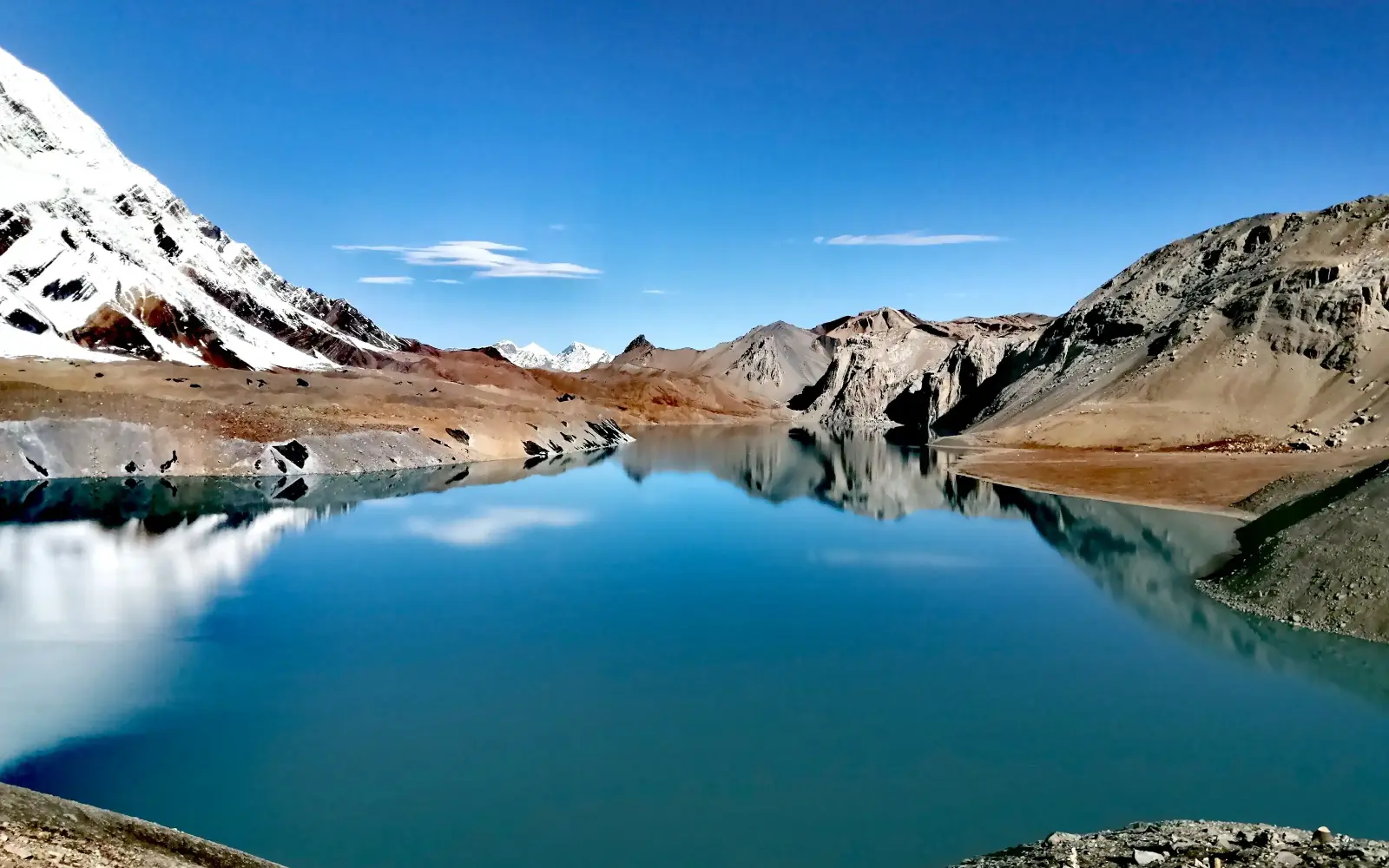
Most people who hike the Annapurna Circuit never see Tilicho Lake. It is found off the main trail, up a steep, exposed side valley that most standard routes merely circumvent. However, for trekkers willing to add a few days to their trek and take on a more difficult trail, Tilicho Lake takes an already extraordinary trek to a rarer level a glacial lake at 4,919 metres, surrounded by sheer rock walls and hanging glaciers and often described as one of the highest lakes of its size in the world.
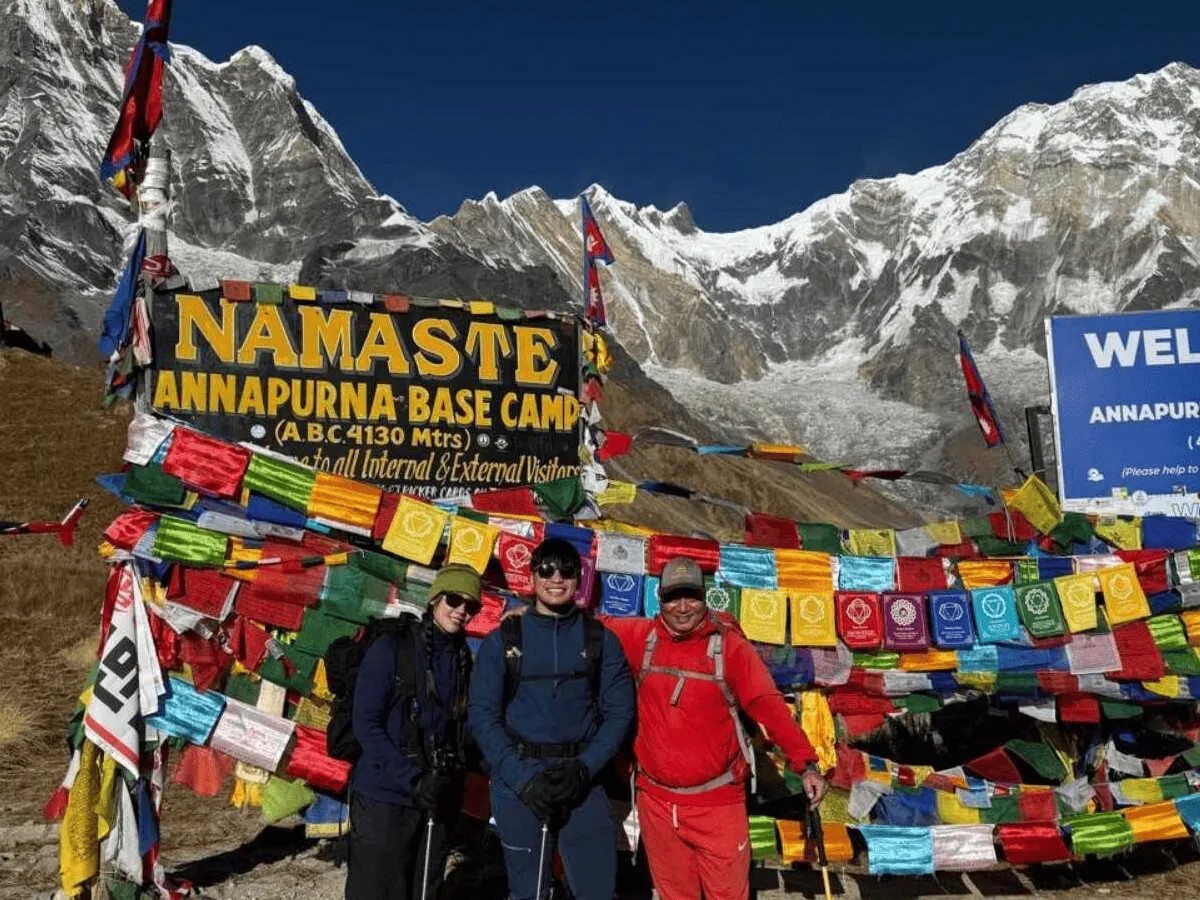
This manual will walk you through everything you need to know about Annapurna Circuit with Tilicho Lake Trek like the route, permits, costs, difficulty, packing, altitude safety, and how to decide if it’s the right add on for your trip.
Tilicho Lake is not just a diversion it is a real physical challenge added to an already demanding trek. But why do experienced trekkers always say that the effort is worth it?
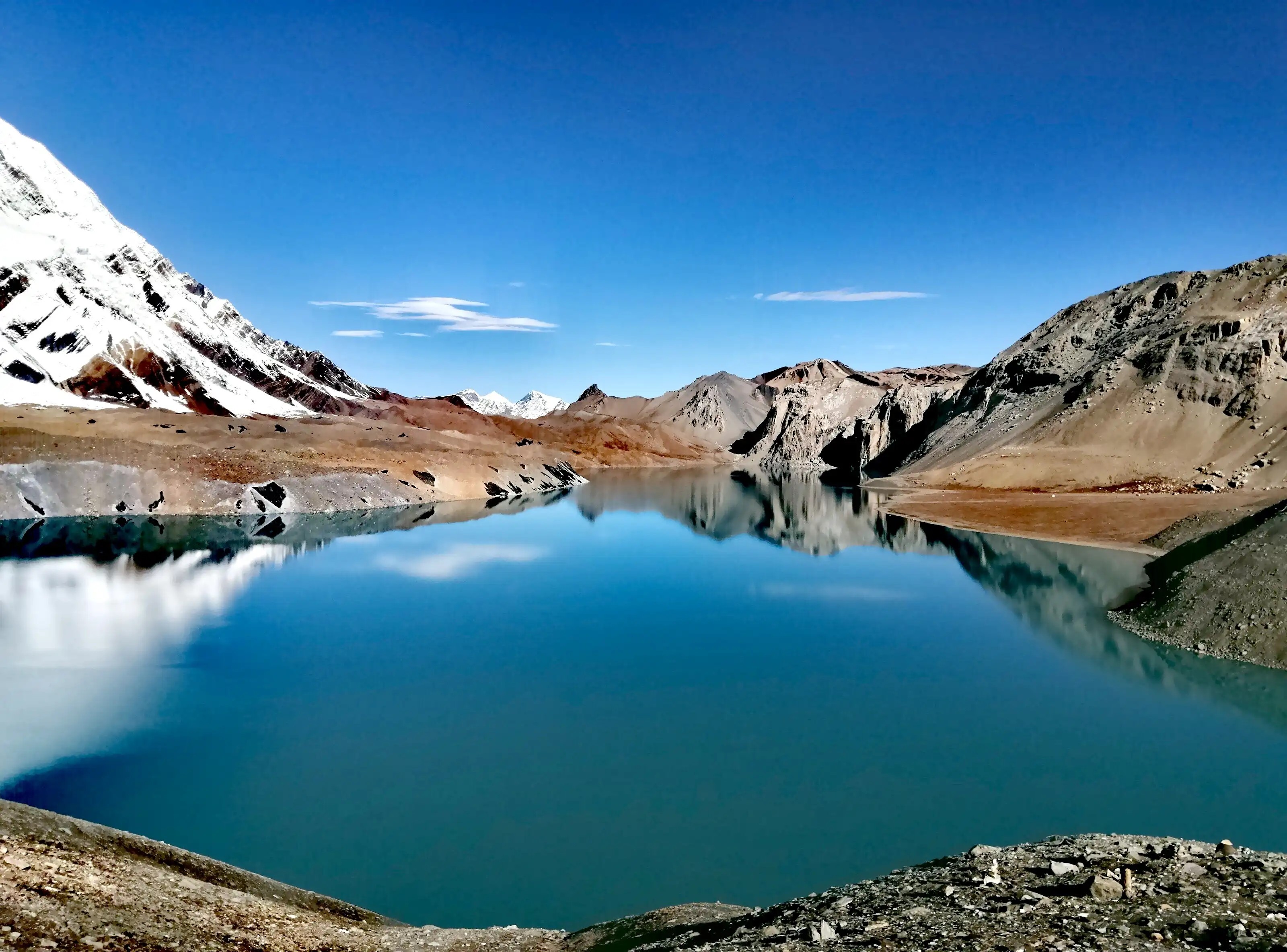
The reward is the lake itself. Fed by glacial meltwater from the Tilicho and Grand Barrier peaks, its colour varies from deep blue to turquoise depending on the light and time of day, enclosed by a wall of ice and rock that hides almost everything else. Thorong La Pass is just a short stop and move down the other side but Tilicho Lake is a destination where you get there and sit for a bit with a place to rest, take photos and take in the scale of the lake before heading back down.
Also it’s far less crowded than the main circuit trail. The side trip increases difficulty, altitude and days, so only a tiny percentage of Circuit trekkers take the detour. Even in the busiest trekking weeks of the year, the trail to Tilicho is still much quieter than the main route through Manang.
There is also a sense of achievement that is not like the rest of the trek. The Thorong La Pass is a big achievement but thousands of trekkers do it every season. Tilicho Lake is a smaller club and that scarcity is part of what makes it feel special.
The standard Annapurna Circuit follows the Marsyangdi River valley through Chame and Pisang to Manang, and then on to Thorong La Pass and down to Muktinath and the Mustang region.
The trek to Tilicho Lake ends before reaching Manang. From the village of Khangsar the trail climbs steeply towards Tilicho Base Camp, crossing a notoriously unstable section of trail known locally as the “landslide area,” where the path is narrow along a loose scree slope high above the valley floor. This is the most talked about part of the whole detour and with good reason. It requires good footing, good weather, and preferably an early morning crossing before the sun and wind have loosened the slope more as the day progresses.
The climb from Tilicho Base Camp continues to the lake itself, well above 4,900 metres. Most trekkers spend a night at Base Camp, hike up to the lake and back the next morning, then descend and rejoin the main circuit route near Manang or Shree Kharka, continuing on towards Thorong La Pass rather than backtracking the way they came.
The outline is as follows:
Yes, distinctly. It is a step above the standard route for four reasons.
This doesn’t make the route unsafe for well prepared trekkers, but it does mean that Tilicho Lake is generally better suited to trekkers with some prior high-altitude experience, solid fitness, and a guide who knows current trail conditions particularly around the landslide section, which can shift after rain or snowmelt.
Altitude safety is a key consideration for this route, with the Tilicho detour adding a second high altitude push to the standard Thorong La Pass crossing.
Recognise early signs. Headache, nausea, dizziness and unusual fatigue are early warning signs from the body. On the Tilicho route, these symptoms should not be pushed through, especially since the trail is so exposed and remote.
Don't forget your days of acclimatisation. The Tilicho detour adds a little bit of elevation gain to the acclimatisation built into the standard circuit, tempting some trekkers to compress the schedule. Resist the urge An extra rest day before or after the landslide crossing is far safer than rushing through.
Travel with a guide with a pulse oximeter. The distance to Tilicho Base Camp from the nearest reliable medical support makes regular checks of oxygen saturation important for spotting problems associated with altitude before they become dangerous.
Have a plan for your descent. If symptoms worsen at Base Camp or around the lake, the only real treatment is immediate descent. Ensure your guide has a clear plan for this before you set out, not when symptoms occur.
Take Diamox for instance. Some trekkers take altitude medication as a preventative, on the advice of their doctor, especially for routes such as this one that put two high altitude challenges close together.
The permit requirements are the same as for the regular Annapurna Circuit Trek. No special extra permit is required for Tilicho Lake as it lies in the Annapurna Conservation Area.
Foreign trekkers need to have an Annapurna Conservation Area Permit (ACAP) which costs NPR 3,000. As with the rest of the region, TIMS card requirement has been suspended as of 2023. All foreign trekkers are legally required to take a licensed guide in the Annapurna Conservation Area, and it’s well worth hiring one for the Tilicho side trip given the terrain and the trail markings, which are less frequent than on the main circuit route.
The most reliable season is September–November (Autumn), when the skies are clear and the trail conditions are steady, which matters a lot for safe passage through the landslide section, where visibility and dry ground are both important.
Spring (March-May) is also good although snow can last longer near the lake at this elevation and sometimes access is delayed in early spring.
Avoid the monsoon season (June-August), when the landslide traverse is far more hazardous due to loose wet scree and visibility around the lake is often poor due to cloud cover.
Winter treks are possible but expect snow, cooler temperatures at Base Camp and the possibility that the trail to the lake will be closed entirely if local authorities or guides deem conditions unsafe.
There are some items that matter on this route more than the typical Annapurna Circuit packing list.
Tilicho Lake is included in an Annapurna Circuit package, generally the cost of the trek is higher, mostly due to more trekking days rather than additional permit fee, since no additional permit is necessary.
While comparing the packages, do check whether Tilicho Lake is part of the base itinerary or an optional add-on; pricing structures differ across trekking agencies. Some agencies charge a flat extra fee per person, others just apply the day-rate to the extra days. It’s worth asking directly, rather than assuming it’s included by default, as “Annapurna Circuit” package names don’t always indicate whether Tilicho Lake is part of the standard route.
While Tilicho Lake is not the only optional add on that trekkers can add to the Annapurna Circuit, it is considered the most challenging.
Tilicho is longer, more difficult trail and higher altitude tolerance than a side hike near Manang on a rest day, like to Ice Lake or Gangapurna Lake viewpoint, which is shorter and lower altitude. Instead many trekkers were pressed for time or were concerned about altitude so chose one of these shorter side trips around the Manang area. More rewarding, for trekkers with more time, better fitness and a real craving for remote, high altitude scenery, tends to be Tilicho Lake.
Underestimation of the landslide crossing Some trekkers would classify it as "Just another section of the trail" and don't check conditions or timing carefully. Cross early in the day, and always check with your guide for recent conditions before heading out.
Speeding up the itinerary to save time. To reduce the cost and time of the Tilicho detour by shortening the number of days significantly increases the altitude risk. If time is short, it is usually better to skip the detour altogether than to shorten it.
Too light for the cold of Base Camp. Trekkers who have experienced the relatively better facilities on the main circuit trail are sometimes surprised at how much colder and more basic accommodation is near Tilicho Base Camp.
Ignoring the guide’s advice about timing the weather. The exposed ridge sections are much more pleasant and safer in the calm conditions of the morning than in the wind that often picks up by early afternoon.
Not all trekkers on the Annapurna Circuit must via Tilicho Lake. It adds days, altitude, a very challenging trail section and more basic accommodation to an already challenging route. But for those who take the detour, it offers something the main trail does not: a remote, high-altitude lake that most trekkers on the same trail as you will never actually see in person.
If you have the extra time, the fitness to back it up and a guide who knows the current trail conditions, it's one of the most rewarding additions you can make to an Annapurna Circuit itinerary a quieter, harder-earned counterpart to the crowds at Thorong La Pass, and often the moment trekkers say made the whole extra effort worth it.
Does the standard Annapurna Circuit itinerary include Tilicho Lake?
No, it’s a side trip that branches from the main trail near Khangsar. It is not included in every Circuit package but trekkers can specifically request or book it as an addition.
What altitude is Tilicho Lake?
The lake is situated at an altitude of some 4,919 metres (16,138 feet) above sea level.
Is the Tilicho Lake trail dangerous?
It is more difficult than the regular circuit trail because of a section of unstable scree slope, but it is trekked regularly and safely by prepared trekkers with a knowledgeable guide, in good weather conditions, and with an early start to avoid afternoon wind.
Can Tilicho Lake be done by a beginner on the Circuit trek?
It’s achievable with good preparation but the increased altitude and terrain challenges make it better suited to trekkers with some previous high altitude trekking experience, or those trekking with an experienced guide and a conservative, unhurried schedule.
Do you require an extra permit for Tilicho Lake?
No. It is part of the same ACAP permit as the rest of the Annapurna Conservation Area.
How many additional days should I expect?
A normal Annapurna Circuit itinerary takes 3 to 4 more days, and you should add at least one buffer day for weather delays at the landslide crossing.
When is the best time to combine the Circuit with Tilicho Lake?
The most stable conditions for the full combined route are in the autumn (September–November) with the landslide traverse and the high altitude push to the lake itself being particularly suitable.


