
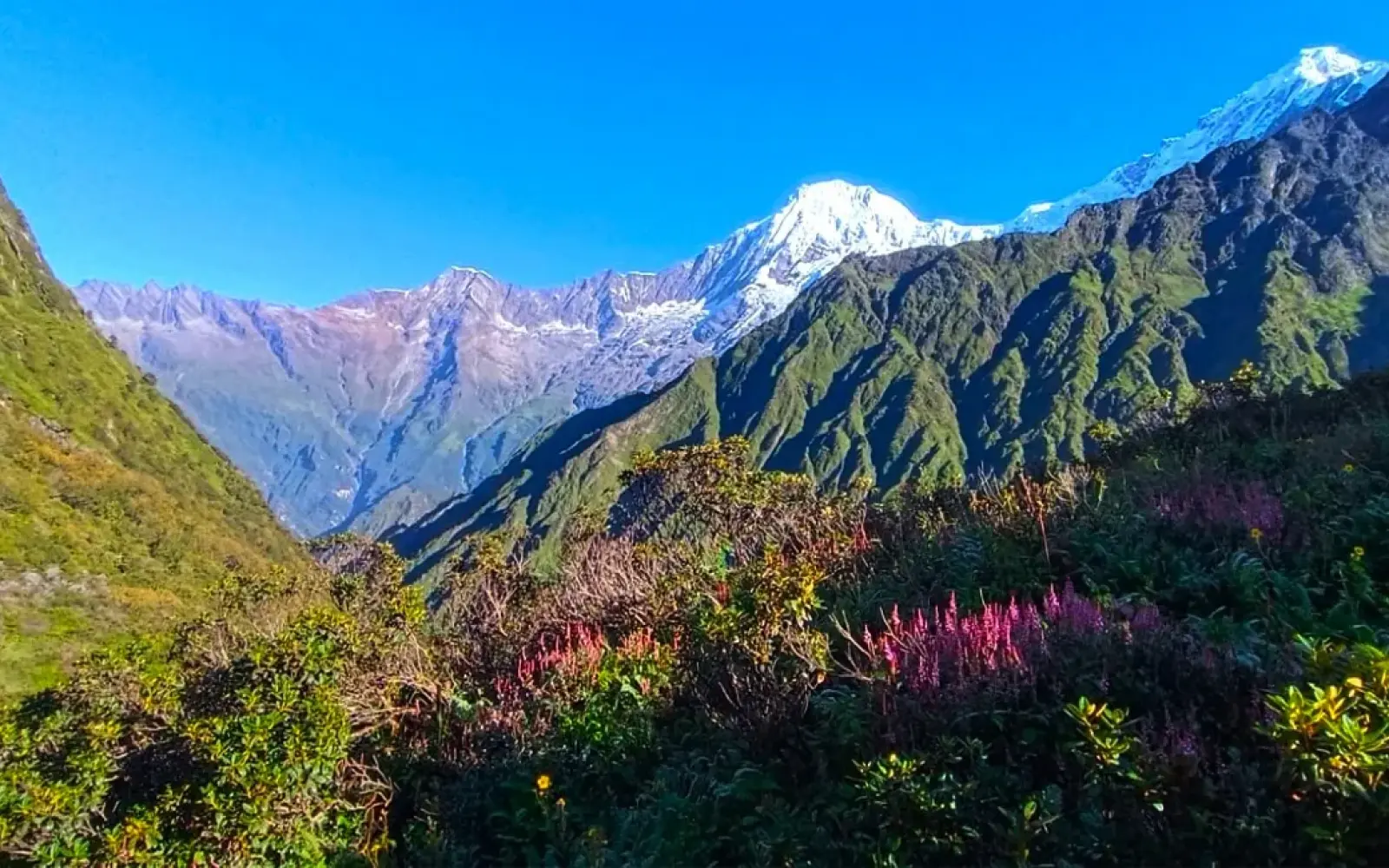
The Ruby Valley Trek is an extraordinary experience along the less travelled route in Nepal. This trek offers you breathtaking views of the mountains, interaction with local cultures, and adventure through untouched nature. For those who want to avoid large groups of trekkers, this trek is situated between Langtang and Manaslu, and provides the best opportunity for good weather and safe trekking.
The Ruby Valley Trek is located in the Dhading and Gorkha districts of Nepal, which is centrally located. The name "Ruby Valley" refers to the presence of a ruby deposit found in the Ganesh Himal range. Most itineraries will take approximately 6-10 days, beginning at Kathmandu via Syabrubesi or Dhunche, and covering approximately 80-100 km through predominantly Tamang, Gurung, and Ghale villages.
Some of the highlights of the Ruby Valley Trek include Pangsang La Pass at 3,850m, stunning panoramic views from here of Ganesh Himal at 7,422m, Langtang Lirung at 7,227m and Manaslu at 8,163m, as well as the possibility of visiting hot springs and the diverse ecosystems of subtropical forests to alpine meadows along the trek. The difficulty level of the trek ranges from moderate to strenuous, therefore a good level of fitness and acclimatization are required for beginners to complete the trek.
The Ruby Valley Trek is designed to provide an opportunity to stay in local homes to support the local economy and provide trekkers with the opportunity for cultural experiences such as Tamang dances and organic foods. The only permits required will be the TIMS and entry fees for Langtang National Park (approximately NPR 3,000).
Ruby Valley Trek's perfect seasons to visit are in springtime, (March to May), and autumn, (September to November), because the weather is at its most stable with clear skies, exceptionally colourful scenery as the flowers are blooming everywhere. During this time, you can be sure that your trails will be dry, temperatures will be moderate (average daytime highs of 12-20°C, nighttime lows 0-10°C), and that you will have unobscured views of the Himalayas.
In spring, the entire valley will be covered with pink and red flowers from the blooming rhododendron trees and thousands of orchids throughout the region. March will have that feeling of newness because of the fresh air after winter has passed. April is considered the peak month for wildflowers blooming in the valley, and May is when the air is warm again after the monsoon season, but prior to the arrival of the clouds from the pre-monsoon period. The ability to see Ganesh Himal during this period will be outstanding, and the chance of rain will be minimal.
After the monsoon season is over in September, the sky clears up through November where you will have outstanding photographic conditions with clear blue skies, solid trails from all the rains (as soon as the rain ends), and fresh air in the valley. Added to the favorable photographic conditions will be the cultural festivities that take place during the October festival period, where there are fewer visitors to the valley than any of the Annapurna or Everest trekking areas.
| Season | Months | Avg. Temp (°C) Day/Night | Pros | Cons |
| Spring | Mar-May | 15-22 / 5-12 | Blooming flora, mild weather, clear views | Possible late-afternoon showers in May |
| Autumn | Sep-Nov | 12-20 / 0-10 | Crystal skies, dry trails, stable conditions | Cooler nights in November |
Winter (December - February) is a good time for tough walkers wanting solitude since the days are bright (10-15 degrees Celsius) but the night can be cold (-5 to 5 degrees Celsius). There can also be snow on the high mountain passes. The trails will be much quieter due to low numbers of trekkers, which will provide good opportunities for making photographs. However, the sunnier and warmer (daytime) weather can be offset by shorter days and cold weather means that you will need to take warm equipment. In addition, snow will add to the scenery of the Ganesh Himal, but will also slow down the rate of travel when trekking.
The region is at its most beautiful during the rainy season (June - August) when the Pangsang La Valley, other valleys are verdant and green, and water flows from every cliff face. Despite the beauty of this season, the downpours (200-400mm per month) can create very slippery trails, will lead to many leeches, and create very hazardous conditions due to landslides created by the rains. Although the mountains will be obscured due to very low visibility during the monsoon, the low number of trekkers will allow for peaceful stays at various teahouses. This season is not recommended for beginners.
Experienced trekking groups determine whether they want to trek in winter to experience snow-covered passes or they want to trek during the monsoon to see all of the biodiversity. If they are trekking in the monsoon, they should bring waterproof gear and check the weather forecast from the Department of Hydrology in Nepal before trekking on their given trail.
Because the two primary factors related to weather are temperature and precipitation, they will play a role in your safety and enjoyment during a trekking expedition. The best time to minimize the chances of experiencing AMS (Acute Mountain Sickness) while crossing the Pangsang La at 3850m is to arrive at your destination via a gradual climb (recommended 400-500m/day of elevation gain). The navigation through remote areas with limited lodges or shelters can be significantly improved because the navigation aids (standard cairns and simple signposts) become easier to see.
After the monsoon rains have finished, the autumn months will be the best time to trek through the region because the trails will be less damaged than they would be by the spring thaw and frost, which will assist in acclimatization and the overall ease of trekking to the various destinations. Bypassing the weather can create additional risks: for example, snow in winter will block access to passes and mud during the monsoon will cause trekkers to tire quickly.
Ruby Valley has over 20 villages representing Tamang weaving, Gurung shamanism and Ghale folklore. Spring festivals (Losar = February/March) include dances. Autumn festivals (Dashain = October) celebrate with food.
You can see red pandas, Himalayan monal pheasants and a variety of medicinal plants. Spring flowers that bloom will attract butterflies; autumn berries will feed wildlife. Homestays are ecofriendly, using solar power to reduce environmental impact.
Pangsang La has several places for meditation, with views of Manaslu like those found on treks that require a permit. Tatopani hot springs are available year-round for post-hike muscle recovery.
ATMs are scarce in remote areas. Cash should be carried in the form of the Nepali Rupee. There are not regularly scheduled helicopters, although your insurance policy should cover your evacuation, if required. Weather forecast applications (Meteo Nepal) will be required.
In mountainous areas of Nepal during the monsoon season, leeches can be eliminated by applying salt. In the winter months, you will want to use the buddy system to stay warm.
| Challenge | Peak Season Solution | Off-Season Adjustment |
| Weather Instability | Rare; check daily | Extra buffers, early starts |
| Altitude | Gradual profile | Diamox, rest days |
| Crowds | Low always | Negligible impact |
| Access | Frequent buses | 4WD jeeps |
Experience the Beauty of the Himalayas on a Ruby Valley Trek by seeing the world's most beautiful landscape. The Ruby Valley Trek should be taken between spring and autumn for safety and beauty. Whether it's to discover the rhododendron forests exploding in spring or to bask in the autumn glow on the mountains, The Ruby Valley is waiting for you!
Are you ready to begin? Contact All Himalayan Treks for all of your Ruby Valley Trek needs. From custom Ruby Valley Tours, to professional Sherpa guides, necessary permits, and logistics, All Himalayan Treks have you covered!


