 5.0 of 433 reviews
  5.0 of 309 reviews 5.0 of 433 reviews 5.0 of 309 reviews
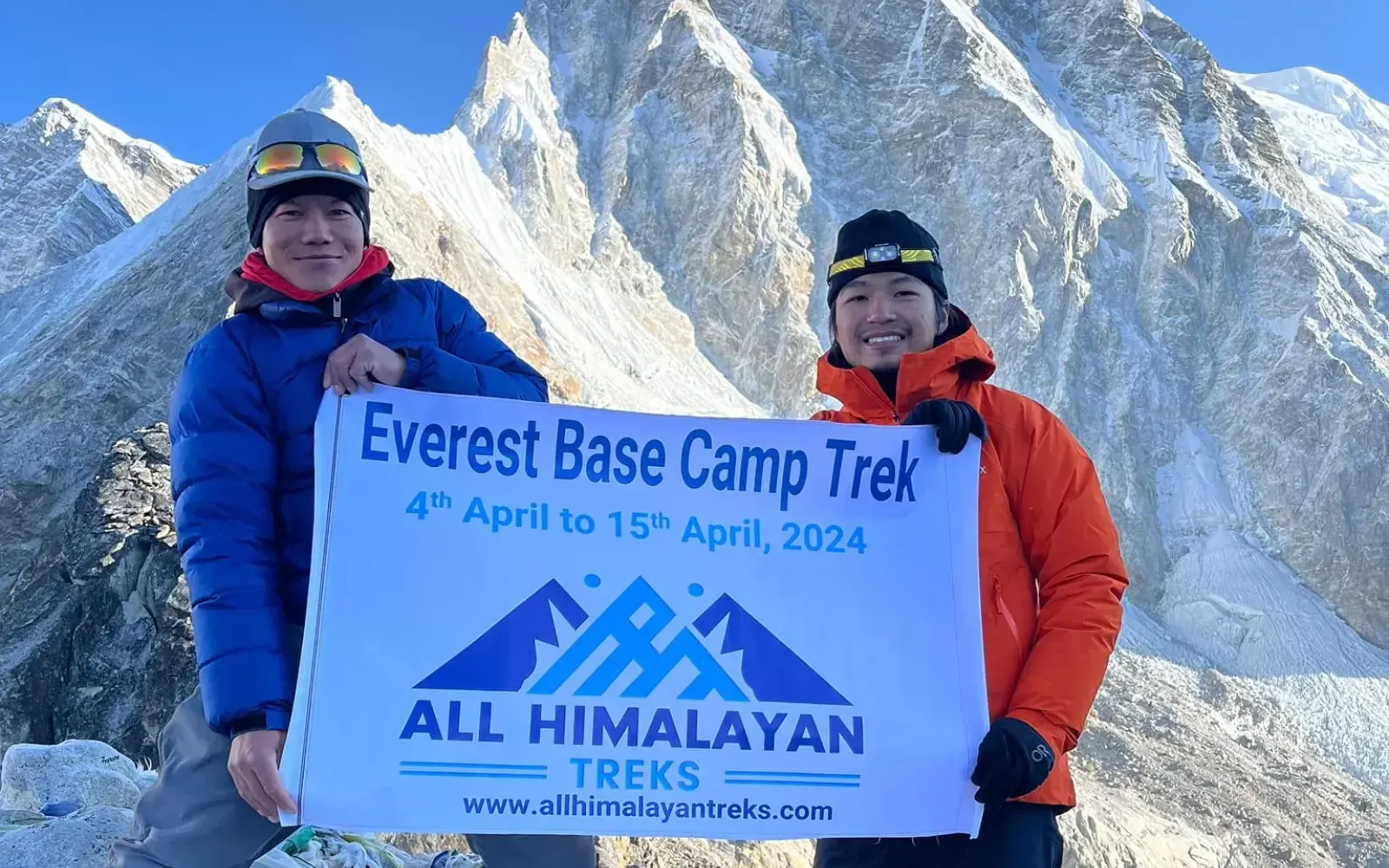
Most serious adventurers have the Everest Base Camp Trek at the very top of their checklist — and there are great reasons for that. This exciting trek takes you through some of the oldest Sherpa villages, across example glaciers, along raging rivers and right to the base of Earth’s highest mountain — Mount Everest at a staggering 5,364m! But it also begs the question for would-be trekkers: how much does it actually cost?
You might be surprised to know that if you do your homework and find the right tour operator, the Everest Base Camp Budget Trek can be accomplished in a short 12 days and the final expense is far more affordable compared to what most people expect. Here’s everything you need to know to plan your 2026 trek — the actual cost, the itinerary and the cost-saving suggestions you’ll need to save a lot of money.
The cost of the Budget EBC Trek with All Himalayan Treks is as follows; USD 1,199 for an individual traveller, $1,150 for 2-4 people, USD 1,100 for 5-10 people and USD 1,050 for 10-20 persons. This pricing structure for group discounts can help bring down your per-person cost significantly when you travel with a group.
The general travel package includes airfare to/ from Lukla and Kathmandu, the guide's costs and all expenses associated with his travel, room and meals while on the trek (11 nights in a tea house share room), and three meals a day (12 breakfast, 12 lunch and 11 dinner).
The additional inclusions are a sleeping bag and down jacket, some light snacks on the trek such as granola bars and dry fruit, a piece of fresh fruit for dessert in the evening, the use of a pulse oximeter to monitor oxygen levels, a comprehensive first aid kit, Sagarmatha National Park and Pasang Lhamu Rural Municipality entrance fees, all taxes and company surcharges.
You will be responsible for your own airfare to/from Nepal. Visa fees for Nepal are also your responsibility: USD 30 for 15 days; USD 50 for 30 days; and USD 125 for 90 days. Emergency medical care/travel insurance covering emergency helicopter evacuation over 5000 metres is compulsory, but not covered by the expedition. Personal expenses such as hot showers; device charging; internet; and bar bills are also not included as well as gratuities (tips) to guides and porters.
The optional use of a porter to carry your luggage will be $220. Porters can carry up to 25kg, and we believe that for the majority of trekkers, this will be a very sensible expense—your body will thank you at the top of Namche Hill!
In addition to the package price, you should plan to spend between USD 80 and USD 150 on travel/medical insurance that includes high altitude evacuation coverage. You may also have personal expenses along the trail such as hot showers, Wi-Fi, device charging, and extra snacks approximately USD 5 to USD 15 per day depending on your location relative to existing services. The charging of devices will become progressively more expensive as you gain elevation, with Gorakshep charging about USD 10 to provide a full charge for your mobile phone. It is recommended you budget at least USD 300 in cash as an emergency buffer for weather-related delays or unanticipated circumstances.
The route of our trekking adventure is Kathmandu - Lukla - Phakding - Namche Bazaar - Tengboche - Dingboche - Lobuche - Gorakshep - Everest Base Camp - Kala Patthar - Pheriche - Namche Bazaar - Lukla - Kathmandu. The highest point of the trek is at Kala Patthar (5644m).
Day 1: Fly from Kathmandu to Lukla (2860m), then continue by trekking from Lukla to Phakding (2610m). The trek will be 3-4 hours and you will go down through beautiful pine and juniper trees on your way to Phakding. During the trek you have to cross a few suspension bridges.
Day 2: You will be trekking from Phakding to Namche Bazaar (3440m). This trek will take 6-7 hours and is very challenging because of the elevation change from Phakding (2610m) to Namche Bazaar (3440m) and will be the first time you feel the difference in altitude (i.e., breathing more heavily than usual).
Day 3: This is a day for acclimatising to the altitude and making a side trip to the Everest View Hotel (3880m) which has an excellent view of Everest. In the afternoon you can explore the Namche Bazaar markets, museum and Sherpa culture and history.
Day 4: Trek from Namche Bazaar to Tengboche (3870m). Tengboche has a beautiful monastery and breathtaking views of Everest, Lhotse and Atmospheric.
Day 5: You will be trekking to Dingboche (4410m). The landscape will be all alpine, as there are no trees from here to Dingboche.
Day 6: Acclimatise by trekking to Nangkartshang Hill (5050m). This trek provides stunning views of Ama Dablam, Island Peak and if the weather is clear, Makalu as well.
Day 7: You will be trekking to Lobuche (4910m). There will be a significant change in terrain because you will be crossing over glacial moraines and passing Thukla Pass, which contains memorials for climbers who died climbing Everest.
Day 8: Walk to Gorakshep (5,160m) and then to Everest Base Camp (5,364m), then return to Gorakshep. This will be the most emotional moment of the entire trekking trip.
Day 9: Pre-dawn hike to Kala Patthar (5,644m) for the sunrise at the top of Mt. Everest, then descend for a long distance to Pheriche (4,288m).
Day 10: Trek back to Namche Bazaar (3,440m). This is a total descent of 19km at a consistent rate with noticeably thicker air.
Day 11: Last trekking day back to Lukla (2,860m).
Day 12: Take a flight back to Kathmandu and transfer to hotel. This completes your adventure.
When we say budget trek, we don't mean inferior quality – however, we do mean smarter treks, true budget treks!, where every dollar spent has a purpose, every day has a plan, and your mountain adventure is as amazing as it should be.
All Himalayan Treks is proud to offer the Budget Everest Base Camp Trek with:
- The best value for your money
- No booking fees
- A book now pay later policy
- Flexible date changes with no fees up to 30 days before your trip.
All of our guide team are Government Licensed and experienced Sherpa guides who handle permits, logistics, food and safety. So your time on the most remarkable trek of your life will be solely focused on your adventure.
The roof of the world is closer than you think. Start now with All Himalayan Treks!
Our travel experts are ready to assist you with any questions.
Send us a message.Have a question before you book? Send your enquiry below and our travel experts will get back with the required information.