
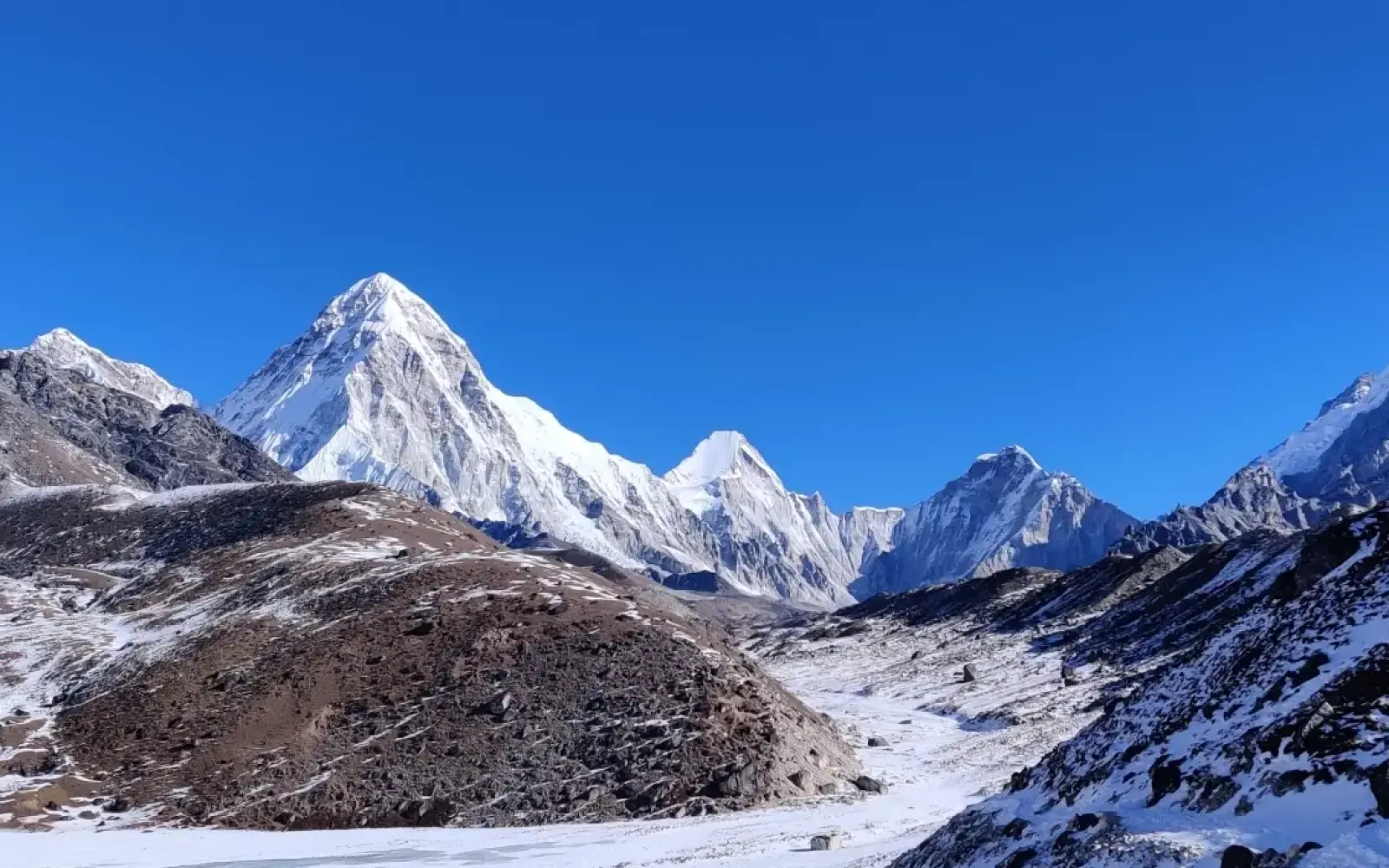
Everest Base Camp Trek is one of the most famous and sought-after adventures that can be taken at high altitude, yet it requires far more from the trekkers than it may seem initially. Although mountaineering experience is not needed for Everest Base Camp Trek, it poses serious physical and psychological difficulties on account of the altitude and terrain involved. In the following paragraphs, I will introduce the difficulty of the trek itself, give some details of what you should expect on the way, and discuss preparations necessary to make your journey successful.
Many describe the EBC trek as moderately difficult or even strenuous, depending on your physical condition and previous experience in mountain climbing. Typically, the tour takes around 12-14 days and covers a distance of 120-130 kilometers with altitude gain starting from about 2,860 meters in Lukla to 5,364 meters in EBC and 5,545 meters at Kalapatthar. At such altitudes, air becomes significantly thinner and there is only half of the amount of oxygen compared to sea level, thus making breathing problematic and increasing strain on the body.
Strength is of secondary importance to endurance, pacing, and physiological adaptation to high altitude. The trek can be accomplished by first-timers, yet requires thorough training and proper acclimatization planning.
The usual walking period on an Everest Base Camp itinerary lasts 5-7 hours daily, although there will be some "long" days such as from Lukla to Namche Bazaar or from Dingboche to Lobuche, taking up to 7-8 hours. While you follow marked trails, the terrain is rough, stony, and rather steep, which means that you will walk slower than during normal walks. On average, the distance is between 8 and 16 km per day, yet due to altitude, it seems much longer.
The main difficulty is not in distance, but rather in constantly ascending higher and higher into the thinning atmosphere. Lukla is at an altitude of 2,860 m, Namche Bazaar – 3,440 m, Dingboche – 4,410 m, and Everest Base Camp – 5,364 m. At elevations of 3,000-4,000 meters, you might notice fastened breathing, exhaustion, and insomnia; when crossing 4,000 meters, even minor exertion makes you gasp for breath.
An average trip includes at least two days of acclimatization (typically in Namche and Dingboche) involving light climbs up and down to allow your body to adjust. Hurrying the process is the primary reason for developing serious altitude sickness; therefore, trekking slowly and respecting your body's limitations is essential.
The Everest region experiences extreme weather fluctuations. The spring (March-May) and autumn (September-November) seasons are recommended, offering clear skies and favorable mountain scenery, although mornings will be chilly, and temperatures may fall below freezing point even during these seasons. Winter treks (December-February) entail intense cold and snowfall, whereas monsoon (June-August) results in slippery and muddy trails.
Rain, snow showers, and strong winds are frequent occurrences, even when the majority of days will be sunny.
The major health hazard associated with the EBC trek is acute mountain sickness (AMS). Symptoms include headache, nausea, dizziness, tiredness, anorexia, poor sleep, and in some cases it may lead to life-threatening illnesses such as HAPE or HACE. Many trekkers suffer from AMS and it doesn’t indicate a low level of fitness; it simply means that your body climbed too quickly.
To prevent AMS it is recommended to ascend slowly, drink plenty of fluids, not smoke and drink alcohol and use medication when needed. In case of prolonged and worsening symptoms, descent is the only way out.
The EBC trek requires a lot of effort from you. Even though there is no technical climbing involved, it still takes strong legs, good endurance and lots of stamina. Walking several hours a day with a day pack on steep dirt trails, stone staircases and rocks will become increasingly difficult as you gain altitude.
Your porters and guides can carry almost all of your belongings, but you should take care of your day pack (around 5-8 kilograms).
Even though the Khumbu region is arguably the best trekking area of Nepal in terms of development, there isn’t much modern infrastructure. There are basic teahouses where most nights will be spent with communal bathrooms, basic food, and sometimes even lack of lighting or heating. There may be no medical help around, thus small ailments such as blisters, cold or diarrhea can ruin a trek.
It is essential to start training for the trek 8–12 weeks ahead of time. The key is to exercise your cardiovascular system as close to the daily trek routine as possible: walk fast or run, cycle, or climb stairs. Extend exercise until you can comfortably hike 4–6 hours at one go while climbing hills.
If possible, exercise in hill terrain carrying a weighted backpack, starting from 5–7 kg and increasing the load. It helps train the correct muscle groups as well as get used to the weight.
Strong legs take the burden off the knees and help you descend. Include exercises such as squats, lunges, step‑ups, and calf raises into your routine, plus core work (planks, bridges) to stabilize your body while carrying a pack.
Instead of doing only treadmill training, train yourself by walking outdoors on an irregular surface, stone staircases, or gravel pathways. It helps to strengthen your sense of balance, ankles, and feet, reducing the chances of stumbling on the way.
Psychological and logistical preparation
Most trekking novices have unrealistic views of the psychological burden of walking long distances, cold nights, and fatigue due to elevation changes. The best advice is to start with realistic expectations. Some days will be hard work, you won't necessarily feel great on summit day, and rest days don't mean you'll do nothing but sleep.
Flexibility knowing when to slow down, forego an excursion, or even turn back is not weakness but responsible trekking.
Purchase a reliable pair of waterproof and broken-in hiking boots to protect your ankles and prevent your feet from getting wet. Your clothing should be layered: moisture-wicking clothes serve as the base layer, an insulating layer (either fleece or down) is necessary, and finally, a waterproof and wind-resistant outer layer.
Bring some warm gloves, a hat, a buff, and good thermal socks, because hands and feet will get cold very fast at higher altitudes. Finally, a down jacket would be a must at temperatures below 4,000 meters.
The recommended size for your backpack is about 35 to 50 liters with comfortable shoulder straps and a hip belt. The trekking poles are highly recommended to reduce the load on knees during descent, as well as on slippery trails.
Even though most teahouses have basic sleeping arrangements, bringing a reliable sleeping bag that is suitable for temperatures lower than -10 degrees is strongly recommended.
One way to minimize the effort is to hire a local guide and/or porter who will be responsible for navigation, altitude management, and carrying your luggage. Your professional guide will moderate the pace, watch out for any signs of acute mountain sickness, and help you find accommodations and delicious food without worrying about all these issues.
Respected travel agencies usually handle the issue of obtaining permits, transportation services, and other aspects related to safety and security during your expedition in the mountains.
It may seem intimidating due to its demanding nature; however, if you are physically fit, motivated, and able to hike at altitude, there is nothing impossible about reaching the legendary Everest Base Camp.
If you think you are ready for this great adventure, consider booking an Everest Base Camp package offered by All Himalayan Treks!


