
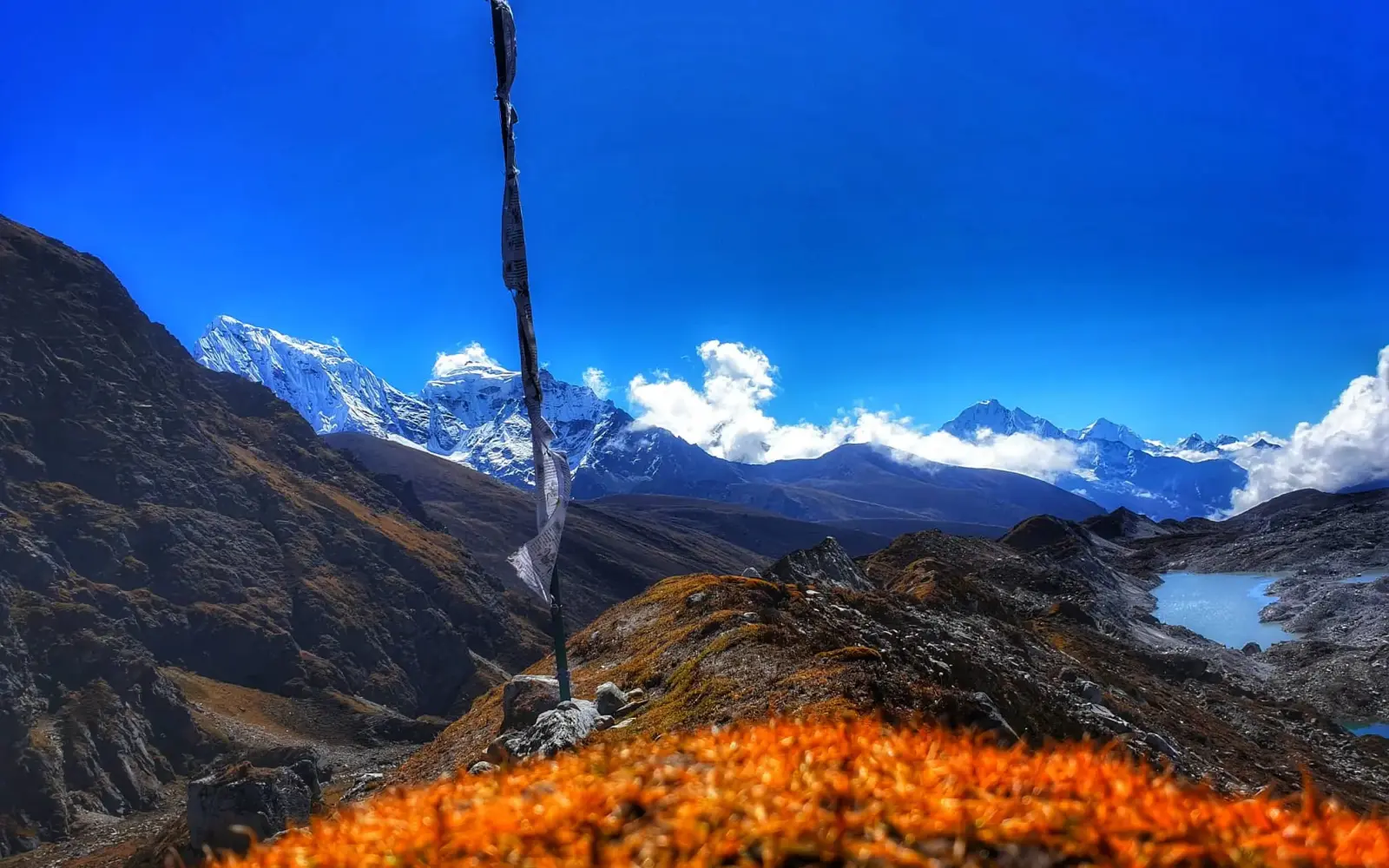
There is no trekking adventure on earth that pushes the limits of the human mind and body more than Everest Three Passes Trek does. While most treks in Nepal can be called challenging at best, the Three Passes Trek in the Everest region will certainly put you under intense physical strain. Why? Because during this trekking, you'll cross three of the world's highest trekking passes: Renjo La (5,360m), Cho La (5,420m), and Kongma La (5,535m), which will eventually provide access to the most spectacular views of Mt. Everest, Lhotse, Makalu, Cho Oyu, and the Gokyo Lakes, none of which can be observed by the regular Everest trekkers.
Everything about Everest Three Passes trek has been covered in this guide – what the journey entails, how it should be done, and all other essential information about what lies ahead!
Everest Three Passes Trek is an upgraded version of the famous Everest Base Camp trek. In contrast to the traditional approach, this trek will not only get you to Base Camp and back, but it will take you around the high ridges and glaciated valleys of Khumbu in a loop. As you travel, there are also some must-see sights like Everest Base Camp, Kala Patthar (the famous point for seeing sunrise) , Gokyo Lakes, and three high passes along the way.
It usually takes 18 to 21 days with 160 to 180 kilometers covered during the journey. Elevations range above 5,000 meters, where the passes themselves require an early start in the morning, preparedness for icy conditions, and high physical condition.
The Three Pass Trekking Route is strenuous to very strenuous in difficulty and requires either experience in high altitudes or a well-prepared cardiovascular system.
Renjo La can be considered the first pass you will cross when going through the circle. It is approached from the Gokyo Valley side after acclimatization days in Namche Bazaar and Dole. The hike itself takes place in the morning hours by crossing the boulder field and climbing snowy slopes. The result will be an absolutely stunning scenery, where Gokyo Lakes sparkle in bright turquoise colors far below. You will see not only that but also Mt. Everest, Cho Oyu, and the Ngozumpa Glacier stretching out into infinity. The steep but safe descent will lead you to the legendary valley of Gokyo lakes.
It links the valley of Gokyo to the glacier Khumbu and is considered to be the most difficult one among the other two passes. The way from the village of Dragnag includes crossing the glacier, which is full of cracks. It requires good skills and equipment (crampons and rope) to pass this place at some periods of the year. This area is covered by ice and snow all year round. Cho La is quite a narrow gap between rocky cliffs, providing breathtaking views of such mountains as Cholatse and Taboche. The descent from this point is very steep and rocky, and should not be made in bad weather conditions without the help of a guide.
It is the highest among other passes and lies between the villages of Chhukung and Lobuche, and you can pass it after visiting Everest Base Camp and before your descent to Namche. The route traverses moraines and stony areas; Imja Lake lies in the distance from above when the weather is good. Once trekkers stand atop the peak, their views are unblocked; they will see Island Peak, Lhotse, and all peaks of the Khumbu Himalaya. The descent down to Lobuche will be lengthy and physically challenging for you. Crossing Kongma La is often called the hardest point of the trek, but also one of its best moments.
The following is the case for the Khumbu:
Do not underestimate this trek. The Three Passes loop includes several consecutive days above 5,000 meters, with extended climbs and descents over uneven terrain. At least three months of physical preparation should be made before starting, including:
During the hike, maintaining proper hydration levels, pacing, and correct acclimatization schedule outweighs pure fitness. Diamox (acetazolamide) is frequently used as an anti-altitude sickness drug. Consult a physician before use.
For trekkers in the Khumbu region, the following permits and logistics are needed:
The traditional entry point is by air travel from Kathmandu to Lukla (40-minute flight). The flights are weather-dependent and prone to delays. As an alternative during peak periods, Ramechhap serves as the starting point to minimize congestion in the Kathmandu airport.
Tea houses are available all along the trail, while facilities may be very basic above 4,500 meters. Tent camping is possible for the adventurous, yet tea-house trekking remains much more popular.
The Three Passes Trek involves glacier crossings, technical high-altitude trails, and considerable exposure to weather elements. For the glacier crossings and especially the passes, hiring a certified guide is highly recommended, if not necessary. Here's why:
Figures and elevations tell only a small fraction of why the Three Passes Trek is a truly unique experience. From the golden light of dawn that covers the entire Khumbu Himal from the top of Gokyo Ri, through silent yak caravans crossing glaciers at the height of 5,000 meters, to conversations with Sherpa teahouse owners who have called these valleys their homes for several generations; the true magic of such treks cannot be described through numbers alone.
This is not just about exploring new places but, perhaps more importantly, about self-reflection and personal development through immersion in nature on a grand scale. The Three Passes Trek challenges us to embrace the essential aspects of life: breathing, walking, mountains, and skies.
Among many treks available around the world, the Everest Three Passes Trek is considered to be one of the most challenging ones and a true treat for those who want something more than a regular adventure.
For both experienced mountaineers seeking a new record to achieve and dedicated trekkers willing to go further than Everest Base Camp, All Himalayan Treks is here to help!


