
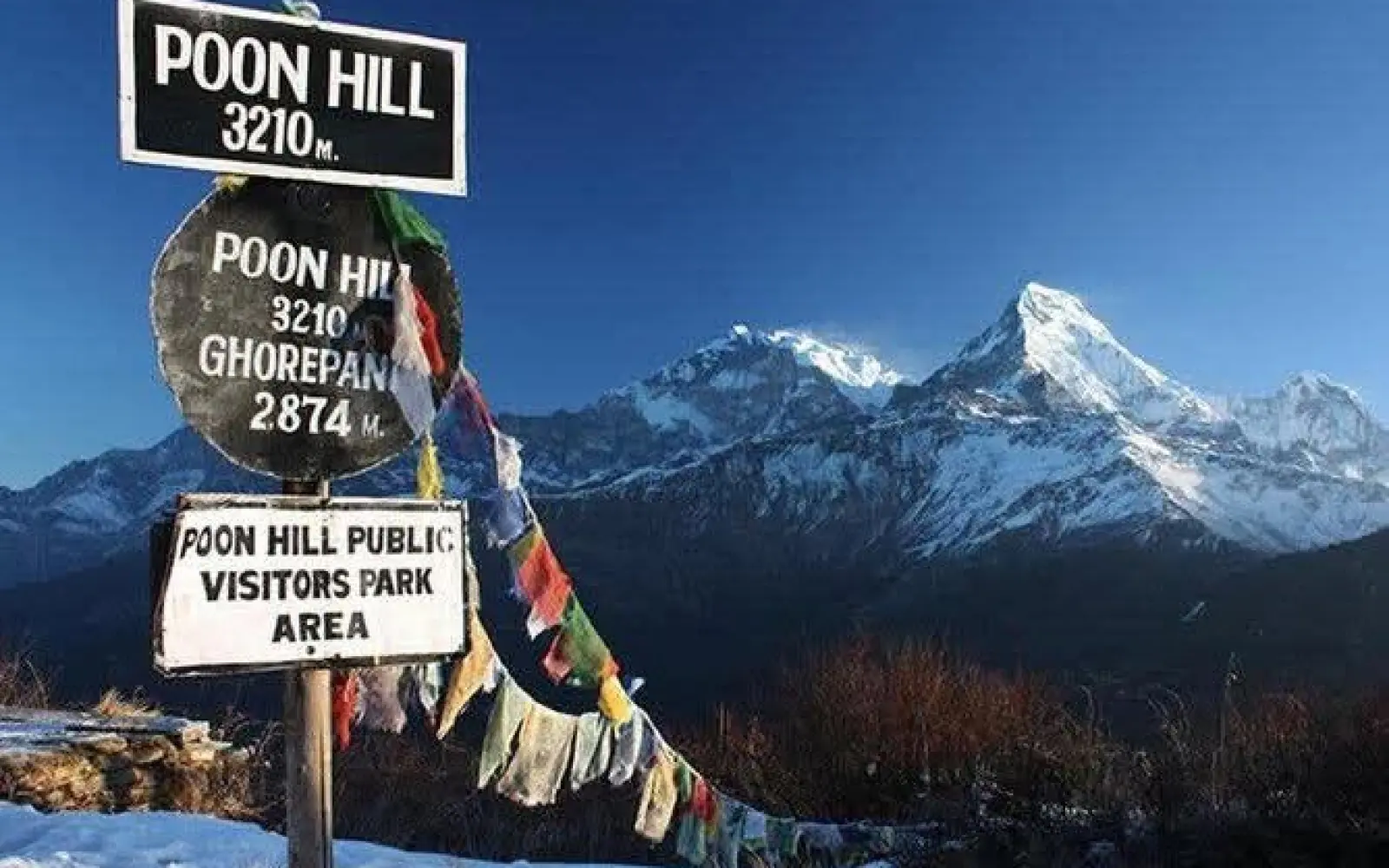
Imagine the brilliant rays of sunlight shining on snow clad peaks while the forest of rhododendrons in different shades of pink and red light up below it. This is the sight at Poon Hill at dawn, and that's precisely what makes Ghorepani Poon Hill Trek one of the most favored in Nepal.
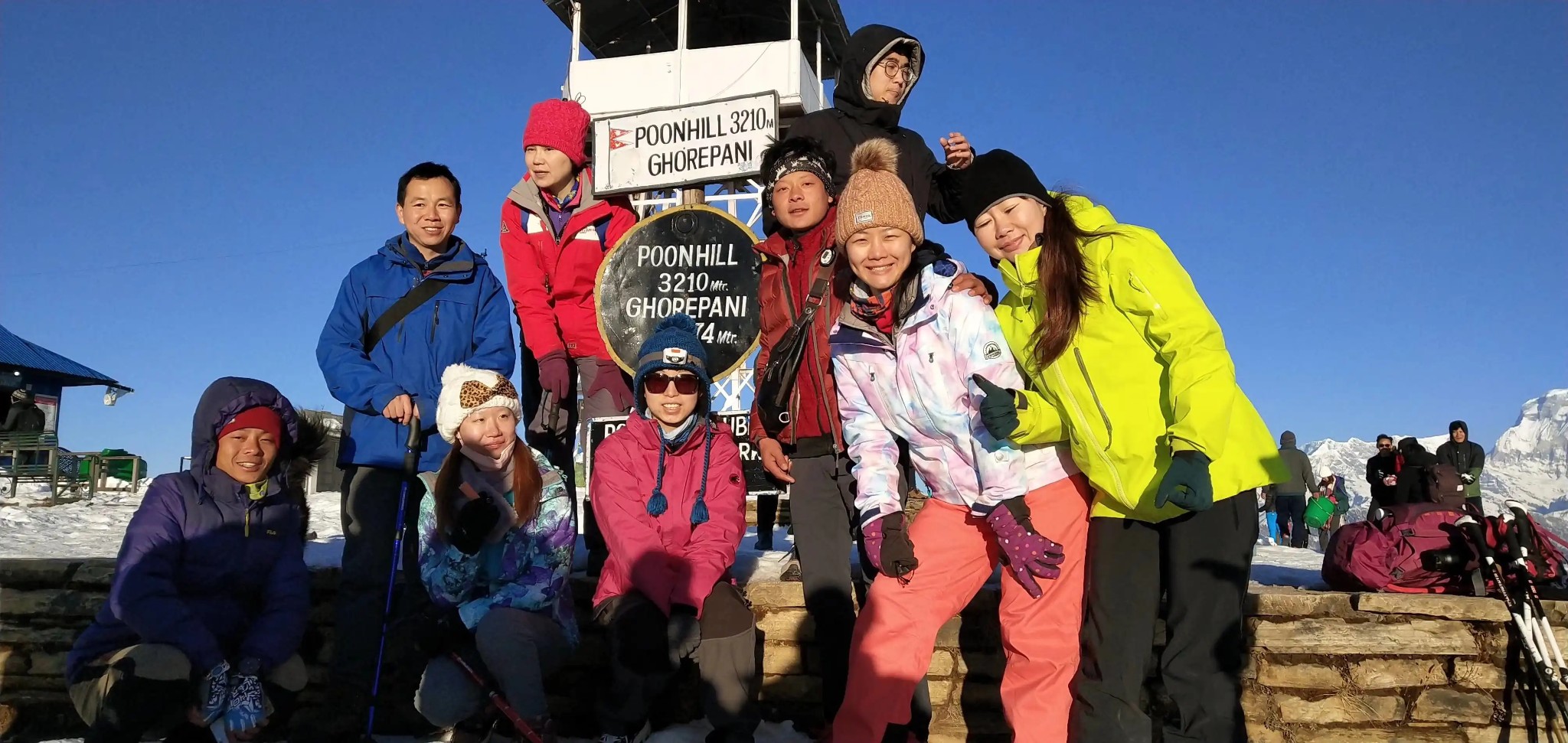
Based in the Annapurna area, this trek can be done within a relatively short trip, but the impression remains on forever. You do not need weeks to take time off from work. Nor do you require previous climbing experience for that matter. Yet, some how you still manage to catch the best views of the mountains that Nepal has to offer. It is indeed a rare combination, no wonder so many tourists in Pokhara undertake the same trek.
All that you need to make a plan is present here, including the perfect timing of your trip, the route, all needed permits, packing list, budget calculations, and most commonly asked questions.
This trek makes its way into almost every "Best Treks in Nepal" list for one obvious reason: you get to experience some of the best scenery of Annapurna South, Dhaulagiri, Machhapuchhre (also known as Fishtail), and Nilgiri without having to take weeks of leave.
A few things make it stand out:
A lot of people add this trek almost as an afterthought during their Pokhara stay. They're expecting a simple walk. Then they end up calling it one of the best parts of their whole trip. There's something about watching the sun rise over a wall of 7,000 and 8,000 meter peaks that just stays with you.
It is also good for warming up. Many people hike Poon Hill to determine how fit they are and how their bodies react to the altitude when considering more difficult hikes such as Annapurna Base Camp and Annapurna Circuit.
Timing actually matters a lot here, since cloud cover can hide the mountains completely. The trail feels pretty different depending on when you go.
Spring (March to May): It’s definitely peak time now. There are rhododendrons flowering all over the mountainsides in reds and pinks, particularly in areas like Ghorepani and Deurali. Days can be bright mornings but cloudy in the afternoons, so it’s good to set out early.
Autumn (September to November): This is what most books will say is the perfect time for an experience like this. The skies are always clear, there is moderate weather that allows you to walk around easily, and visibility is always good all day long. This is also the busiest season.
Winter (December to February): Fewer crowds and often very clear skies. The downside is the cold nights at higher points like Ghorepani can drop well below freezing. You might see some snow, but it rarely covers the whole trail.
Monsoon (June to August): Most people skip this season. Rain is heavy, leeches show up on the lower forest trails, and clouds tend to block the views. The stone steps also get slippery. It's not impossible to trek then, but most agencies will steer you away from it unless there's no other option.
If you can only pick one season, go with autumn it's the safer bet for weather and views. If seeing the rhododendrons in full bloom matters more to you, spring is worth the trade-off.
The standard route is a loop that starts and ends near Pokhara. Roughly, it goes like this:
All in, you're looking at roughly 35 to 45 kilometers of trekking, depending on the exact path and any detours. The trail is well marked stone paths and forest track, with teahouses spread out along the whole way.
This may be the most commonly asked question, and the straightforward answer is: moderately difficult but manageable.
There are plenty of stone steps, and alone Ulleri boasts thousands of steps so that this route is much more taxing for your legs than lungs. There is no technical climbing whatsoever, and you will not require any ropes, crampons or mountaineering equipment. If you manage to exercise during a few weeks before the journey with some walking or other light cardio and some general fitness, you should have no problems.
The altitude of the highest point, Poon Hill which stands at 3,210 meters, does not reach anything close to an altitude where altitude sickness starts developing in its serious form. Thus, this trek can be considered a great option both for inexperienced trekkers and families with children. However, if you are not used to hiking for several days continuously, you might find 5 to 7 hours of walking every day quite exhausting. Here pacing and staying hydrated will be more important than physical fitness itself.
If you are unsure about your preparation level, several weeks of walking and hiking will definitely help.
You'll need two permits for this trek:
Both can be arranged in Kathmandu or Pokhara before your trip starts; in addition, there are several trekking agencies in Nepal ready to help with the organization of your hike.
The cost depends on your choice concerning how you are going to trek. An independent hiking will be cheaper while using a guide, porter, or organizing a full package will be more expensive but easier.
There are no difficulties related to accommodation in this region. You may stay in the houses of the local population who rent their rooms with common bathrooms. In the teahouses in Ghorepani and Ghandruk you will find much better accommodation. Usually, the menu includes dal bhat, noodle soup, and simple Western food. Of course, prices increase if you go up high, because all stuff needs to be brought up by porters or mules.
Keep your packing list realistic, and think in layers. There's a big difference between walking during the day and standing at the sunrise viewpoint in the freezing early morning.
You don't need anything too technical here. Comfort and warmth matter more than people expect, especially during that early climb to the viewpoint.
Rough numbers to plan around:
Trekking independently usually runs $150–250 USD total. A guided or all-inclusive package tends to land around $300–500 USD or more, depending on what's included.
Ghorepani Poon Hill trek is an interesting combination because of it's quite simple for a novice trekker and extremely beautiful for those who have some experience in this kind of tourism. This trek will allow you to get an idea of the Annapurna Himalayas even in case when your schedule does not allow you to spend much time in Nepal.
The trek will also introduce you to teahouse trekking in Nepal: mountain lifestyle, good hospitality and an amazing sunrise without spending weeks in Nepal or special equipment. Even if it's your first trekking in Nepal, after Poon Hill, you will surely think about your next trip.
For more information on the permit, visit the Annapurna Conservation Area Project website in Nepal. You may also need to visit Nepal Tourism Board site.
1. How long does the Ghorepani Poon Hill Trek take?
The Ghorepani Poon Hill Trek normally takes around 4-5 days to finish. You can make the trip last 6 or 7 days for a more leisurely trekking experience, should you prefer one. It will all depend on how long you take to go through the route that you have chosen.
2. Is the Ghorepani Poon Hill Trek suitable for beginners?
Yes, The Ghorepani Poon Hill Trek is considered to be one of the easiest trekking routes in Nepal. There is no need to have prior trekking experience or technical knowledge; however, having a moderate level of physical fitness is advisable.
3. What is the highest altitude of the Poon Hill Trek?
Poon Hill is the highest point of the trail, located at 3,210 meters above sea level. It is known for its impressive sunrise view of the Annapurna and Dhaulagiri mountain ranges.
4. What permits are required for the Ghorepani Poon Hill Trek?
Trekkers generally need an Annapurna Conservation Area Permit (ACAP) and a TIMS (Trekkers' Information Management Systems) card for the Ghorepani Poon Hill Trek. Permit requirements can change, so it's best to confirm the latest regulations before starting your trek.
5. What is the best time for the Ghorepani Poon Hill Trek?
The best time to trek to Poon Hill is generally during spring (March to May) and autumn (September to November). These seasons usually offer clear mountain views, favorable trekking conditions, and pleasant daytime temperatures. Spring also brings colorful rhododendron blooms along parts of the trail.
6. Do I need a guide for the Poon Hill Trek?
A guide may not be essential as the Poon Hill trekking path is very much developed and used, but taking the services of a local guide will ease up things for the trekkers in terms of directions, accommodation, transportation, etc., and also help in contributing to the locals involved in tourism.
7. Which mountains can you see from Poon Hill?
Poon Hill is renowned for its panoramic Himalayan views. On a clear morning, you can see impressive peaks including Dhaulagiri, Annapurna I, Annapurna South, Machhapuchhre (Fishtail), Nilgiri, and other surrounding mountains. The sunrise from Poon Hill is one of the main highlights of the trek.
8. Can the Ghorepani Poon Hill Trek be combined with other treks?
Yes, The Ghorepani Poon Hill Trek can be combined with several other trekking routes in the Annapurna region. A popular option is to extend the journey toward the Annapurna Base Camp (ABC) Trek. Another option is adding Khopra Danda, which offers spectacular mountain scenery and a quieter trekking experience.
9. How much does the Ghorepani Poon Hill Trek cost?
The cost of the Ghorepani Poon Hill Trek depends on whether you travel independently or book a guided package. Independent trekkers can generally budget around US$150–250, while guided or all inclusive packages commonly cost around US$300–500 or more. Your total budget may vary depending on permits, transportation, accommodation, meals, guide or porter services, and the length of your itinerary.


