
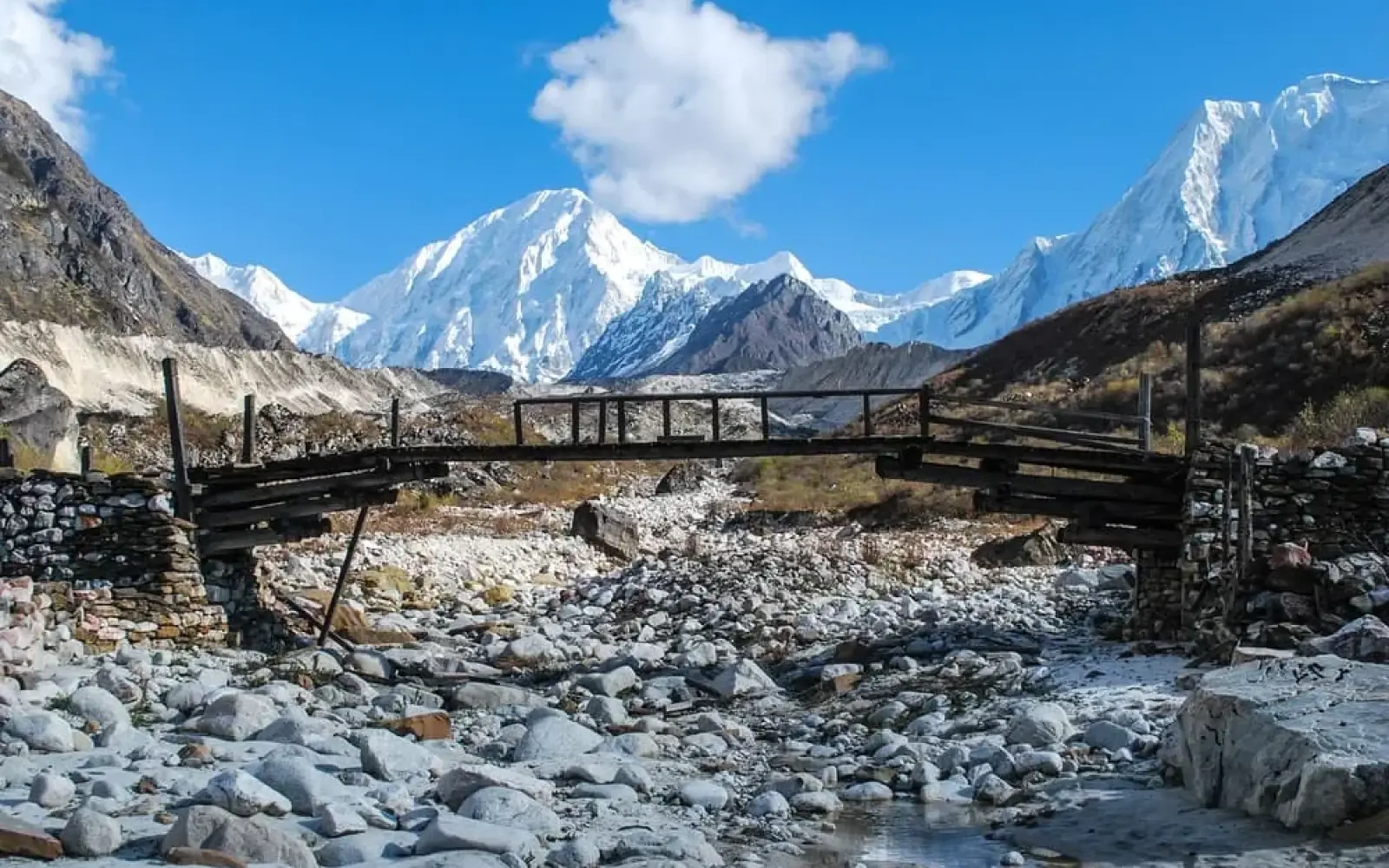
The Manaslu Circuit Trek around Mt. Manaslu covers a distance of 177 km and offers stunning views of the natural environment and variety of landscapes. The trek starts with a lush Rhododendron forest, passing through glacial valleys and extensive meadows while culminating at the high mountain passes of greater than 5,000m. Although the trek is beautiful and offers wonderful landscapes, the trek has a reputation for being very challenging. This guide will provide you with an honest answer to the question: "How difficult is the Manaslu Circuit trek?"
For trekkers who want an alternative to the busy Everest Base Camp or Annapurna circuit, they should look at the Manaslu Circuit. The Manaslu Circuit was not open to trekkers until 1991. Thus, it is in a more natural and unspoiled state than those two routes and provides an opportunity to experience the beauty of snow-covered mountains in solitude. Trekkers on the Manaslu Circuit need to respect the difficulty of the trek and should be of good physical condition. The total time to complete the Manaslu Circuit is estimated at 12-18 days.
When considering the trek's difficulty on the Manaslu Circuit, a basic understanding of how the Manaslu Circuit trek works is needed. The standard trekking itinerary for the Manaslu Circuit is a start from Soti Khola (710m) and ends in Besisahar; with a total number of kilometers covered during the trip 177km. The standard duration to complete that trekking itinerary is approximately 14 days. Below is a list of some of the key points to assist you in evaluating whether it is hard to do the Manaslu circuit.
Compared to other treks:
| Trek | Difficulty | Max Altitude | Duration | Crowds |
| Manaslu Circuit | Strenuous | 5,160m | 12-18 days | Low |
| Everest Base Camp | Moderate-Strenuous | 5,3644 | 12-14 days | High |
| Annapurna Circuit | Moderate | 5,416m | 10-15 days | Medium |
| Langtang Valley | Moderate | 4,984m | 7-10 days | Low |
Manaslu edges out in remoteness and technical demands, making it tougher for novices.
Manaslu is not an easy climb for the body; plan to hike between eight and ten hours a day, whilst carrying a backpack of around 10-15kg (this will be much less, if you have hired a Porter to carry your backpack).
Manaslu has many challenges including:
1. Very steep climbs and descents - from Jagat to Deng (Days 3-5) are very tough with continuous stair climbing, plus log crossings at many rivers.
2. High altitude - Risks of Acute Mountain Sickness (AMS) are most prevalent over 4000m. The journey from Samdo to Larkya La (Days 11-12) will challenge you; thin air will test your endurance here.
3. Extreme weather - The monsoon (June-August) will turn the trails into a mudslide and from December to February it could be -20 degrees Celsius and there will be deep snow. The best time for trekking is March to May and September to November.
Fitness benchmark: You should train for this trek for a minimum of 3-6 months prior. A suggested fitness plan for reaching your fitness benchmark is to run 10km, three times a week, and find some hilly areas to hike up and down, using a backpack with approx. 10kg of weight in it, plus doing strength training for your legs and core. A VO2 max score of 40+ ml/kg/min is required and will make your experience much easier. If you've never trekked before, you may want to try trekking to EBC first, before taking on Manaslu.
The technical aspects of Manaslu are part of what makes this trek so different from many easier treks. The "teahouse highway" does not exist on the Manaslu trek. The trails are very rugged with some sections that are not marked on any maps, which will require good navigational skills by each trekker.
Navigation is based on GPS apps, e.g., Maps.me; Gaia GPS Framework, and also by experienced guides (required for restricted area permit). The weather changes drastically with clear mornings, storms above 4,000 m by noon.
Advice: Hire a licensed agency for the Manaslu Restricted Area Permit (USD 100 week) and MCAP/TIMs cards. Teahouses from NPR 300-800 / night and meals NPR 500-1000.
At 5160m, the effects of hypoxia are very pronounced. Headaches, nausea and dizziness can result in you being put off sideline. Rapid ascent on Manaslu (e.g., 1,000m on day 11) may increase the risk.
Prevention Steps:
- Ascend slowly (Climb High, Sleep Low).
- Drink plenty (4 to 5 liters per day); use acetazolamide (Diamox if prone).
- Use pulse oximeters to monitor pulse oximeters <85% SpO2, descend.
Evacuation is accomplished by helicopter from Samagaon (USD 500 to 1,000), but the region's remoteness may lead to lengthy response time. An analysis of previous incidents has demonstrated that approximately 5% of all trekkers will develop AMS; fatalities due to AMS are rare but provide evidence of the importance of being prepared.
Ideal Candidates Include: Individuals within 6 months hiking experience with multi-day hikes over 12,000 ft (4,000m); families/or groups of children will require custom pacing.
Not For:
What Is The Success Rate? 90%+ with a prepared group along with the experienced guide..
Trekking poles (Gore-Tex), good waterproof boots, jackets that are good for -20 degrees Celsius, sleeping bag that is rated for -15 degrees Celsius comfort, head lamp with batteries, first aid kit (Ibuprofen, elevation medication, etc.)
Estimated Cost: $1,200 - $1,800 per person (guides, permits, food provided, or hire)
The Manaslu Circuit Trek is physically challenging and demands not only stamina and proper preparation but also respect for nature's power and beauty. If you follow all necessary precautions (training, hiring guides, being realistic about your expectations), you will arrive at Larkya La feeling like a new person!
If you are looking for the ultimate adventure in the Himalayas try looking at All Himalayan Treks website where you can find Manaslu circuit trek packages that include permits, porter services and acclimatization enhancements with an expert guide. Book now with All Himalayan Treks and turn this challenge into triumph - don't delay, your trek starts now!
A: Yes! The technical climb to Larkya La is going to be one of the most challenging, there are areas that are far more remote than either trek, and you will find fewer services available than either trek.
A: No. You should have had some previous experience hiking above 4000m, so if you have not done high altitude treks before please consider doing Poon Hill or Langtang prior to doing the Manaslu trek.
A: Spring (March - May) or Autumn (September - November) would provide the most stable weather conditions with minimum snow/ice, making it an easier time to do the trek.
A: You should be physically fit enough to be able to hike for 8+ hours/day carrying your pack, and you should train for some elevation gain as well.
A: If you start to feel any symptoms associated with altitude sickness (headache, vomiting, lack of sleep, etc.) then you should descend immediately; all of our guides carry oxygen with them. The best way to deal with altitude sickness is to prevent it from occurring!
A: No. The Manaslu Circuit falls within a restricted area and therefore only guided groups can go trekking on this circuit.


