
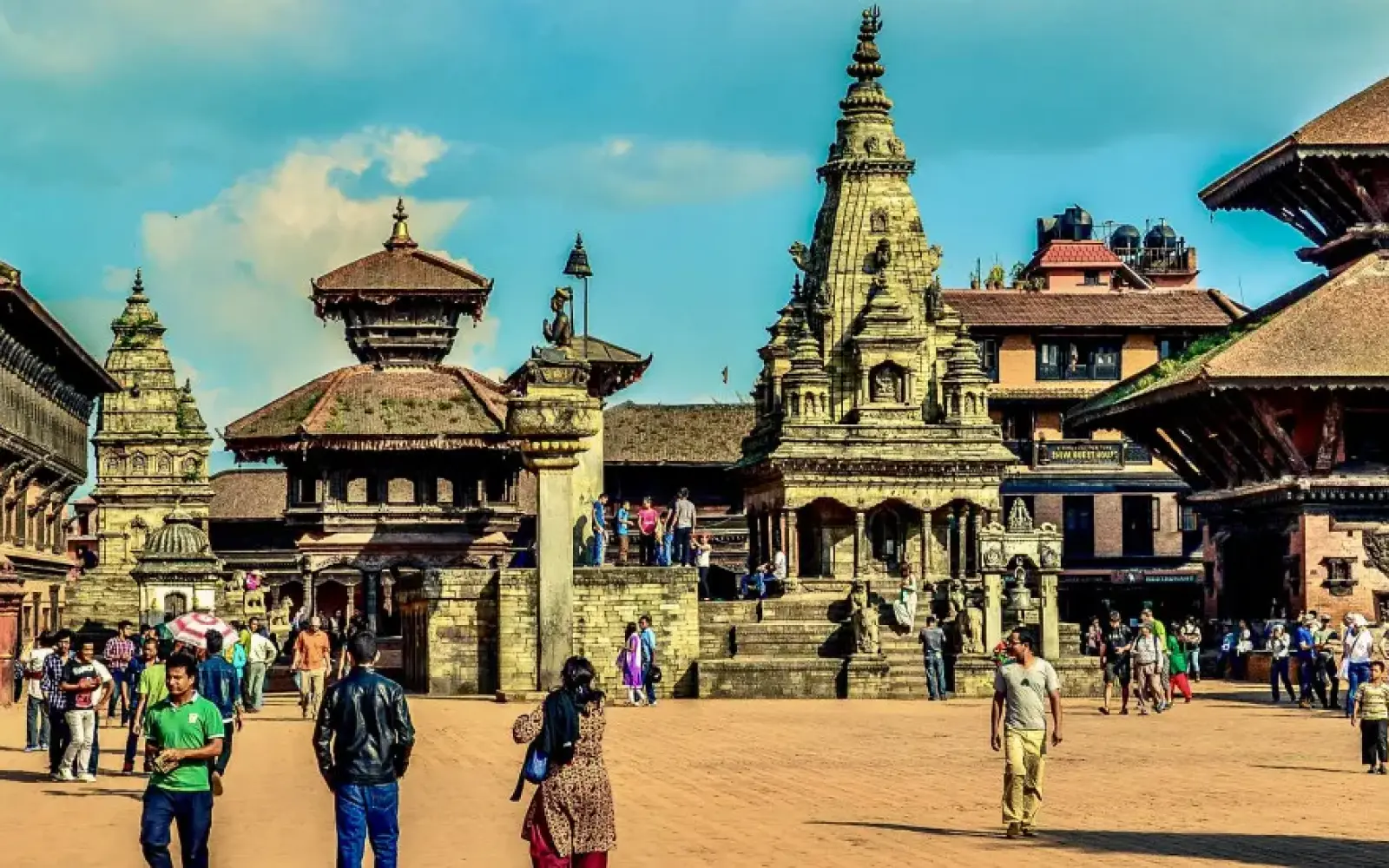
To successfully plan a trip to the Kathmandu UNESCO Sites in 2026, you will need the most current entrance fees in order to budget appropriately. This updated guide will give you the needed information, visitor tips, and cultural context in order to enhance your visit.
The Kathmandu Valley contains seven UNESCO World Heritage Sites, established in 1979 for their inherent cultural significance; they represent the best examples of Newar architecture, Hindu and Buddhist spiritual practices, and fabulous wooden sculpting that appeals to history, spiritual practitioners, and adventure seekers. All of these various sites are manifestly part of Nepal’s living heritage through the completion of ancient spiritual practices that are still in force today, while entailed by the modern day tourism industry.
The entrance fees to the UNESCO World Heritage Sites are structured into three price categories based on whether the visitors are from outside of Nepal, from either of the other two countries in the South Asian Association for Regional Cooperation (SAARC), or are residents of Nepal; as established by the Nepalese government so that the proceeds from these fees are utilized for the preservation of the UNESCO World Heritage Sites. The entrance fee amounts for the UNESCO World Heritage Sites in 2026 will be comparable to those in the previous year. Here's the breakdown:
| Site | Foreign Tourist (NPR) | SAARC (NPR) | Notes |
| Kathmandu Durbar Square | 1,500 | 750 | Valid 3 days |
| Patan Durbar Square | 1,500 | 750 | Official gate entry only |
| Bhaktapur Durbar Square | 1,500 | 750 | Includes museum |
| Swayambhunath Stupa | 2,000 | 1,000 | Full complex access |
| Pashupatinath Temple | 1,000 | 500 | Non-Hindus via east gate |
| Boudhanath Stupa | 1,000 | 500 | Stupa area; some report 400 NPR |
| Changu Narayan Temple | 600 | 300 | Oldest Hindu temple |
Kids under ten generally get in for free but should confirm this on the actual day. To be safe, purchase tickets from one of the official counters only because there are counterfeit tickets in circulation.
Kathmandu Durbar Square was the centre of Nepal’s monarchy and is the home to pagoda temples, such as Hanuman Dhoka and Kumari Bahal. Foreign tickets are three day permits and currently cost NPR 1,500 and allow you to visit the palaces, courtyards and museums. Visiting during festivals, such as Indra Jatra or to photograph the temple complex, is the best option. Expect to see many local vendors selling prayer flags and other local handicrafts, many of which are made in the temples. The new reconstruction work primarily funded by foreign tourist ticket sales is a testament to how well the area has recovered since the 2015 earthquake.
Patan Durbar Square is also known for its bronze sculptures and Krishna Mandir (one of the finest examples of shikhara style architecture). Foreign tickets to enter Patan Durbar Square are priced the same as Kathmandu Durbar Square - NPR 1,500 and must be purchased through the entrance points to enhance security. The Patan Museum has gilded archaeological finds and is close to Golden Temple (which costs NPR 100 for foreigners to enter). Evenings see fewer crowds, and many of the carvings are illuminated.
Bhaktapur is also a living museum, has the 55-window palace as well as the Nyatapola temple, a five-story climb to the top. The ticket prices for Bhaktapur are the same as Kathmandu for foreigners; NPR 1,500 for foreigners and NPR 750 for SAARC nationals includes a visit to the national art gallery's paubha paintings. Bhaktapur is a medieval Newar town; no cars are allowed in the city and therefore preserves the squares of the city, pottery production areas and woodwork. Spend the whole day at Bhaktapur exploring numerous taels (courtyards). Also, groups of 11-20 receive one free entry for the group leader.
Swayambhunath, also known as the Monkey Temple, offers breathtaking panoramic views of the Kathmandu Valley and religious shrines for followers of the Vajrayana (Tibetan) Buddhist tradition. An entry fee of NPR 2,000 allows the exploration of this hilltop complex; climb 365 steps in the early morning hours for prayer flags fluttering in a thick fog! Monkeys will add an element of humor to your journey, but please be careful with your belongings as they are quite skillful at taking what is not theirs! The cost to maintain the Swayambhunath will increase due to rising costs associated with maintaining it in the middle of a growing city.
Pashupatinath Temple is Shiva's holy place on the banks of the Bagmati River. The temple serves as a place to witness open-air cremations of deceased Hindus, as well as for many Sadhus who pursue the path of devotion to God. The fee for non-Hindus is NPR 1,000 at the east entrance into the temple, allowing access only to the terraces that surround the temple; as a Hindu, you will not pay anything to enter the temple through the west entrance. Foreigners are not permitted access to the inner sanctum of the temple; it is important to understand and respect these rituals. Plan your visit to Pashupatinath outside the peak season of Dashain to avoid crowds of worshipers. Entrance fees will be used to maintain the ghats and ashrams at Pashupatinath.
Boudhanath is one of the largest mandala stupas in the world! Boudhanath Stupa is home to many Tibetan refugees who spend their days spinning prayer wheels around the stupa. An entry fee of NPR 1,000 (or NPR 400, according to some reports) allows you to walk clockwise around the stupa, joining the monks in their 'kora'. In the evenings, Boudhanath is surrounded by magical light from the butter lamps that fill the stupa; many of the rooftop cafes around the stupa have excellent views of it. Tickets for Boudhanath can be purchased at various locations throughout the city; access to the stupa is free after dark.
The Changu Narayan Temple is located on a ridge with the city of Bhaktapur visible below. The Changu Narayan Temple is known to have been built in the year 255 A.D. and is the oldest Hindu temple in the Kathmandu Valley. Changu Narayan Temple has many remarkable carvings and temples, including several of Vishnu's incarnations and lots of Licchavi inscriptions. The fee for Changu Narayan temple is NPR 600; you can hike in the hills around the temple. Because of its elevation and quietness, the Changu Narayan Temple is a great place for patient exploration. A visit to Bhaktapur and a spectacular view from Nagarkot will provide a memorable half-day outing.
Tickets should be purchased at the official booth, and expect scams if you are in the Thamel area. You must present your passport for SAARC discount pricing. Please dress modestly (shoulders/knees covered) and do not wear leather in the temples. The Durbar ticket covers multiple days so plan your visits accordingly; visit stupas first (mornings) and durbars second (afternoons). If possible, book guided tours that combine multiple sites to save time/money. The peak travel months for Nepal are during the monsoon during May to October. There is no photography allowed in the sanctum of each temple, and drones are also prohibited.
Catching the golden light and chants at both the Swayambhunath and Boudhanath stupas during sunset is an ideal time to visit the temples. Late afternoons after the temples have closed (and before dusk) is the best time to visit the Durbar Squares to see them in their most picturesque forms. If you want to be part of the Maha Shivaratri festival (around February to early March) at the Pashupatinath temple, be sure to check the dates in 2026/27. Weekdays will be much less busy than weekends. All sites are open between dawn and dusk.
The cost for a foreigner to visit all 7 temples is estimated at ~NPR 9,100, and the estimated cost of transportation to and from each temple is NPR 2,000 - 5,000 (depending on if you take a taxi or microbus). If you are a SAARC citizen, your costs are halved and the average cost for a Nepalese citizen is less than NPR 500. Meals are another estimated cost of NPR 500/day, and guides will average around NPR 3,000/day. Although combo tickets to the sites are not yet offered, booked tours typically save you money.
When walking around a stupa; always walk around clockwise as you will walk around counter-clockwise when doing kora. You must remove your shoes and/or hat in any shrine, and do not touch any offerings. Bargain fairly in the bazaars and if you decide to use a guide, give him/her around NPR 500/day as a gesture of goodwill. The vast majority of these cultural sites exist in respect, your fee to access these sites goes toward the preservation of these sites.
Support for responsible tourism includes the fee system, designed to offset the urbanization and seismic damage created by mass-tourism, and eco-tours that support the local population as well as one-time use plastics. Hire a Newar guide for real-time stories about your site.
Day 1: Central Cluster - Kathmandu Durbar + Swayambhunath (taxi, NPR 500)
Day 2: East Side - Pashupatinath + Boudhanath (taxi, NPR 500) - bike or rickshaw.
Day 3: South/North - Patan + Bhaktapur (bus, NPR 100) - Changu Narayan.
This covers everything in three days and will leverage the duration of the multi-day ticket.
Expert local guides are invaluable for sharing the stories and legends of the various sites and will often provide transportation, front-of-the-line access to sites, and help to connect you with the communities that you are visiting.
Kathmandu offers a wide variety of UNESCO World Heritage Sites and timeless spirituality within its stunning architecture; the fees for using each site help ensure its long-term preservation. To have an adventure experience in Kathmandu, book with All Himalayan Treks for guides, priority tickets, customized itineraries, and insider information. Visit or contact All Himalayan Treks today to start transforming your 2026/27 visit into an experience of a lifetime!
Fees are standardized by location on a yearly basis but the actual tour packages may be considerably different.
Many will be free (under the age of 10) but please check with the venue where you are visiting.
No official combined tickets are available; please purchase them separately at each location.
Yes. A passport will be necessary to enter SAARC (South Asian Association for Regional Cooperation) countries and should verify your citizenship/residency in order to use SAARC privileges at each site.


