 5.0 of 433 reviews
  5.0 of 309 reviews 5.0 of 433 reviews 5.0 of 309 reviews
The Langtang Trek is rated as moderate to challenging. There are no glacier crossings that require canyons, no fixed lines or summit pushes at midnight; it does, however, take you to a height just under 5,000m, multiple days of considerable elevation gain and, in many cases, altitude sickness which is the great equalizer doesn’t take fitness level into consideration. Understanding these factors should be the key to any success on this trek.
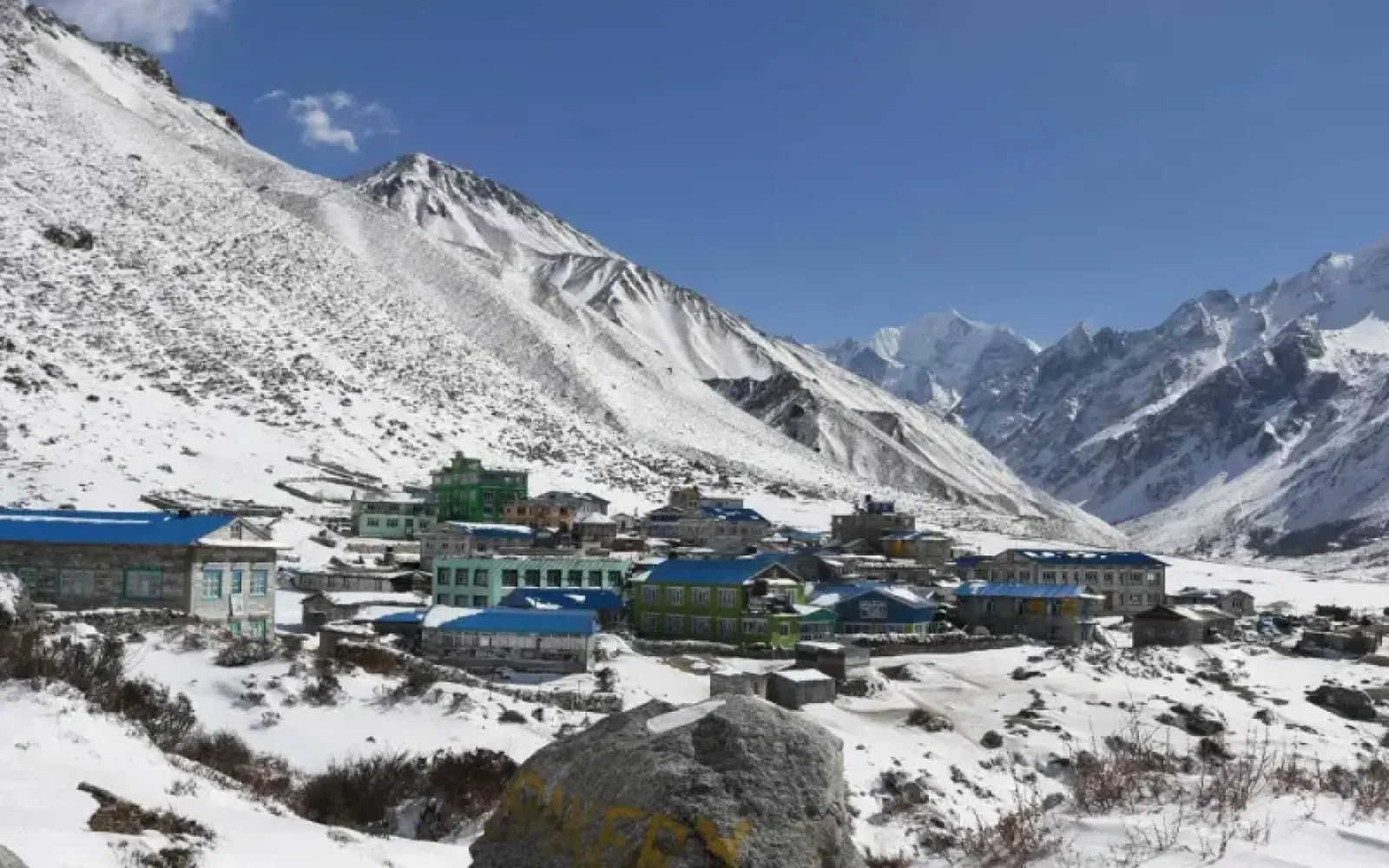
Langtang is located in the north-central region of Nepal and is located approximately 50km (30 miles) north of Kathmandu, as the crow flies. The standard trek starts in Syabrubesi (1,550m in elevation), follows the Langtang River upstream through a narrowing forest gorge until reaching Kyanjin Gompa (3,870m elevation), which is the spiritual and administrative centre of the Langtang District of Nepal.
The two most sought after summits above Kyanjin are Kyanjin Ri (4,773 m) and Tsergo Ri (4,984 m), both of which can be accomplished on a day hike and both provide views that can compete with any offered in the Everest or Annapurna regions.
The average number of days it takes to complete a round trip is seven to 12 depending on your pace and whether you choose to do the Gosaikunda Lake extension.
The terrain from Syabrubesi to Kyanjin is approximately 65 km (one way) in distance with an elevation gain of approximately 2,320 m over a period of approximately three to four days of walking. The total elevation gained is considerable; however, it is distributed over the course of several days rather than having an overwhelming total elevation that would require climbing all at once.
For the first two days the trail winds through heavy rhododendron and oak trees along a river gorge. The trail is well-marked and well-maintained but be aware that some parts of the trail may be exposed or on a steep drop-off. If you have an extreme fear of heights take more caution on the trail between Lama Hotel and Langtang village.
As you walk from Langtang village (3,430 m) to Kyanjin Gompa, the valley opens up remarkably. Trees are replaced by large yak pastures, stone walls, and wide-open views toward Langtang Lirung (7,227 m). In this area you will find more exposure to wind and sun when walking and you will start experiencing the effects of altitude more significantly.
The real test of endurance comes from the day hikes around Kyanjin. Kyanjin Ri is 900m (3,000ft) of virtually straight ascent from the Gompa; it requires anywhere from 3 to 4 hours of hard labour for most inexperienced hikers. On the other hand Tsergo Ri, at just under 5,000m (16,400ft) will require a much longer time & effort to reach the summit, and is overall a much greater challenge than Kyanjin Ri. Because of the close proximity to the summit's altitude, you will find the vast majority of 5,000m trails are no more difficult than their 3,000m counterpart - but with thin air conditions at those altitudes, you will not have to work as hard to reach your summit compared with the same effort level at a lower elevation, i.e., repeat your 3,000m hike before doing Tsergo Ri.
Because of the nature of elevation gain, most trekkers do not account for altitude when planning their trek. Altitude does not measure an individual's level of fitness. It instead measures an individual's physical capabilities as they relate to how well they perform while under the influence of altitude. Kyanjin Gompa at 3,870m (12,700ft) is high enough to be considered a serious risk for developing Acute Mountain Sickness (AMS). It is estimated that between 25%-30% of all hikers that go above 3,000m will develop some symptoms associated with Acute Mountain Sickness; some will have only mild symptoms of headache and fatigue, while others may experience life threatening symptoms requiring immediate evacuation.
Many trekkers have made the mistake of attempting to treat Langtang as an easy to hike trail and trying to push through from Syabrubesi to Kyanjin in three aggressive days of trekking. Some have been successful but some have had very painful experiences.
According to the 2026 recommendation, it is important to spend at least one full day resting in Langtang before travelling to Kyanjin and at least two nights at the gompa prior to the high viewpoint attempts. While this can add a day or two to your itinerary, it greatly lowers the risk of AMS and increases the chances of reaching Tsergo Ri.
The symptoms that should raise alarm include a persistent headache not relieved with paracetamol, nausea, dizziness, decreased appetite, and unusual fatigue. If two or more of these symptoms worsen over the course of 24 hours, you MUST immediately descend to a lower altitude and never attempt to climb a mountain unless you are fully prepared.
For the standard route from Kyanjin back to Kyanjin, a moderate level of physical conditioning is adequate. Golfers should be capable of walking 6 to 8 hours per day, hiking with 5 to 7 litres of gear over several days and not need to stop every few minutes while on a sustained three-hour uphill hike. If you are able to accomplish this level of conditioning, you are trail-ready to attempt the trek.
The requirements for Tsergo Ri are substantially more difficult. With almost 1,100 metres of climbing to nearly 5,000 metres after a long, hard working day, it is likely that you will not have reached your maximum cardiovascular limit! We suggest spending six to eight weeks preparing for Tsergo Ri by doing sustained aerobic exercise; repeating hills with a weighty backpack; and climbing stairs; these methods will be far more effective than using the gym. Training at lower elevations cannot provide all the benefits of training at higher elevations; however, arriving prepared will provide the best possible base of fitness on which to continue.
The 2015 earthquake devastated the Langtang Valley. The reconstruction effort has been outstanding and most of the trail, teahouse, and lodge infrastructure should be completely restored, and in many instances improved, by 2026. At lower elevations and in forested areas, the trails are solid, well-graded, and easily hiked. The trails above Ghora Tabela (2,970 metres) become rockier and require more care in foot placement. The trails above Langtang village are often icy in the early spring and autumn months due to the colder temperatures. Trekking poles are recommended from the Lama Hotel to Tsergo Ri and may be required if you are attempting to reach the summit of Tsergo Ri.
Teahouse accommodations are available throughout the trail and will be of a good standard. Most lodges in Kyanjin Gompa, which is at the end of the Langtang valley, can provide a comfortable private room. There is electricity for charging devices; however, it is often inconsistent above Langtang village, so we recommend bringing a power bank.
Compared to the Annapurna Circuit and Thorong La Pass (5,416 m), the Langtang Trek is much easier. Furthermore, the Langtang trek is significantly easier than the Everest Three Passes Trek or any climb of a peak. The Annapurna Base Camp Trek compared to the overall difficulty of the Langtang trek is about equal.
One of the best ways for someone new to the high-altitude trekking in Nepal to start is by opting for the Langtang Valley Trek. Located near Kathmandu, well serviced with many amenities, offering a wealth of cultures, scenery and very few logistical challenges compared to longer Himalayan treks.
Although the Langtang Valley Trek is doable for a motivated, relatively fit adult with proper training to the altitude; it is not an easy casual walk. Any person arriving to the Langtang Valley Trek without enough training will experience significant challenges during the 5 days of continued mountain hiking and will likely not have a successful hike up to almost 5000m for viewing purposes without placing themselves at risk.
However, the Langtang Valley Trek is also one of the most gratifying moderate treks in the World. The combination of Tibetan influenced cultures, numerous ancient gompas, Yak herders and remarkably beautiful mountain views from the valleys make it suitable for repeat visits. The bottom line is to train appropriately, be patient, consume substantial quantities of water, be attentive to your body and have fun.
All Himalayan Treks provide completely personalized itineraries throughout Nepal's Himalayas, including Langtang and Annapurna, as well as expeditions to Dolpo and Upper Mustang. Every trek has experienced, knowledgeable local guides who prioritize safety and provide an itinerary customized to fit your fitness level and timing..

Our travel experts are ready to assist you with any questions.
Send us a message.Have a question before you book? Send your enquiry below and our travel experts will get back with the required information.