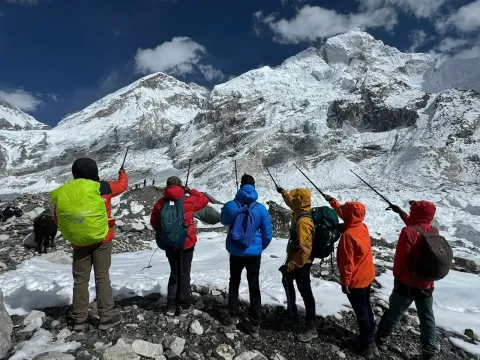
Every March the lower slopes of the Himalaya are transformed. The forest that looked brown and silent in the winter, begins to show colours of red, pink and white as the rhododendrons bloom, and the sounds of birds, mule bells and trekkers ascending the mountain echo along the trails. If you are looking for the best spring trekking in Nepal, this is one of the best times of the year.
Spring Trek Season in Nepal: March-May Monsoon has not yet set in. Days are mostly warmer than in winter. Mountain views are also spectacular, often, especially in the mornings. Although conditions can never be guaranteed given the speed at which the Himalayan weather can change, the season offers an ideal mix of culture, scenery and comfort.
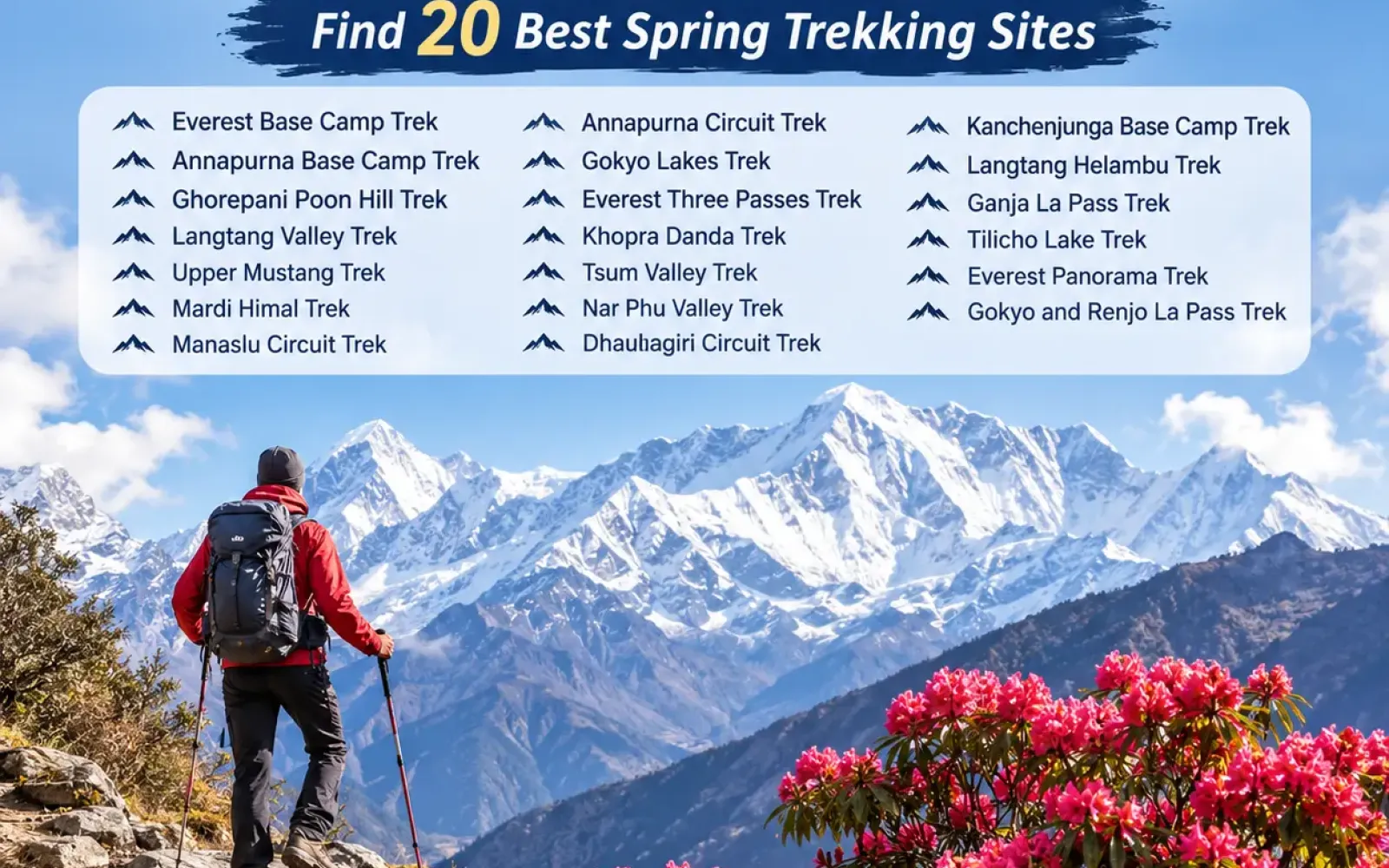
The guide book details twenty routes in the Himalaya ranging from family-friendly walks to challenging high-altitude crossings. There’s a month-by-month weather guide, a comparison of spring and autumn, and advice on permits, packing and planning. This text has been written by All Himalayan Treks, a trekking and adventure company in Nepal and the advice given is therefore typical of the actual operation of the trips. Use it to narrow down your choices, and then contact a reputable operator to check the latest conditions before booking.
Compared with winter, spring brings warmer daytime temperatures and longer daylight. Lower villages can feel pleasantly warm, while high camps still get cold at night. Expect the season to be drier than summer, though afternoon clouds, wind and occasional showers or snow at altitude are normal.
The rhododendron (lali gurans) is Nepal's national flower. Blooms usually appear at lower elevations first, often from March, then move higher through April and into May. Treks through forested middle hills, such as those around Ghorepani, the Annapurna Sanctuary approach and the Khumbu below Namche, are especially colorful. Timing varies each year, so treat bloom dates as a guide, not a promise.
Mornings often deliver the sharpest views of peaks such as Everest, Lhotse, Annapurna and Dhaulagiri. Haze can build as spring warms, particularly in late April and May, and clouds often gather by afternoon. Start early and keep a flexible schedule.
Nepal's national parks and conservation areas shelter Himalayan tahr, musk deer, langur monkeys, and many pheasants, including the colorful Himalayan monal. Langtang is known for red pandas, though sightings are rare. Spring is also a good time for birdwatching.
Trekking here means walking through living communities: Sherpa villages in Khumbu, Gurung settlements around Annapurna, Tamang villages in Langtang, and Tibetan-influenced communities in Mustang, Manaslu and Tsum. You will pass monasteries, mani walls and prayer flags. Spring includes festivals in some areas, such as Tiji in Upper Mustang, usually held around May [VERIFY dates for 2027].
A four-day hike to Poon Hill and a three-week crossing of three 5,000 m passes both work in spring. That range lets beginners, families and experienced mountaineers all find a fitting route.
Spring is one of Nepal's two main trekking seasons, alongside autumn. Temperatures below are rough guides and vary by year, route and altitude.
March is a transition month. Lower and mid-elevation trails are comfortable and rhododendrons begin to bloom. Higher routes can still be cold, with snow on upper trails and passes. At about 4,000 m and above, nighttime temperatures can drop well below freezing. Nepal trekking in March suits those who want quieter trails and don't mind cold at altitude. It can work well for Everest Base Camp, but pack for winter-like nights.
April is the busiest and often the most balanced month. Rhododendrons are widely in bloom, days are warm in the valleys, and snow on higher trails is usually less of an issue than in March. Nepal trekking in April is popular, so book flights, lodges and guides early for Everest and Annapurna routes.
May is warmer, with higher blooms in the upper forests and generally better conditions on high passes. The trade-offs are more haze, hotter lower valleys and increasing afternoon cloud or thunderstorms as the monsoon approaches, which usually arrives around early to mid June. Rain-shadow regions like Upper Mustang remain good options.
Altitude and temperature in brief: Lower villages (under 2,000 m) can reach the mid-20s °C by day. Around 3,500 m, days are mild but nights are cold. Above 4,500 m, expect freezing nights throughout spring, plus possible snowfall.
If you want to make your trekking experience one that you will never forget, you can trek through these twenty incredible regions during the spring season. Spring is one of the best times to trek in Nepal because the weather is predictable, the sky is blue, and the environment is clean. All Himalayan treks provide you with access to twenty incredible trekking sites that are designed specifically for your adventures during the spring season.
The Everest Base Camp trek is among the most famous adventure treks in the world. Mount Everest, the highest mountain in the world, offers stunning views of the Himalayan region. During spring, trekkers will be rewarded with the sight of majestic white peaks against a clear blue sky and Nepal’s national flower and brilliant rhododendrons blooming throughout the trekking routes. The main attractions of Everest Base Camp trek are Lukla Bazar, Namche Bazaar, Tengboche, Everest Base Camp and Kalapathhar.
Explore our Everest Base Camp Trek
This route climbs into the Annapurna Sanctuary, a glacial amphitheatre ringed by Annapurna I, Machapuchare (Fishtail) and Hiunchuli. In spring, the lower forests of the Modi Khola valley glow with rhododendrons and the high sanctuary is surrounded by snow. Trails pass Gurung villages such as Ghandruk and Chhomrong, with hot springs at Jhinu Danda.
See our Annapurna Base Camp Trek
A short route in the Annapurna region, famous for its sunrise over Dhaulagiri and Annapurna from Poon Hill. Spring is arguably its best season, because the forests between Ulleri and Ghorepani are among the most celebrated rhododendron landscapes in Nepal. Villages like Ghandruk offer easy cultural encounters.
Explore our Ghorepani Poon Hill Trek
Lying north of Kathmandu near the Tibetan border, Langtang is reached by road to Syabrubesi. The valley rises through bamboo and rhododendron forest into a glacier-carved landscape around Kyanjin Gompa. Spring brings flowers, langur sightings and clear mornings. The area was badly damaged by the 2015 earthquake and landslide, and the Tamang communities have since rebuilt; travelers help the recovery.
Learn about our Langtang Valley Trek
This former forbidden kingdom lies in the rain shadow north of the Himalaya, so the landscape is arid, with red cliffs, eroded canyons, cave monasteries and the walled city of Lo Manthang. Spring is popular for its dry conditions, and the Tiji festival often falls in May. Expect strong afternoon winds on the Kali Gandaki valley.
Discover our Upper Mustang Trek
A relatively quiet ridge walk near Pokhara, Mardi Himal climbs through forests of oak and rhododendron to High Camp, with Machapuchare seemingly close enough to touch. Spring brings flowers in the forest and sweeping views above the tree line.
Circling the eighth-highest mountain on earth, Manaslu (8,163 m), this route is remote and less crowded than Annapurna. It runs through the Buri Gandaki gorge, past Buddhist villages like Samagaon, and over Larkya La. Spring offers rhododendron forests in the lower valley and generally manageable conditions on the pass later in the season.
See our Manaslu Circuit Trek
Once Nepal's most famous long trek, this circuit crosses Thorong La and passes from subtropical valleys to the high desert of Manang and Mustang. Roads now cover some sections, so many trekkers shorten the route or use side trails, but the scenery of Annapurna, Gangapurna and Dhaulagiri remains remarkable. Spring brings blossoms in the lower forests.
Explore our Annapurna Circuit Trek.
A beautiful alternative to the main Everest route. The trail climbs beside the Ngozumpa Glacier, the longest in Nepal, to a series of turquoise lakes below Cho Oyu. From Gokyo Ri, you can see Everest, Lhotse, Makalu and Cho Oyu in one sweep. Spring brings rhododendrons in the lower valley and generally good morning views.
See our Gokyo Lakes Trek
The toughest of the Khumbu classics, this loop crosses Kongma La, Cho La and Renjo La while visiting Chhukung, Everest Base Camp and Gokyo. It rewards strong trekkers with the region's best landscapes. Spring snow can make pass crossings more demanding early in the season, so April and May are typically preferred.
Explore our Everest Three Passes Trek.
A community-run route in the Annapurna region that links forested ridges and high meadows with fewer crowds than Poon Hill. In spring, the oak and rhododendron forests are spectacular, and Khopra Ridge opens to views of Dhaulagiri and Annapurna South. Many itineraries add the sacred Khayer Lake.
Tsum Valley is a hidden Buddhist valley near the Tibetan border, accessed from the Manaslu trail. Villages, monasteries such as Mu Gompa and Rachen Gompa, and prayer walls reflect a strongly Tibetan culture. Spring brings green fields, blossoming forests and views of Ganesh Himal and Sringi Himal.
Hidden north of the Annapurna Circuit, Nar Phu is a restricted area of stone villages, canyons and Tibetan Buddhist culture. The trail joins the circuit at Koto and climbs to Kang La before descending toward Manang. Spring brings a sense of wilderness and, with luck, sightings of blue sheep.
This serious expedition-style trek circles Dhaulagiri I (8,167 m), crossing French Pass and Dhampus Pass. It involves glaciers, moraines and camping, with a remote atmosphere. April and May are generally the better months because the passes are more manageable, though conditions can still be difficult.
In Nepal's far east, this route approaches the world's third-highest mountain, Kanchenjunga (8,586 m). The lower slopes in Taplejung are famous for rhododendrons, which makes spring a standout season, along with Limbu and Sherpa villages and rich biodiversity. The north base camp at Pangpema offers an extraordinary view of the massif.
This route combines Langtang with the Helambu region and, in many itineraries, the sacred Gosaikunda lakes. It crosses Laurebina La and passes Sherpa and Tamang villages and forested hills. Spring offers flowering rhododendrons and scattered mountain views.
Ganja La connects Langtang and Helambu through a high, glaciated pass, making it one of the most adventurous routes near Kathmandu. It suits trekkers who prefer remote camping, steep terrain and big views.
One of the world's highest lakes, Tilicho sits below Tilicho Peak in the Manang area. The route usually branches from the Annapurna Circuit. Spring brings clear days, though early-season snow is common, and the lake itself may remain partly frozen.
A short Khumbu route with relatively gentle altitude gain. It visits Namche Bazaar, the Everest View Hotel area and Tengboche, with Everest, Lhotse, Nuptse and Ama Dablam in view. Spring rhododendrons add color to the lower forests.
This variation visits Gokyo Lakes and crosses Renjo La, often one of the most scenic passes in Khumbu. From the pass, the view back over Gokyo and across to Everest is exceptional. It is shorter than the full Three Passes and avoids two of the harder crossings.
If 20 options feels like too many, use this table to shortlist.
| Traveler type | Best choices | Why |
|---|---|---|
| Beginners | Ghorepani Poon Hill, Mardi Himal | Moderate altitude, short duration, good lodges |
| Families | Everest Panorama, Poon Hill, Langtang Valley (older children) | Flexible pacing and lower altitude |
| First-time Himalayan trekkers | Annapurna Base Camp, Everest Base Camp | Classic, well-supported routes |
| Experienced trekkers | Manaslu Circuit, Annapurna Circuit | Longer, higher, more remote |
| High-altitude adventure seekers | Everest Three Passes, Dhaulagiri Circuit, Gokyo and Renjo La | Multiple 5,000 m+ crossings |
| Limited time | Poon Hill, Everest Panorama, Mardi Himal | Under a week |
Some quick tips for deciding:
A short, honest rule: choose the trek that matches your weakest point, whether that is time, fitness or altitude tolerance, not your most ambitious.
Family travel in Nepal works best when you separate trekking destinations from sightseeing destinations.
Families should choose shorter walking days, watch for altitude symptoms (children may not report them clearly), plan rest days and carry basic medicines. As a rough planning guide, many operators suggest lower-altitude routes for younger children, but consult a pediatrician and your operator for your family's situation.
Summer in Nepal means monsoon, roughly June to August, with the heaviest rains typically in July and August. The lowlands get hot and humid, trails become muddy and slippery, and clouds often hide mountain views.
Not every region is the same. Rain-shadow areas such as Upper Mustang, Nar Phu and Dolpo receive much less rainfall than the southern slopes. Some travelers choose these in summer, but still need extra planning for flights, roads and flexible schedules. For most trekkers, spring and autumn remain easier and safer choices.
Both seasons are excellent. The better one depends on what you value most.
| Factor | Spring (March–May) | Autumn (September–November) |
|---|---|---|
| Weather | Warming, pre-monsoon, some afternoon cloud | Typically stable and dry after monsoon |
| Temperature | Warmer as season advances | Cooler, especially in November |
| Mountain visibility | Often good in mornings; haze increases by May | Often very clear |
| Rhododendron flowers | Peak season | Not in bloom |
| Trail conditions | Dry; some snow on passes early | Dry, well-maintained after monsoon |
| Crowds | Busy, especially April | Busiest of the year |
| Cultural experiences | Festivals such as Tiji in Mustang; Nepali New Year in April | Dashain and Tihar, Nepal's biggest festivals |
| Suitable treks | Rhododendron routes, Everest expeditions, Upper Mustang | All major routes, especially high passes |
Choose spring for flowers, warmer afternoons and the Everest expedition atmosphere. Choose autumn for typically clearer skies and festival culture.
Beginners should look at Poon Hill, Mardi Himal or Everest Panorama. Previous multi-day trekking helps if you want Everest Base Camp or Annapurna Base Camp.
With five to seven days, choose short routes. With two weeks, consider the base camps. Three weeks opens up circuits and passes.
Altitude sickness can affect anyone, regardless of fitness. Ascend gradually, include rest days, drink plenty of water, and descend if symptoms worsen. Never ignore headache, nausea, confusion or loss of coordination.
Most treks involve five to seven hours of walking daily on uneven terrain. Cardiovascular fitness and leg strength help, but pace and acclimatization matter more than speed.
Costs depend on route length, flights, permits, guides, porters and accommodation level. Restricted-area treks cost more. Ask for a written itinerary and clear inclusions rather than relying on a single headline price.
Choose Khumbu for Everest, Annapurna for variety and rhododendrons, Langtang for proximity to Kathmandu, Mustang for desert culture, and Manaslu or Kanchenjunga for remote wilderness.
Layering is the key. Mornings and nights can be freezing at altitude while afternoons feel warm. A good sleeping bag and sturdy, broken-in boots matter more than any gadget.
Most routes require a national park or conservation area permit and local fees, and many require a TIMS card or equivalent. Restricted areas such as Upper Mustang, Manaslu, Tsum, Nar Phu and Kanchenjunga need special permits arranged through a registered agency. Fees and rules change, so confirm current requirements with your operator.
Train for at least two to three months with hiking, stair climbing, cardio and strength work. Practice walking with a loaded daypack.
A conservative itinerary with rest days is the best protection. Pay attention to how you feel and tell your guide early.
Licensed guides provide navigation, safety judgment, cultural insight and altitude monitoring. Using local porters supports mountain communities; ensure they are fairly paid and properly equipped.
Buy insurance that covers trekking at your maximum altitude and helicopter evacuation. Keep policy details accessible and share your itinerary with someone at home.
Teahouses offer simple rooms and meals such as dal bhat. Higher lodges are basic and charging or hot showers may cost extra. Transport can involve domestic flights or long bumpy drives, so build buffer days at the end of your trip.
Clothing
Footwear
Equipment
Sun protection and health
Documents
1. What is the best month for trekking in Nepal?
April is often considered the best spring month for balance of weather, blooms and trail access, while October is a popular autumn option.
2. Is April a good time for trekking in Nepal?
Yes. April is peak spring season, with warm days, blooming rhododendrons and generally good trail conditions. It is also busy, so book early.
3. Can you trek to Everest Base Camp in March?
Yes, many people do. Expect cold nights and possible snow at higher altitudes, so pack warm gear.
4. Which trek is best for beginners in spring?
Ghorepani Poon Hill is a common choice, with Mardi Himal and Everest Panorama also suitable for active beginners.
5. What are the best family-friendly treks in Nepal?
Poon Hill and Everest Panorama are common options. Choose routes with modest altitude and flexible pacing.
6. Can I see rhododendron flowers while trekking in Nepal?
Yes. Blooms typically peak between March and May at mid elevations, in areas such as Ghorepani, Annapurna and Khumbu.
7. Is spring better than autumn for trekking in Nepal?
Neither is universally better. Spring offers flowers and warmer conditions, while autumn often has clearer skies.
8. What is the temperature in Nepal during spring?
It varies by altitude. Low villages can reach the mid-20s °C, while high camps often drop below freezing at night.
9. Is a guide necessary for trekking in Nepal?
Restricted areas require a licensed guide. Regulations for other areas have changed in recent years, so confirm current rules . Guides are strongly recommended in any case.
10. What permits are required for spring trekking?
Usually a national park or conservation area permit plus local fees, and a TIMS card where required. Restricted areas need special permits through a registered agency.
11. Can you trek in Nepal during summer?
Yes, in some regions, especially rain-shadow areas such as Upper Mustang, but expect rain, leeches and transport disruptions elsewhere.
12. How many days should I spend trekking in Nepal?
Short treks take 4–7 days, classic base camp treks 10–14 days, and circuits or pass crossings 15–21 days or more. Add buffer days for flights and acclimatization.
Spring in Nepal brings flowers, long days and mountain scenery that stay with you long after you leave. The right trek depends on your experience, time and interests, not just popularity. Whether you choose a short walk to Poon Hill or a long crossing of 5,000 m passes, plan early, acclimatize patiently and allow flexibility.
If you would like help choosing, contact All Himalayan Treks to discuss a customized spring itinerary for 2027 and 2028.

Our travel experts are ready to assist you with any questions.
Send us a message.Have a question before you book? Send your enquiry below and our travel experts will get back with the required information.

Travel inspiration, new treks and exclusive offers, straight to your inbox.