[{"name":"Everest Base Camp Trek","duration":"14","image_url":"https:\/\/www.allhimalayantreks.com\/storage\/trip-galleries\/1\/thumb_4b830d92fadc4c68b1e8886a7f879cad.webp","offer_price":1175,"url":"https:\/\/www.allhimalayantreks.com\/trips\/everest-base-camp-trek"},{"name":"Everest View Trek","duration":"9","image_url":"https:\/\/www.allhimalayantreks.com\/storage\/trip-galleries\/2\/thumb_67e3b64f28bb7fe46efd5edb0b8c0b70.webp","offer_price":890,"url":"https:\/\/www.allhimalayantreks.com\/trips\/everest-view-trek"},{"name":"Gokyo Ri Trek 10 days","duration":"10","image_url":"https:\/\/www.allhimalayantreks.com\/storage\/trip-galleries\/3\/thumb_c01977bc670aa835677d6b342e96aa95.webp","offer_price":1270,"url":"https:\/\/www.allhimalayantreks.com\/trips\/gokyo-ri-trek-10-days"},{"name":"Everest Three High Passes Trekking","duration":"19","image_url":"https:\/\/www.allhimalayantreks.com\/storage\/trip-galleries\/4\/thumb_645753d8eb778459a249b833ad39d851.webp","offer_price":1345,"url":"https:\/\/www.allhimalayantreks.com\/trips\/everest-three-high-passes-trekking"},{"name":"Annapurna Base Camp Trek","duration":"13","image_url":"https:\/\/www.allhimalayantreks.com\/storage\/trip-galleries\/5\/thumb_6865009674c652efacaf63d8cd75b24a.webp","offer_price":null,"url":"https:\/\/www.allhimalayantreks.com\/trips\/annapurna-base-camp-trek"},{"name":"Shortest Annapurna Circuit Trek","duration":"8","image_url":"https:\/\/www.allhimalayantreks.com\/storage\/trip-galleries\/6\/thumb_243c641a084eceb4ad69d2a4ad117ddb.webp","offer_price":null,"url":"https:\/\/www.allhimalayantreks.com\/trips\/shortest-annapurna-circuit-trek"},{"name":"Ghorepani Poon Hill Trek","duration":"6","image_url":"https:\/\/www.allhimalayantreks.com\/storage\/trip-galleries\/7\/thumb_ae0a5575ae2aeb7fa252856838d767f5.webp","offer_price":null,"url":"https:\/\/www.allhimalayantreks.com\/trips\/ghorepani-poon-hill-trek"},{"name":"Short ABC Trek with Poonhill","duration":"8","image_url":"https:\/\/www.allhimalayantreks.com\/storage\/trip-galleries\/8\/thumb_1231dedce915315838f8166f2e7632d1.webp","offer_price":650,"url":"https:\/\/www.allhimalayantreks.com\/trips\/short-abc-trek-with-poonhill"},{"name":"Langtang Valley Trek","duration":"10","image_url":"https:\/\/www.allhimalayantreks.com\/storage\/trip-galleries\/9\/thumb_5b4b4f05909fa8803d54ac84285cb555.webp","offer_price":null,"url":"https:\/\/www.allhimalayantreks.com\/trips\/langtang-valley-trek"},{"name":"Gosaikunda Lake Trek","duration":"8","image_url":"https:\/\/www.allhimalayantreks.com\/storage\/trip-galleries\/10\/thumb_028fc663f9fbe10c00d50d32adec4f7a.webp","offer_price":null,"url":"https:\/\/www.allhimalayantreks.com\/trips\/gosaikunda-lake-trek"},{"name":"Tamang Heritage Trail Trek","duration":"9","image_url":"https:\/\/www.allhimalayantreks.com\/storage\/trip-galleries\/11\/thumb_6c65a803a51e2b6c7058e0f1b685c203.webp","offer_price":null,"url":"https:\/\/www.allhimalayantreks.com\/trips\/tamang-heritage-trail-trek"},{"name":"Chisapani Nagarkot Hiking","duration":"3","image_url":"https:\/\/www.allhimalayantreks.com\/storage\/trip-galleries\/12\/thumb_60702804e5e4d0cc20a4bad23d7dc26c.webp","offer_price":null,"url":"https:\/\/www.allhimalayantreks.com\/trips\/chisapani-nagarkot-hiking"},{"name":"Upper Mustang Trek","duration":"18","image_url":"https:\/\/www.allhimalayantreks.com\/storage\/trip-galleries\/13\/thumb_d8eafc1e7014ee7dbf094bb2940c8e65.webp","offer_price":null,"url":"https:\/\/www.allhimalayantreks.com\/trips\/upper-mustang-trek"},{"name":"Ghorepani Poon Hiil Trek 3 Day","duration":"3","image_url":"https:\/\/www.allhimalayantreks.com\/storage\/trip-galleries\/14\/thumb_43f06d89b77e3ea214feed95fa46f9ce.webp","offer_price":null,"url":"https:\/\/www.allhimalayantreks.com\/trips\/ghorepani-poon-hiil-trek-3-day"},{"name":"Mardi Himal Trek","duration":"11","image_url":"https:\/\/www.allhimalayantreks.com\/storage\/trip-galleries\/15\/thumb_21da47928d20b1bf1c9ad39053bdd206.webp","offer_price":null,"url":"https:\/\/www.allhimalayantreks.com\/trips\/mardi-himal-trek"},{"name":"Khopra Danda Trek","duration":"14","image_url":"https:\/\/www.allhimalayantreks.com\/storage\/trip-galleries\/16\/thumb_92510475d8e41fe478925b698ca56a42.webp","offer_price":null,"url":"https:\/\/www.allhimalayantreks.com\/trips\/khopra-danda-trek"},{"name":"Jomsom Muktinath Trek","duration":"14","image_url":"https:\/\/www.allhimalayantreks.com\/storage\/trip-galleries\/17\/thumb_56e53ea08cb1b2ac7ad9cba96a70d978.webp","offer_price":null,"url":"https:\/\/www.allhimalayantreks.com\/trips\/jomsom-muktinath-trek"},{"name":"Ghandruk Annapurna Base Camp Trek","duration":"11","image_url":"https:\/\/www.allhimalayantreks.com\/storage\/trip-galleries\/18\/thumb_4246b4fa65718115dd319fc8453a479c.webp","offer_price":null,"url":"https:\/\/www.allhimalayantreks.com\/trips\/ghandruk-annapurna-base-camp-trek"},{"name":"Annapurna Circuit and Tilicho Lake Trek","duration":"14","image_url":"https:\/\/www.allhimalayantreks.com\/storage\/trip-galleries\/19\/thumb_dc159ee957f5e36f5fdffbd9b4d06153.webp","offer_price":null,"url":"https:\/\/www.allhimalayantreks.com\/trips\/annapurna-circuit-and-tilicho-lake-trek"},{"name":"Nepal Highlights Tour","duration":"11","image_url":"https:\/\/www.allhimalayantreks.com\/storage\/trip-galleries\/20\/thumb_952827d82900df6efb1be910dd0afc89.webp","offer_price":null,"url":"https:\/\/www.allhimalayantreks.com\/trips\/nepal-highlights-tour"},{"name":"Kathmandu Day Tour","duration":"1","image_url":"https:\/\/www.allhimalayantreks.com\/storage\/trip-galleries\/21\/thumb_11c8afb0ea7a71120dfa33b2f8761594.webp","offer_price":null,"url":"https:\/\/www.allhimalayantreks.com\/trips\/kathmandu-day-tour"},{"name":"Everest Three Passes Trek","duration":"18","image_url":"https:\/\/www.allhimalayantreks.com\/storage\/trip-galleries\/22\/thumb_b476a7a1748c3c1e3388187378933117.webp","offer_price":1550,"url":"https:\/\/www.allhimalayantreks.com\/trips\/everest-three-passes-trek"},{"name":"Everest Base Camp Trek via Gokyo Lake","duration":"15","image_url":"https:\/\/www.allhimalayantreks.com\/storage\/trip-galleries\/23\/thumb_48bb9309731b048a759065415ef8f147.webp","offer_price":1300,"url":"https:\/\/www.allhimalayantreks.com\/trips\/everest-base-camp-trek-via-gokyo-lake"},{"name":"Island Peak With Everest 3 Passes Trek","duration":"18 Days","image_url":"https:\/\/www.allhimalayantreks.com\/storage\/trip-galleries\/24\/thumb_87846e8876b369f0d323d5ab80146c91.webp","offer_price":null,"url":"https:\/\/www.allhimalayantreks.com\/trips\/island-peak-with-everest-3-passes-trek"},{"name":"Everest Base Camp Trek with Helicopter Return","duration":"11","image_url":"https:\/\/www.allhimalayantreks.com\/storage\/trip-galleries\/25\/thumb_fbce85abd32cf0f79fd155cd3add0319.webp","offer_price":null,"url":"https:\/\/www.allhimalayantreks.com\/trips\/everest-base-camp-trek-with-helicopter-return"},{"name":"Budget Everest Base Camp Trek","duration":"12","image_url":"https:\/\/www.allhimalayantreks.com\/storage\/trip-galleries\/26\/thumb_75a42fe11a3fc3abe0dca6df0336226f.webp","offer_price":null,"url":"https:\/\/www.allhimalayantreks.com\/trips\/budget-everest-base-camp-trek"},{"name":"Luxury Everest Base Camp Trek","duration":"14","image_url":"https:\/\/www.allhimalayantreks.com\/storage\/trip-galleries\/27\/thumb_ba33e53afbf8b97e6432fdd2c5130080.webp","offer_price":2400,"url":"https:\/\/www.allhimalayantreks.com\/trips\/luxury-everest-base-camp-trek"},{"name":"Annapurna Circuit Trek","duration":"14","image_url":"https:\/\/www.allhimalayantreks.com\/storage\/trip-galleries\/28\/thumb_6112d98996d78143360b19694d37593a.webp","offer_price":null,"url":"https:\/\/www.allhimalayantreks.com\/trips\/annapurna-circuit-trek"},{"name":"Manaslu Circuit Trek","duration":"14","image_url":"https:\/\/www.allhimalayantreks.com\/storage\/trip-galleries\/29\/thumb_8fe7115b4d0c0b8ecd6789d93b6d19aa.webp","offer_price":900,"url":"https:\/\/www.allhimalayantreks.com\/trips\/manaslu-circuit-trek"},{"name":"Short Annapurna Base Camp Trek","duration":"5","image_url":"https:\/\/www.allhimalayantreks.com\/storage\/trip-galleries\/30\/thumb_95b4ea62ad155b06e0b1b7d2a0e1edbb.webp","offer_price":null,"url":"https:\/\/www.allhimalayantreks.com\/trips\/short-annapurna-base-camp-trek"}]
Ghandruk Annapurna Base Camp Trek 2026: Everything You Need to Know Before You Go
If you’ve been researching for your next Himalayan adventure, then chances are that you have seen mentions of the Ghandruk Annapurna Base Camp Trek. It pops up all the time, and truthfully, it’s worth it. This trek offers just about everything that you expect from Nepal terraced mountain slopes rising along the valley, Gurung villages with fluttering prayer flags, beautiful forests of rhododendron which make the mountainside red and pink during springtime, and an unforgettable finale at the base of Annapurna I, one of the top ten tallest mountains in the world.
The following guide covers all the details of this trek, from permits and prices to the trail itself, packing list, and little tips that no one talks about beforehand.
Why Trek Annapurna Base Camp via Ghandruk?
There are many ways to enter and exit the Annapurna Base Camp region however, the Ghandruk route always seems like a favorite to take, and once you get on the trek, you can see why.
Ghandruk is an organized Gurung village two hours away from Pokhara by road. The Ghandruk route starts with you missing the longer and dusty lower parts of some other routes, so from the start, you'll be walking through villages with stone pathways.
A few things that set this route apart:
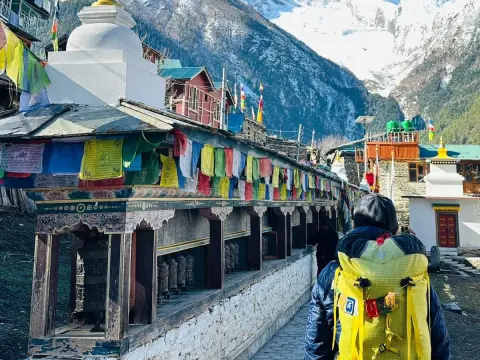
The culture is real, not staged. Ghandruk is one of Nepal's most significant Gurung settlements, and there's a small museum here covering Gurkha history and local traditions that's well worth an hour of your time.
You gain altitude faster. Compared with some longer approaches, you're up among proper mountain views sooner.
You can travel light. Teahouses line the entire route, so there's no need to carry a tent, stove, or sleeping mats.
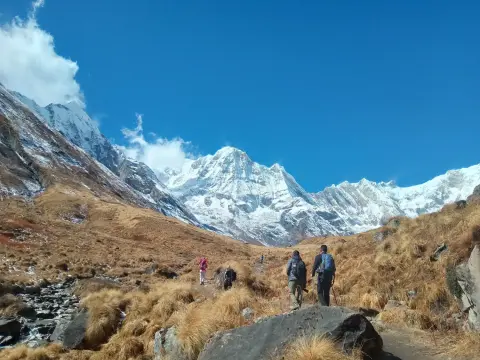
The mountain views keep changing. Machhapuchhre (Fishtail), Annapurna South, Hiunchuli, and Annapurna I all show themselves at different points, often from angles you won't get on other routes.
Best Time to Trek Ghandruk to ABC 2026
Timing matters a lot here, maybe more than people expect.
Spring (March–May): This is rhododendron season. The forests around Ghorepani and Tadapani go red and pink, and mornings tend to be clear even if afternoon clouds roll in.
Autumn (late September–November): Generally regarded as the best window for ABC. Skies are clearer, temperatures are comfortable, and the mountain views are about as good as they get.
Winter (December–February): Quieter trails and often crisp, clear skies, but nights get properly cold above 3,000 meters, and snow at Base Camp itself isn't unusual.
Monsoon (June–August): Best avoided. Leeches, slick and muddy trails, and clouds that swallow the mountain views make this the least rewarding time to go, though the lower villages around Ghandruk do look lush and green.
How Tough Is the Trek?
The Ghandruk to ABC trekking trail falls into the moderate category. One does not need to have mountaineering experience, but one needs to be relatively physically fit and be prepared to spend 5 to 7 hours walking daily with significant uphill climbs consisting only of stone steps.
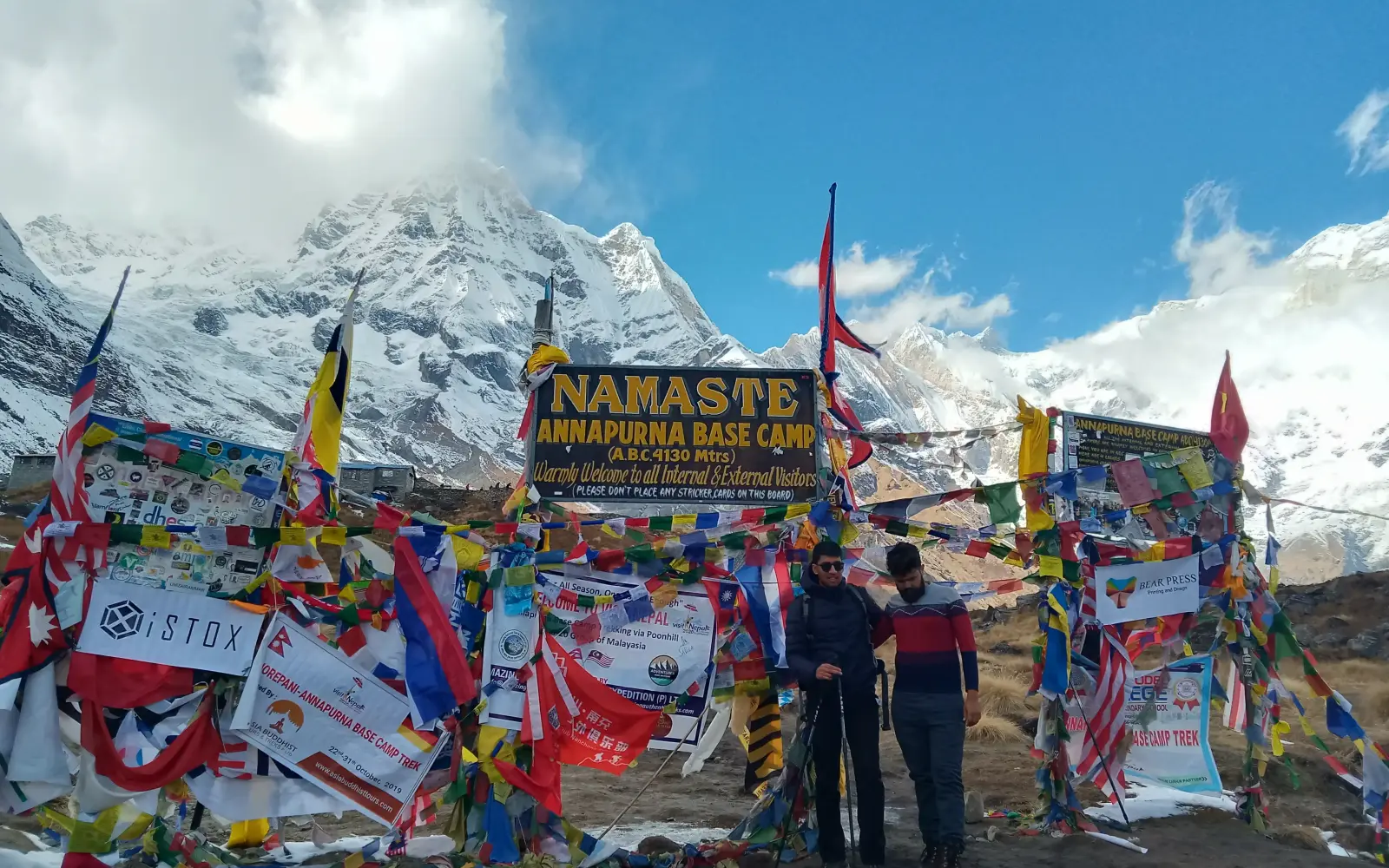
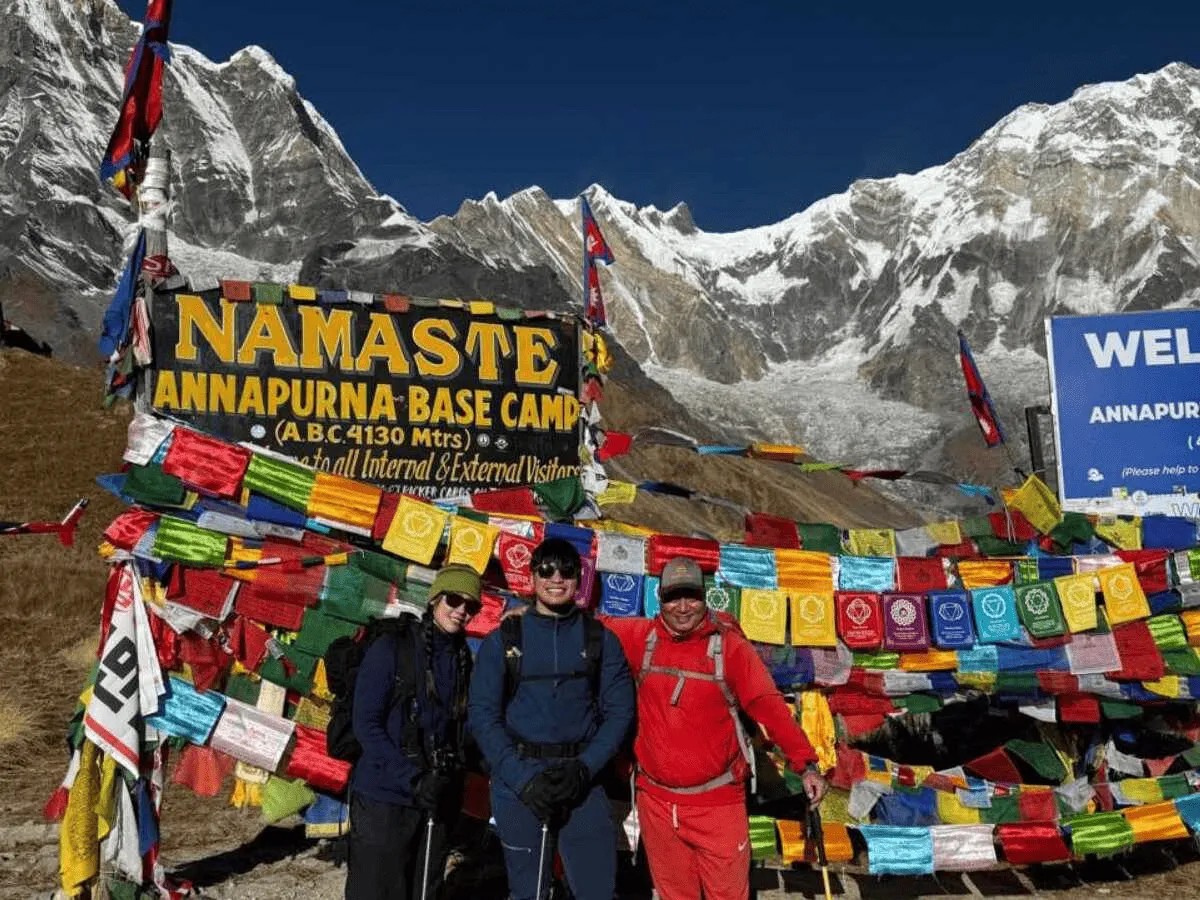
One has to remember that altitude is something to take into account when trekking this route. ABC lies at the altitude of about 4,130 meters and it is high enough that pacing and proper hydration of one's body become more important than miles he or she can cover.
Altitude Sickness and Health Precautions
The trail gains height fairly quickly compared with longer treks like the Annapurna Circuit, so even though ABC isn't as high as some Himalayan destinations, it's worth taking seriously.
Learn to recognize early signs: headache, nausea, dizziness, loss of appetite. Mild versions of these are common and usually settle down with rest and fluids.
Don't push through worsening symptoms. Confusion, a severe headache, or breathlessness at rest mean it's time to descend, not time to tough it out.
Aim for 3–4 liters of water a day and skip the alcohol until you're back down.
Diamox (acetazolamide) is widely used as a preventive measure, but only after a conversation with your doctor before you leave home.
Get travel insurance that specifically covers high-altitude trekking and helicopter evacuation. Standard policies often quietly exclude this, and it's not something you want to discover after the fact.
Teahouses and Food
Accommodation will consist of teahouses all the way up small, family run guesthouses offering twin bedded rooms with simple beds and bathrooms, which become progressively simpler as altitude increases. The rooms will either be inexpensive or even free of charge with the agreement that you will pay for food at the same place, which is a reasonable deal.
Dal bhat will be the main dish along the way. Lentil soup with rice and vegetables will be served along with unlimited refills. This is a good offer when you are trekking over a long period. You may also come across noodles, pasta, soups, porridge, and pancakes practically everywhere.
Prices will be higher as altitude increases because all goods are carried up there either by porters or mules. Hence, do not be astonished if the same plate of dal bhat is substantially more expensive in Deurali compared to Ghandruk.
There will usually be hot showers, wifi connection, and charging facilities at least lower down with additional payment but they will get less frequent and more expensive as altitude increases. At least they are usually solar-powered and unreliable above Dovan.
Estimated Trip Costs for 2026
Costs shift depending on operator, season, and how you organize things, but a rough per-person budget for a 7–9 day teahouse trek looks something like this:
Permits (ACAP): NPR 3,000 for foreign nationals, NPR 1,000 for SAARC nationals
Guide: Roughly USD 25–35 per day
Porter (optional, often shared between two trekkers): Roughly USD 20–25 per day
Accommodation: Often free to a few hundred NPR a night when paired with meals
Meals: Around USD 20–30 a day, more as you gain altitude
Pokhara–Nayapul transport: Shared jeep or private vehicle, a relatively small fixed cost either way
It will be cheaper to hike on your own when you want to keep things simple. It will cost you more to go for the total package through a company that provides everything from a guide to a porter to permits and transport. In any case, it would pay to have some money set aside for additional days, hot showers, and charging costs.
Guides, Porters, and Responsible Trekking
Starting from 2023, trekking in the Annapurna Conservation Area, including Ghandruk, is only allowed if accompanied by a guide. A lot of trekkers tend to hire a porter to transport heavy equipment; this way, they have fewer burdens throughout the day and, at the same time, help the local economy.
A few things worth keeping in mind while you're out there:
Bring a reusable bottle and purification tablets or a filter instead of buying bottled water. Plastic waste is a genuine problem in these mountain communities, and it's one of the easier things to avoid.
Stay on the marked trail, especially near Base Camp, where the alpine ground is fragile and slow to recover.
Ask before photographing people in villages like Ghandruk — it's a small courtesy that's almost always appreciated.
Tip your guide and porter fairly at the end of the trek. It's customary here and makes up a real part of their income, not just a nice gesture.
Training and Fitness Preparation
You don't have to be an athlete for this one, but a few weeks of preparation makes a genuine difference on the stone staircases near Chhomrong and the long climbing days that follow.
Build cardio fitness with regular walking, hiking, or stair climbing for at least 4–6 weeks before you leave.
Break your boots in properly well before the trip. New boots on day one is still one of the most common causes of blisters out here.
If you'll be carrying your own gear, practice walking with a loaded daypack beforehand so it's not a surprise.
Don't skip downhill training. The descent from ABC to Bamboo is long, and it's harder on the knees than most people expect going in.
Packing List
A handful of things that make a real difference on this route:
Layered clothing — warm days, cold nights near ABC
A well broken-in pair of hiking boots
A basic first aid kit, plus Diamox if your doctor's recommended it
Purifying tablets or a filter, and a reusable water bottle
A headlamp for early starts and dimly lit teahouses
Trekking poles — genuinely useful on the stone steps and the long descent
A warm sleeping bag liner or a light sleeping bag for colder nights
Sunscreen, sunglasses, and a hat — the sun is stronger than it feels at altitude
A power bank, since charging isn't always reliable or free
Cash in Nepali rupees — card payments are unreliable the whole way
Connectivity Along the Trail
Mobile signal (NTC tends to hold up better than Ncell here) comes and goes through the lower villages and gets unreliable past Chhomrong. Most teahouses offer wifi for a small fee, though it's slow and prone to dropping out, especially in bad weather. It's worth letting people back home know in advance that you might be quiet for a few days.
Frequently Asked Questions (FAQs)
How many days is the Ghandruk Annapurna Base Camp trek?
Most routes run 7 to 9 days round trip from Pokhara, depending on your pace and whether you add acclimatization or extension days.
Is the Ghandruk ABC hike suitable for beginners?
Yes, it's a solid choice for first-time Himalayan trekkers who have a reasonable level of fitness. There's no technical climbing involved, just long stretches of steady uphill and downhill walking.
Is this hike guided?
Yes, A licensed guide has been compulsory for trekking in the Annapurna Conservation Area, including the Ghandruk trail, since 2023.
What permits will I need for 2027?
Every trekker needs an Annapurna Conservation Area Permit (ACAP). Other permit requirements have shifted a few times in recent years, so it's worth confirming with a recognized agency close to your travel dates.
When is the best time to make this trek?
October and November tend to bring the clearest skies and most stable weather, with March through May offering the rhododendron bloom as a bonus.
How high is Annapurna Base Camp?
It sits at roughly 4,130 meters (13,550 feet).
Do I need travel insurance?
Yes, Look for a policy that specifically covers high-altitude trekking and helicopter evacuation, since standard travel insurance often excludes trekking above a certain elevation.
Can I do this trek without a porter?
You can, and plenty of people carry their own bag. A porter is a relatively small extra cost that makes a noticeable difference on the long ascent and descent days, though.